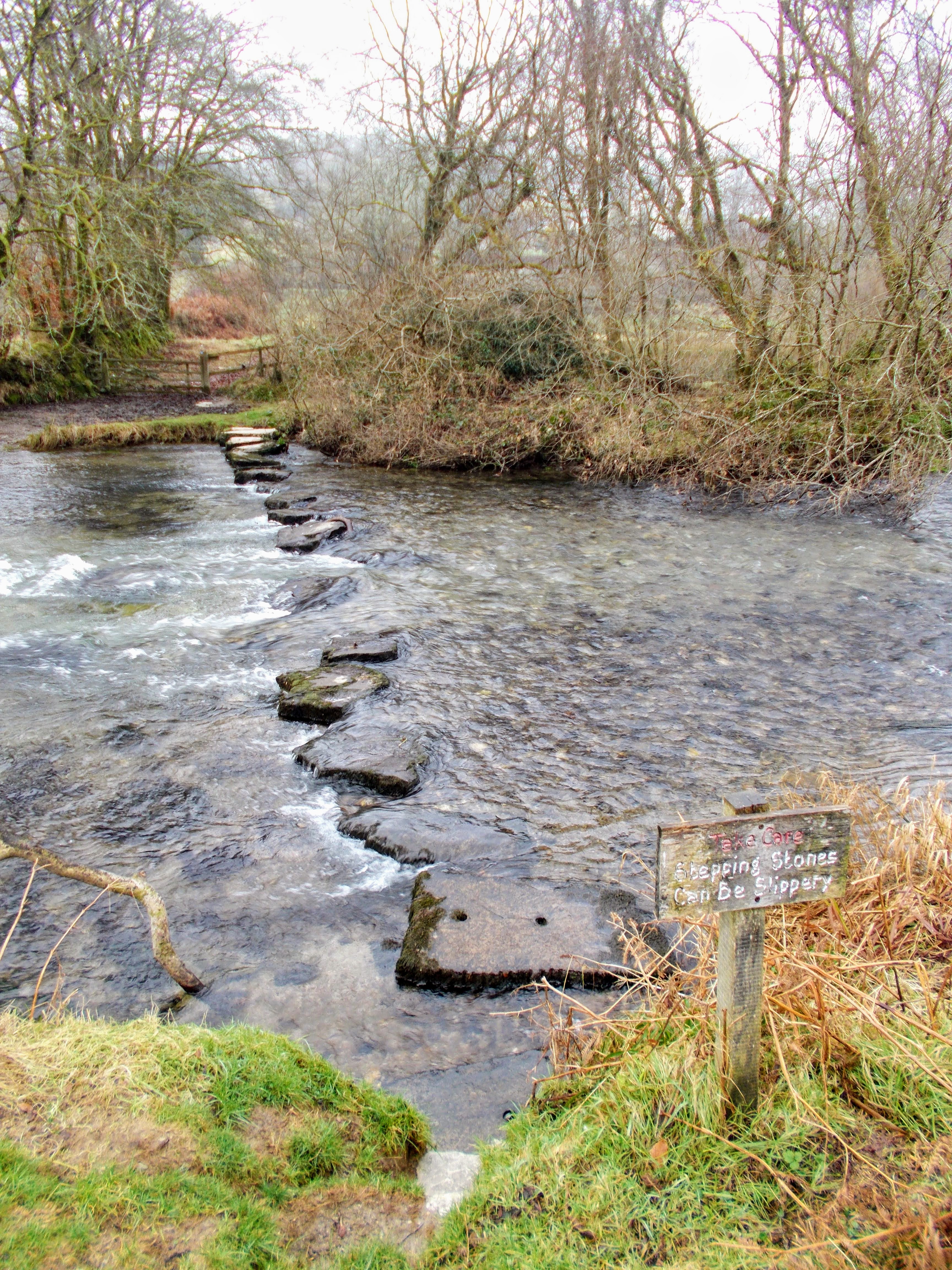
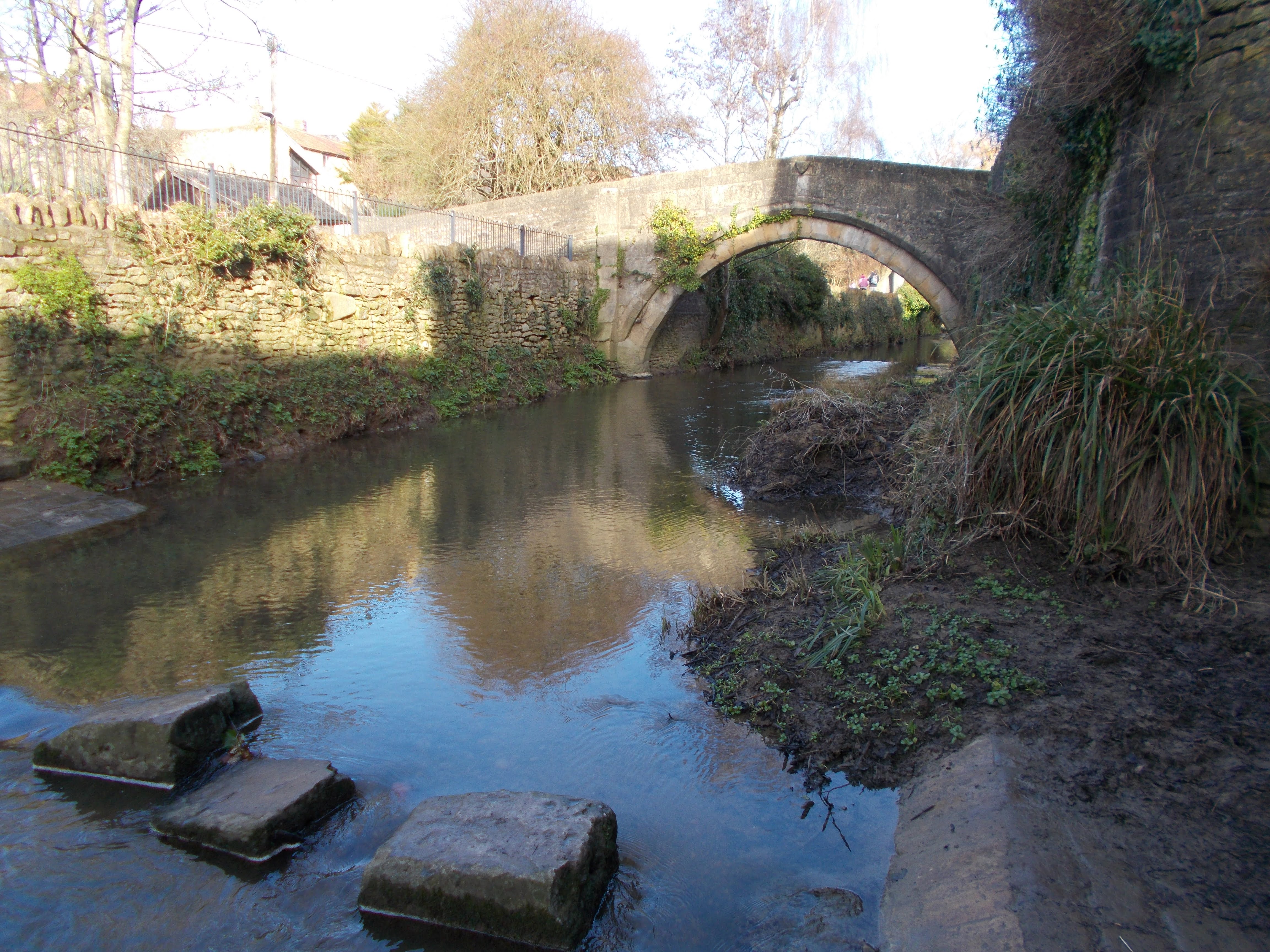
Sets of stepping stones across rivers are rare in Somerset. The only two I have come across so far are across the River Barle near Withypool and across the River Brue in Bruton, just to the west of the packhorse bridge. According to the Somerset Historic Environment Record, the stepping stones in Bruton are modern and were put there sometime after 1982.
Friday, 14 October 2022
Stepping Stones
Saturday, 1 October 2022
Woodspring Priory
Woodspring Priory was founded at an unidentified location in Somerset called Dodlinch c1210 by William de Courtenay. By 1226 it had moved to its present location at Middle Hope to the north of Sand Bay. William de Courtenay’s grandfather, Reginald Fitz-Urse, was one of the knights who murdered Archbishop Thomas Becket in Canterbury Cathedral in 1170.
The name Woodspring derives from a spring in the area called the Worspring or Worspryng and the priory was called Worspring until the 18th century.
Woodspring Priory was of the double order of St Augustine and St Victor, and it was dedicated to the Holy Trinity, St. Mary the Virgin and St Thomas the Martyr of Canterbury. William de Courtenay provided the Manors of Woodspring, Worle and Locking to generate an income for the priory but it was never a very wealthy or large establishment. There were probably never more than ten members of the community living there at any one time.
The priory buildings were arranged around a central square cloister. The priory church was located to the north of the cloister, with the sacristy, dormitory and chapter house on the east side. The agricultural buildings were located to the west of the religious ones and were separated from them. The original chapel was replaced in the late 15th or early 16th century by the present church, which was built in the Perpendicular style. At around the same time an infirmary and tithe barn were built.
In 1534 Prior Roger Tormynton or Tormenton and the seven members of his community signed a declaration acknowledging the supremacy of King Henry VIII instead of the Pope and in 1536 Woodspring Priory was dissolved. Soon afterwards the infirmary, most of the church (except for the chancel, which was demolished) and the prior’s lodgings were converted into dwellings and to agricultural use.
The former priory changed hands several times before being acquired by the Pigott family (later the Smyth-Pigotts) in the late 17th century. It remained in their ownership for 200 years, although it was rented to a succession of tenants from the middle of the 19th century. In 1918 it was sold to Major Vernon Tickell Hill but he sold it to Richard Burrough a few years later.
In 1968 the
priory and adjoining land of Middle Hope were purchased by the National Trust. In
1969 the priory was taken over by the Landmark Trust, which spent 20 years restoring
the buildings. The surviving buildings
include the nave, north aisle and crossing of the priory church; the infirmary;
the tithe barn; a gatehouse and the 17th century farmhouse. The Landmark Trust now rents out the farmhouse
as holiday accommodation.
Wednesday, 14 September 2022
Church of St Nicholas, Kittisford
The Church of St Nicholas in the small village of Kittisford in the countryside between Wellington and Wiveliscombe is a little gem, with many interesting features. It was built of red sandstone c1480s after the building of Cothay Manor nearby and was restored in 1875. It is a Grade II listed building.
The Jacobean pulpit is dated 1610 and is made of oak. The internal pillars and arches are made of wood (probably oak), which has been carved to look like stone. They date from the Tudor period (1484-1603) and were restored in the 19th century. It is very unusual to find wooden pillars and arches in a church. The priest's door has the word Alleluia carved over it. The oldest part of the church is the blocked doorway in the north wall.
There are two brasses on the wall in the south aisle: these are dedicated to Richard and Agnes Bluett (née Verney). Richard Bluett was a local farmer, who died in 1524. There is also a piscina in the south aisle.
Friday, 2 September 2022
Battery Point Lighthouse, Portishead
Battery Point Lighthouse was built in 1931 by Chance Brothers of Smethwick on a rocky promontory on the north west edge of Portishead. The deep water channel known as King Road passes very close to the coast at this point. The lighthouse, which is also known as Portishead Point Lighthouse, is nine metres tall and consists of a black metal pyramid on a square concrete base. The lighthouse is maintained by Bristol Port Company. In 1999 they announced that they wanted to demolish the lighthouse and replace it with a modern navigational aid. After a campaign by local residents, they agreed to build a replica of the original lighthouse.
A two tonne bronze fog signal bell was installed at Battery Point Lighthouse in 1939. It was removed c1998. It was found in a warehouse owned by Bristol Port Company in Avonmouth in 2010. After a campaign by local residents, it was acquired by Portishead Town Council in 2012. It was restored and re-sited on Wyndham Way in 2013.
Battery Point Bell on Wyndham Way
There is a Merchant Navy Memorial close to Battery Point Lighthouse with a brass plaque attached to it. The words on the plaque are as follows:
“This stone is situated here at Battery Point, the closest place on the coast of the United Kingdom which large ships pass.
It is dedicated to seafarers of the West Country who, since the Middle Ages, on voyages of discovery and in times of peace and war, have passed this point, some never to return.
“Oh hear us when we cry to thee, for those in peril on the sea.”
Erected by the Merchant Navy Association
North Somerset Branch, 2005”
Merchant Navy Memorial at Battery Point
Monday, 15 August 2022
Lynmouth to Porlock Overland Lifeboat Launch, 1899
On the afternoon of 12th January 1899 a storm arrived on the North Devon coast and wind speeds increase to force 8. In the early evening, the RNLI Lynmouth Lifeboat crew received a telegraph message from Porlock informing them that a ship called the Forrest Hall was rudderless and in distress in Porlock Bay and requested their assistance. Coxswain Jack Crocombe decided that it would be impossible to launch his twelve-oar lifeboat Louisa from Lynmouth, due to the high seas and then he announced to his surprised crew "We'll launch from Porlock". They were unable to send a telegraph message back to Porlock to tell them this because the wires had blown down.
A team of up to 100 people, including Jack Crocombe and 13 lifeboat crewmen, and 18 borrowed horses were soon assembled and they set off to drag Louisa on her carriage 13 miles overland. Their first challenge was the climb up Countisbury Hill - 300 metres in two miles and 1:4 in places. Richard Moore, the lifeboat's signalman, and half a dozen men had been sent ahead with pickaxes and shovels to widen the road. On the way up Countisbury Hill one of the wheels came off Louisa's carriage but they managed to put it back on.
Once the main party reached the top of Countisbury Hill, most of the volunteers turned back, leaving 20 men to haul the Louisa the rest of the way. She was 10 metres long and weighed 10 tons. At this time the road across the top of Exmoor was a muddy track. At one point it was so narrow that Louisa had to be taken off her carriage and dragged on skids because the road could not be widened. The carriage took a different route over the fields and re-joined them a mile further on. They also had to climb to a height of 420 metres above sea level and all the while it was raining and the gale continued to blow.
The team of men managed to successfully hold Louisa back when they were descending Porlock Hill (1:4 in places) but they had to break down part of someone's garden wall to get through.
They arrived in Porlock Weir at 6.30am on 13th January. Despite being very wet, tired and hungry, they immediately launched the Louisa and it took them an hour to row out to the Forrest Hall, which had anchored near Hurlstone Point. They stood by the Forrest Hall until two tugs arrived when it got light. The lifeboat crew helped get a rope from the tug to the ship and some of the lifeboatmen went aboard the Forrest Hall to help her crew raise their anchor. The Forrest Hall was then towed to Barry, accompanied by the Louisa, in case there were any problems. Thanks to their actions, all 17 or 18 crew members of the Forrest Hall survived.
They arrived in Barry at around 6pm and the crew of the Louisa were given dry clothes and food and accommodated in a hotel for the night. The following day they rowed back to Lynmouth, although they were towed part of the way by a steamer. Louisa's carriage was hauled back to Lynmouth by road.
The 13 crew members received awards of £5 each. The repair bill for the hire of horses and the rebuilding of walls was £118 17s: the owners of the Forrest Hall paid £75 of this.
The overland journey was re-enacted in 1999 by which time the roads had greatly improved but the weather hadn't.
Thursday, 4 August 2022
St John the Baptist Church, Frome
St John the Baptist Church in Frome is well worth a visit, as it contains a large number of interesting features.
The first church on the site was a Saxon one made of wood and founded by St Aldhelm in 685AD. His mission was to bring Christianity to the wild and barbaric tribes who inhabited Selwood Forest. His church was replaced by a stone one, which was then in turn replaced by a Norman church in the 12th century. The Norman church was extended several times until it reached its current footprint in around 1420.
By the mid 1800s the church had become very dilapidated and it was extensively modernised in the Anglo-Catholic style in the Victorian period by WJE Bennett, who was Vicar of St John's from 1852 to 1886. The stained glass windows in the Lady Chapel and the north and south aisles date from this time and were the work of C.E. Kempe & Co.
The St Nicholas Chapel was built in 1408 as a Chantry Chapel. It is now the baptistry. The font dates from the 13th century and the tall wooden cover was made for it in 1884. The Seven Virtues and Seven Deadly sins are depicted in marble on the floor around the font.
A Via Crucis (Way of the Cross) was designed and sculpted by James Forsyth as a processional way from the street up to the north porch of St John's Church. It was erected in 1866 and features scenes from the trial and crucifixion of Jesus.
Thomas Ken was appointed Bishop of Bath and Wells by King Charles II in 1684. He lived a holy and austere life and wrote manuals of prayers and several hymns. He cared for the poor and regularly shared his Sunday lunch with 12 poor men and women. After the death of Charles II, Bishop Ken swore allegiance to James II. He then set up charity schools in the larger towns in the diocese with Lord Weymouth. After the Monmouth Rebellion he remonstrated with Judge Jeffries about the treatment of the captured rebels. He was sent to the Tower of London in 1688 for seditious libel because he had preached against James II's Declaration of Indulgence, which suspended the laws against Roman Catholics and Protestant dissenters. When James II fled from England, Bishop Ken refused to swear an oath of allegiance to William, as he felt that he could not break his existing oath to James II. He had to leave his job and spent the rest of his life living at Longleat with Lord Weymouth. He was buried at St John's Church in Frome because at that time it was the closest parish church to Longleat that was in the Diocese of Bath and Wells.
Font with the Seven Virtues around it
Zeal - the Wise Virgins
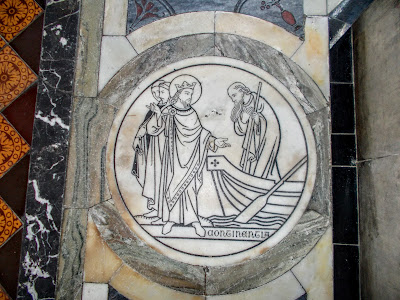
Contentment - Barzillai & David
Greed - the Rich Man
St John the Baptist Church, Frome
In 1990 stained glass artist, Mark Angus was commissioned to make a stained-glass window of a historical timeline commemorating important events in Britain since 597. The events illustrated are from bottom to top:
- 597 St Augustine lands in Kent
- 685 St Aldhelm establishes the first church in Frome (the town is depicted with as a red heart with the River Frome running through it).
- 1066 Norman Conquest of Britain
- 1349 The Black Death
- 1536 Dissolution of the Monasteries by Henry VIII
- 1914-1918 First World War
- 1939-1945 Second World War
- 1945 The Atom Bomb (mushroom cloud)
- 1985 After 1300 years St Aldhelm's Church is still shining the light of the Gospel