Murals brighten up our towns and villages. Some have been painted by professional artists, others by students, self-taught artists or school children.
My favourite mural is the one on the side of the Trading Post Shop at Lopen, which incorporates the Railway Carriage Café next door beautifully. It really seems as if you are looking down a railway platform. The mural was painted in 2013 by 24 year old local artist Camilla Yuill.
The Trading Post, Lopen
The Trading Post, Railway Carriage Café, Lopen
Sweep it under the carpet?
Eleos Café, 28 Fore Street, Chard
Quarry in the Mendips
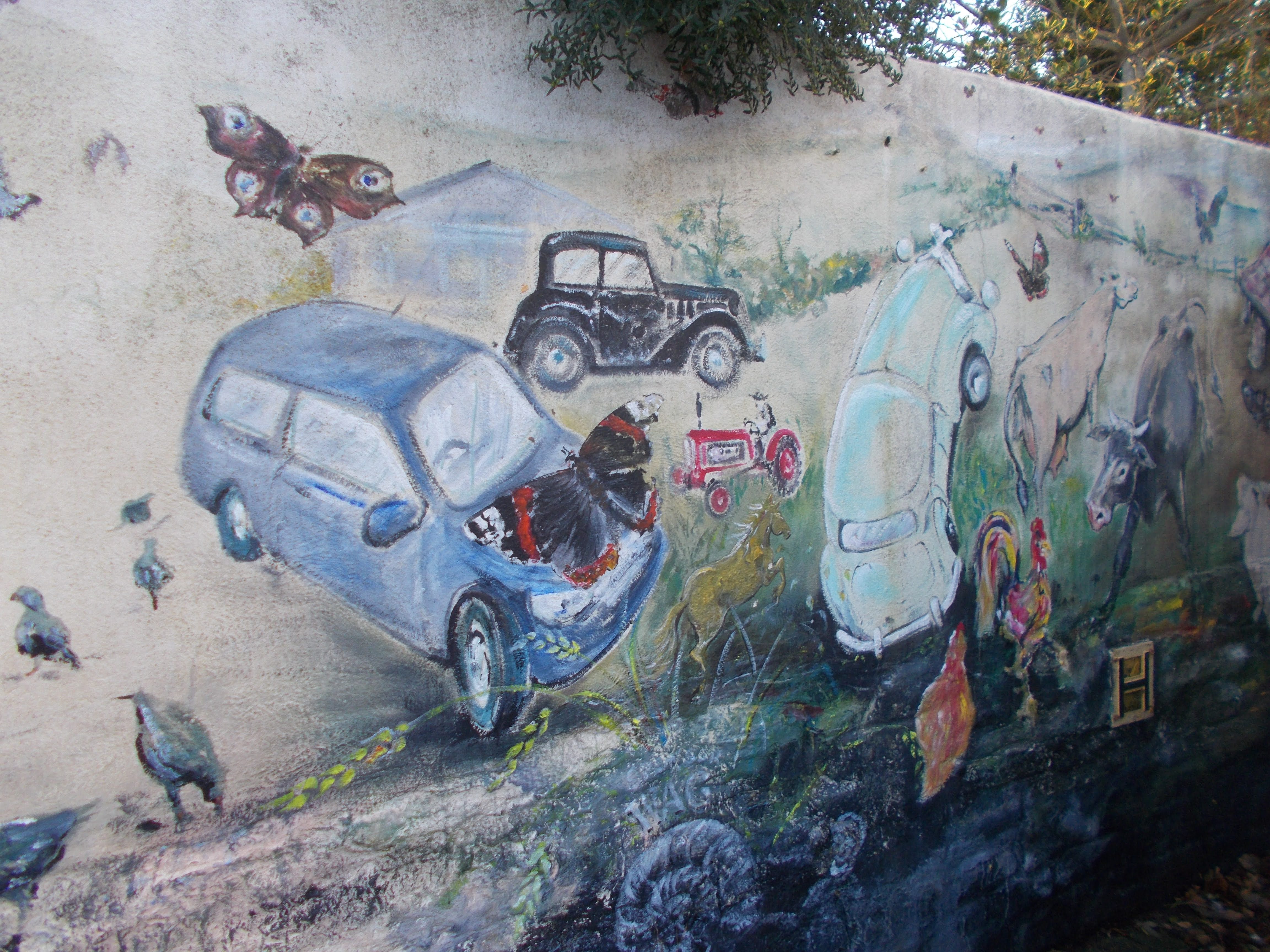
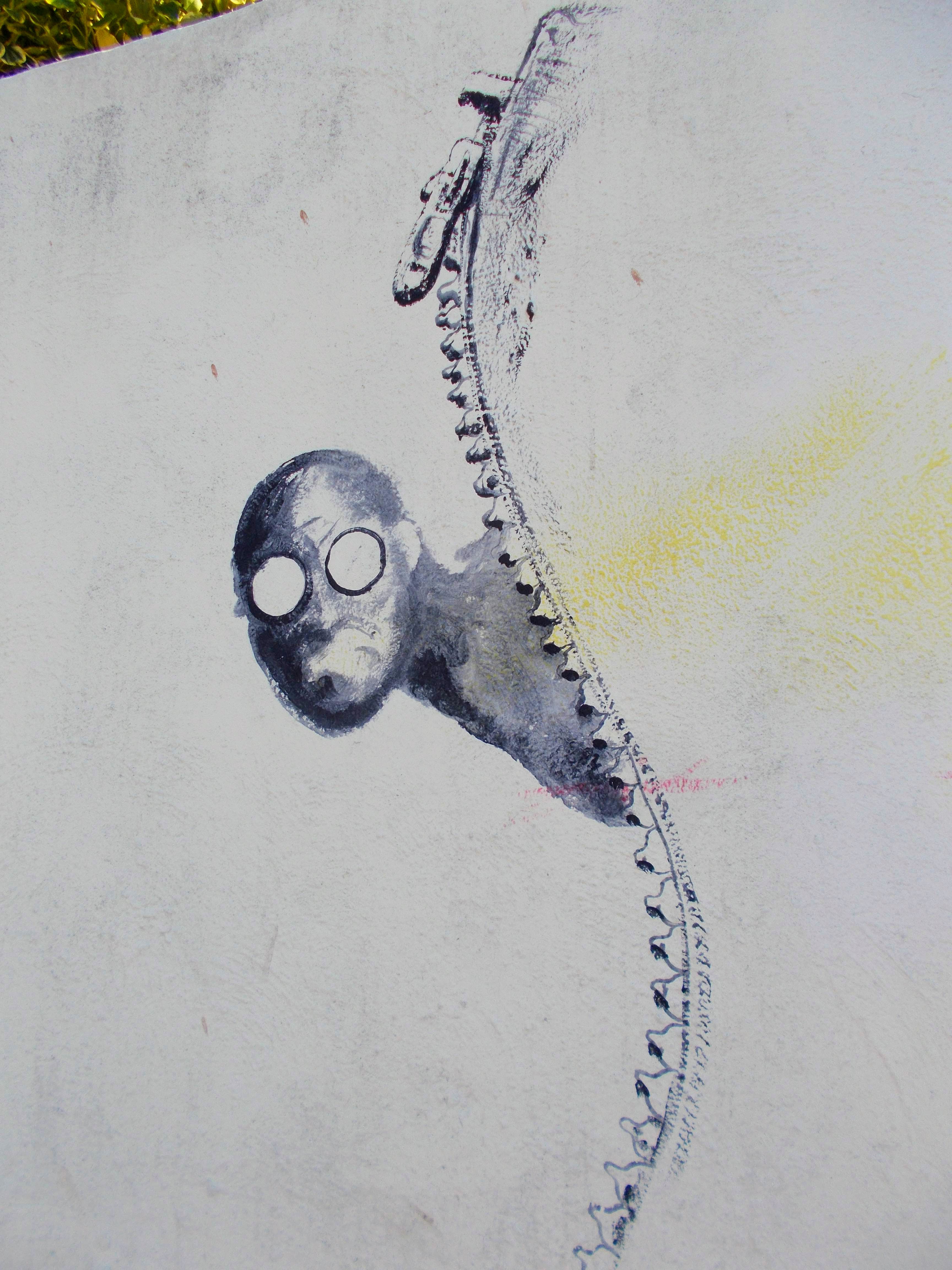
I'm not entirely sure what this mural is meant to be of but I thought it was worth a photo.
King Size, Haydon Road,Taunton
I thought for a while it said King Sue but I think it is King Size!
We Will Remember Them
The King Size mural in Haydon Road, Taunton was replaced in November 2018 by this excellent mural to commemorate the centenary of the end of the First World War
We Will Remember Them, Haydon Road, Taunton
The Dolphin Pub, North Street, Wellington
The Dolphin Pub, North Street, Wellington
Larger than life otter, Tower Lane, Taunton
NB: He has disappeared since I took this photo - well otters do tend to be rather elusive!
Weston-Super-Mare has a large number of street art paintings, many of them painted by JPS (aka Jamie Scanlon) and a female street artist called Fawn. There are so many that Visit Weston have produced an art trail leaflet featuring many of them. I have yet to visit most of them but here are a few of them:
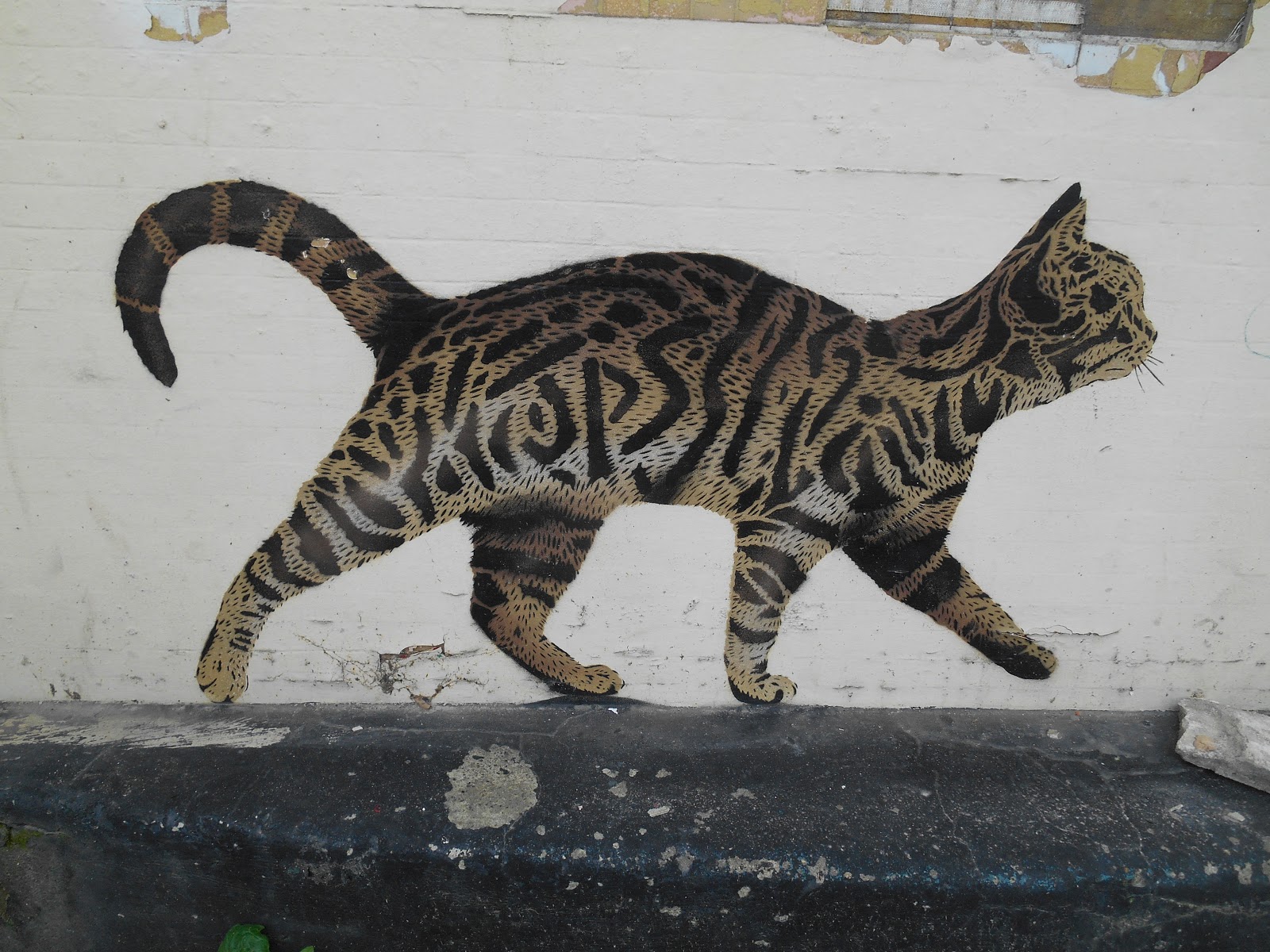
Tabby cat, Weston-Super-Mare
Sonic Boom by JPS, Colonel Stephens Way, Weston-super-Mare

Fawn by Fawn, Weston-Super-Mare
Terminator, Scally's Pub, Carlton Street
Balloon Girl, Scally's Pub, Carlton Street
Better than a Bear Wall, Richmond Street
Painted on a Dark Knight
Dangermouse - this is tiny and painted at the bottom of a pillar box on Marine Parade
Gogo Girl, Greenfield Place
This painting originally made more sense, as there was a real chain across the front of the shop. However the shop appears to have closed down.
Cat - in a shelter near Birnbeck Pier
Angel, Loves Café, West Street
Yoda, Weston Indoor Market, High Street
Ewok, Weston Indoor Market High Street
Hovercraft, Relish Café & Bar, West Street - this is tiny
Welcome to Dismaland, Relish Café & Bar, West Street
Relish Café & Bar, West Street - another tiny painting
Helicopter, Relish Café & Bar, West Street
Upturned police car, High Street
This painting is tiny
Corpse Bride, MT Games, Meadow Street
Predator, MT Games, Meadow Street
I wonder if he enjoyed his Costa takeaway coffee?
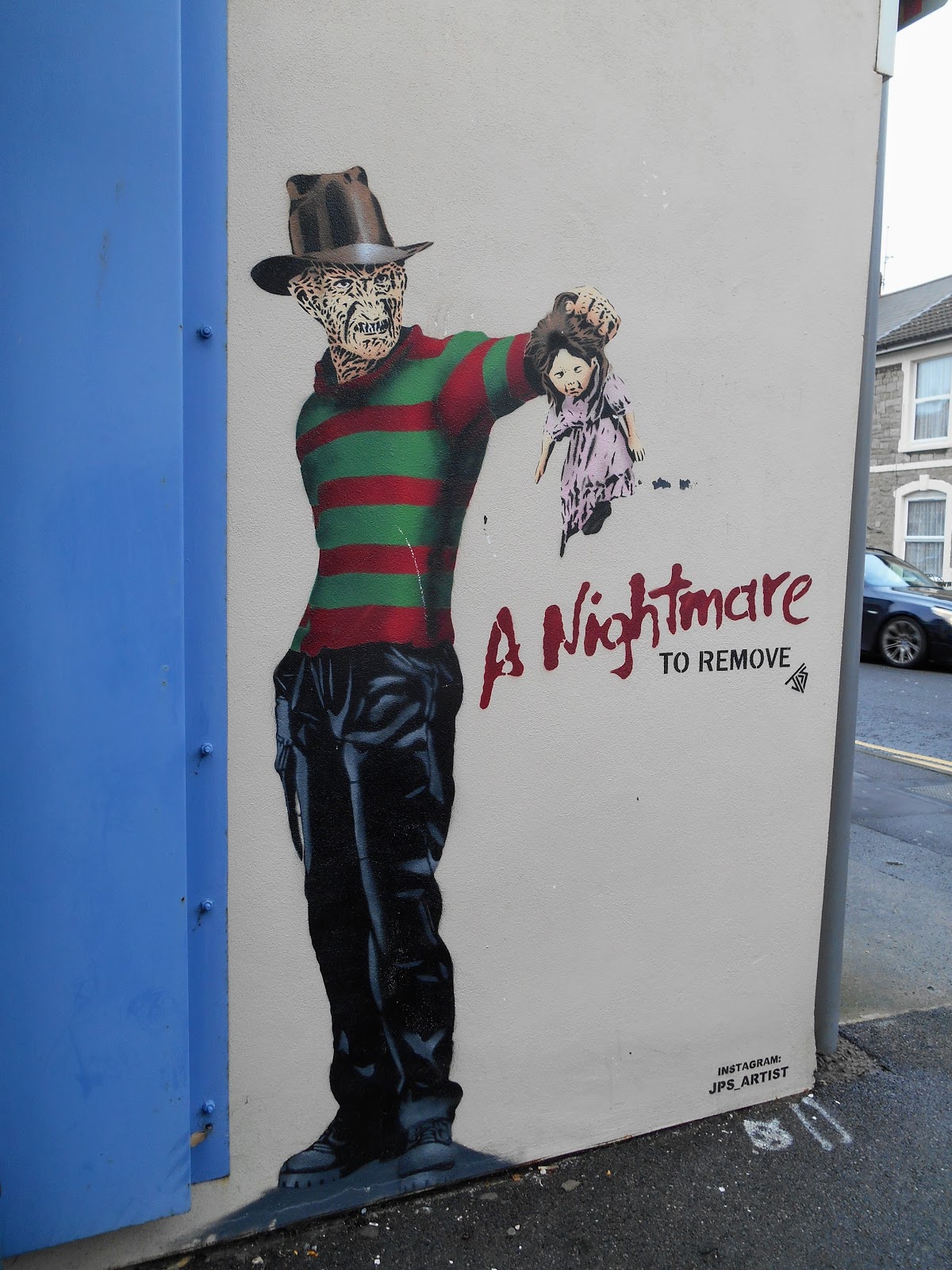
Freddie Kruger, Burlington Street
Dark Wednesday, Cat and Spider at Behind Bars, Meadow Street
Spider, Behind Bars, Meadow Street
Balloon Girl, Alma Street
Tortoise and Pizza, Gloucester Street
Students on an Extension Studies course painted a wall in Knightstone Road, Weston-super-Mare in c2011. The Paintjam Mural is very long and is a beach scene, which features some famous people from Weston-super-Mare e.g. Jeffrey Archer, John Cleese and Roald Dahl's BFG.
Jeffrey Archer and lifeboat on the Paintjam Mural
Paintjam Mural, Knightstone Road
John Cleese on Weston Pier
John Cleese and Jeffrey Archer
Paintjam Mural featuring Roald Dahl's BFG, Weston-Super-Mare
Soldier, Banwell
Portishead Lido
Portishead Open Air Swimming Pool
Dunster Village, Dunster Underpass
Dunster Castle, Dunster Underpass
Giraffic Park Bus Stop, Brean
Giraffic Park Bus Stop, Brean
Goddess Hall, Benedict Street, Glastonbury
Mural by Faye Suzannah in Beckery Road, Glastonbury
Parish churches of Street and its twin towns Notre Dame de Gravenchon in France and Isny im Allgau in Germany
Map of Street showing places of interest in Street, Leigh Road, Street
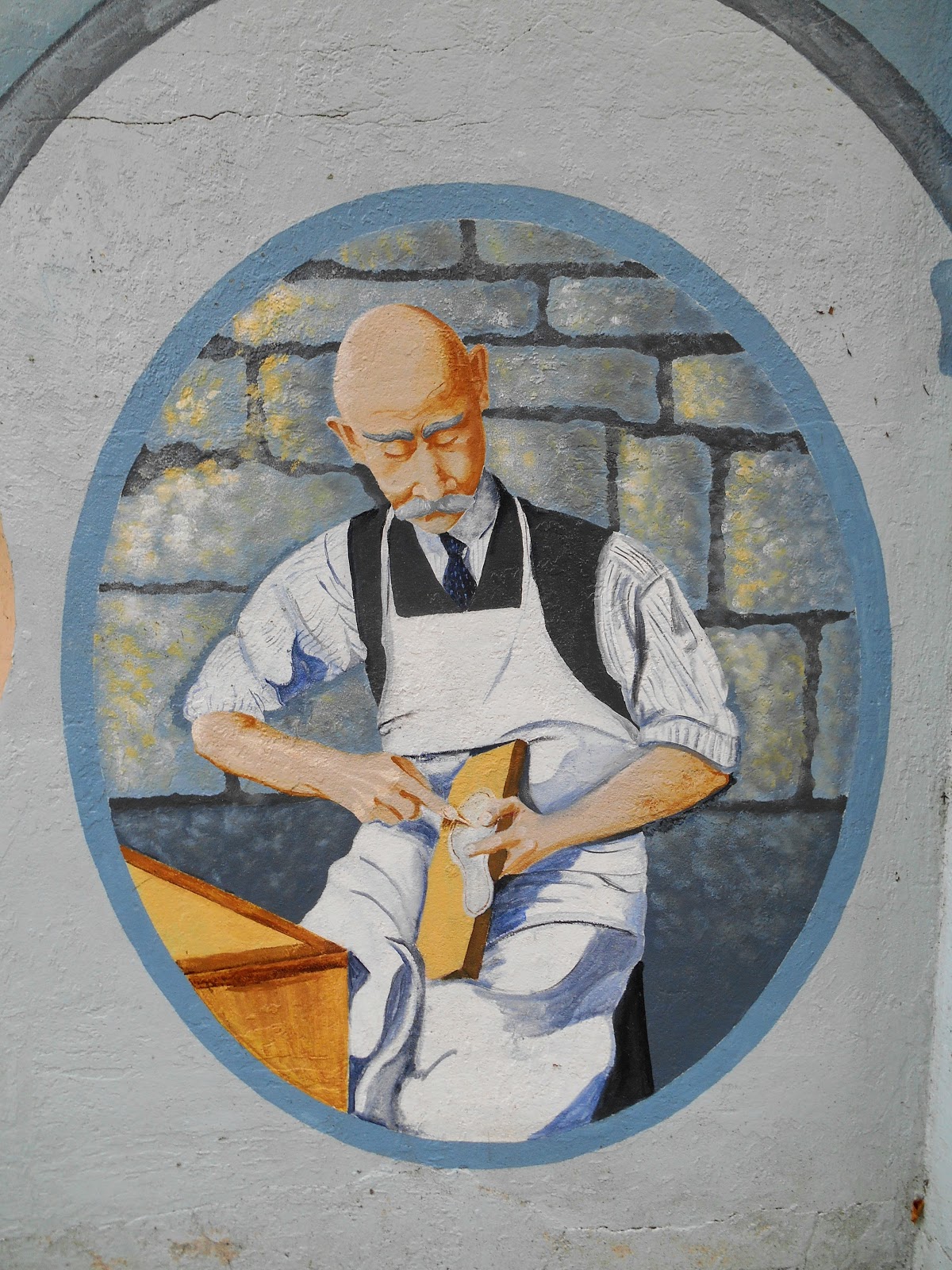
Clark's shoemaker, Leigh Road, Street
I noticed on a visit in December 2023 that the above murals in Leigh Road, Street are no longer there. They have been replaced by the ones shown below. These were commissioned by Street Parish Council, Street Library Trust and Mendip District Council. They were painted by Jonathan Minshull and were unveiled in May 2022.
Shoemaking and Hay Harvesting The left hand panel depicts the inside of C&J Clark's shoemaking factory in Street 1900-1910. The right hand panel shows hay harvesting in Street 1860-1880.
Fossils in Quarry and Peat CuttingThe left hand panel depict the discovery of ichthyosaur fossils at one of the Street blue lias limestone quarries in the 1850s. The right hand panel shows peat harvesting on the Somerset levels c1900.
Mural showing one of Street's twin towns?
Paddington Trust Farm, Glastonbury
Northload Street, Glastonbury
This mural, which features various Glastonbury landmarks and legends, has proved to be very controversial. In 2015 homeowner Bill Knight commissioned a group of local artists to paint a mural on the side of his house, as he was fed up of graffiti being sprayed on it. However his house is a listed building and Mendip Council initially refused retrospective planning permission for it, due to its colours, size and style. 3,500 people signed a petition asking for it to be allowed to stay and in August 2016 the council agreed that it could remain there for two years, after which time the case will be reviewed (it was still there in February 2025). I like it: it is very Glastonbury!
In 2016 the grey concrete harbour wall of Watchet's Old Mineral Yard Car Park was brightened up with a giant mural depicting scenes from Watchet's history. Watchet Arts Group had applied for a £21,000 grant from the Hinkley Point Community Impact Mitigation Fund to transform the harbour wall in to a heritage mural. but their application was turned down, so they invited self-taught local artist Pat Dennis to paint it. The mural is 5 metres high and 30 metres long. The idea for the mural came from the late Tim Prior, who was formerly chairman of Watchet Arts Group.
Watchet Arts Group - Harbour Wall Mural
Railway at Watchet
Under sea creatures
St Decuman's Church, the Domesday Book and the Vikings
Watchet's maritime heritage
Iron Mines in the Brendon Hills
The Ancient Mariner's albatross merges with the real blue sky
Lady on Watchet Harbour wall
Nautical and agricultural mural on the garden wall of Esplanade House, Watchet
This mural was commissioned by Watchet Art Group and painted by local artist Pat Dennis in 2019.
Esplanade House mural, Watchet
Watchet seafront
Under the sea mural on the Watchet Brownie and Guide HQ
Perchance to Dream Mural, The Brewhouse Theatre, Taunton
Mural in Manor House Road, Glastonbury by The Krumble Empire (Kim van Coels) and Sophie Alexi
Other end of the Manor House Road Mural, Glastonbury
I couldn't get a better photo due to parked cars.
Adam & Eve by Frank Harwood, St Benedict's Close, Glastonbury
Moonlit Landscape by Xenz, Benedict Street, Glastonbury
Dahlias by John Minshull, Heart of the Tribe, High Street, Glastonbury
Globe Inn by Oksana Gaidasheva, Abbey Park Walk, Glastonbury
Bromeliads by Faye Suzannah, High Street, Glastonbury
Pilgrimage by Jon MinshullThis mural, which was painted in 2022, is located in the garden of the Royal Magdalene Almshouses, Glastonbury.
Giraffe by Jon Minshull, Meare
This mural was painted in January 2025.
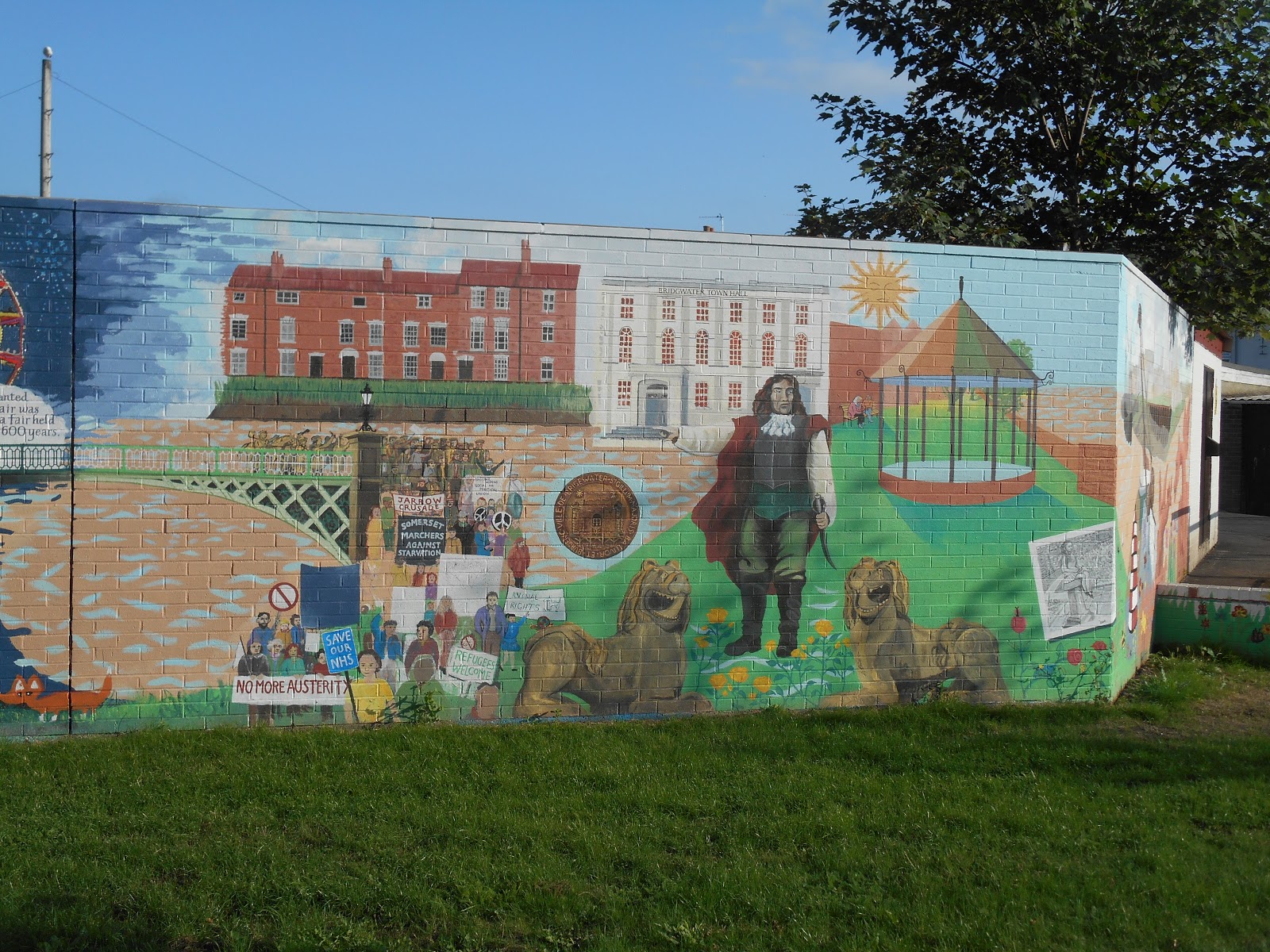
A mural celebrating
Bridgwater's history was completed in November 2017. It was painted by
local artist Rachel Gundry, with help from local residents. It is located
on the Broadway side of Blake Gardens, just to the south of the underpass.

Bridgwater Carnival
Admiral Blake, Blake Gardens, Town Hall and Town Bridge
Cornhill and St Mary's Church, Bridgwater
Skateboarder on the ramp access to the Red Brick Building, Beckery, Glastonbury by JPS
Facebook mural by Fawn - on the side of the Red Brick Building, Beckery, Glastonbury
(hanging out your dirty washing perhaps?)
Mural on a disused building adjacent to the Red Brick Building, Beckery, Glastonbury
Wildlife mural under the Tangier Way bridge, which crosses the River Tone in the centre of Taunton
This section depicts French Weir, the willow cathedral, an egret, a water vole, an otter and some fish
Tangier Way bridge wildlife mural showing the old town bridge, another otter and a pair of mallard ducks
Cricket meets recycling!
Mural on the side of the Viridor offices in Priory Bridge Road, Taunton
Canal mural at Maunsel Lock on the Bridgwater and Taunton Canal
The Willow Man and Glastonbury Tor on a "temporary" mural Castle Street/Tangier Way Taunton
Dunster Castle and the West Somerset Railway on the "temporary" mural wall in Castle Street/Tangier Way, Taunton
Taunton Marathon mural - Castle Street/Tangier Way, Taunton
Unofficial? mural under the Trenchard Way River Tone bridge
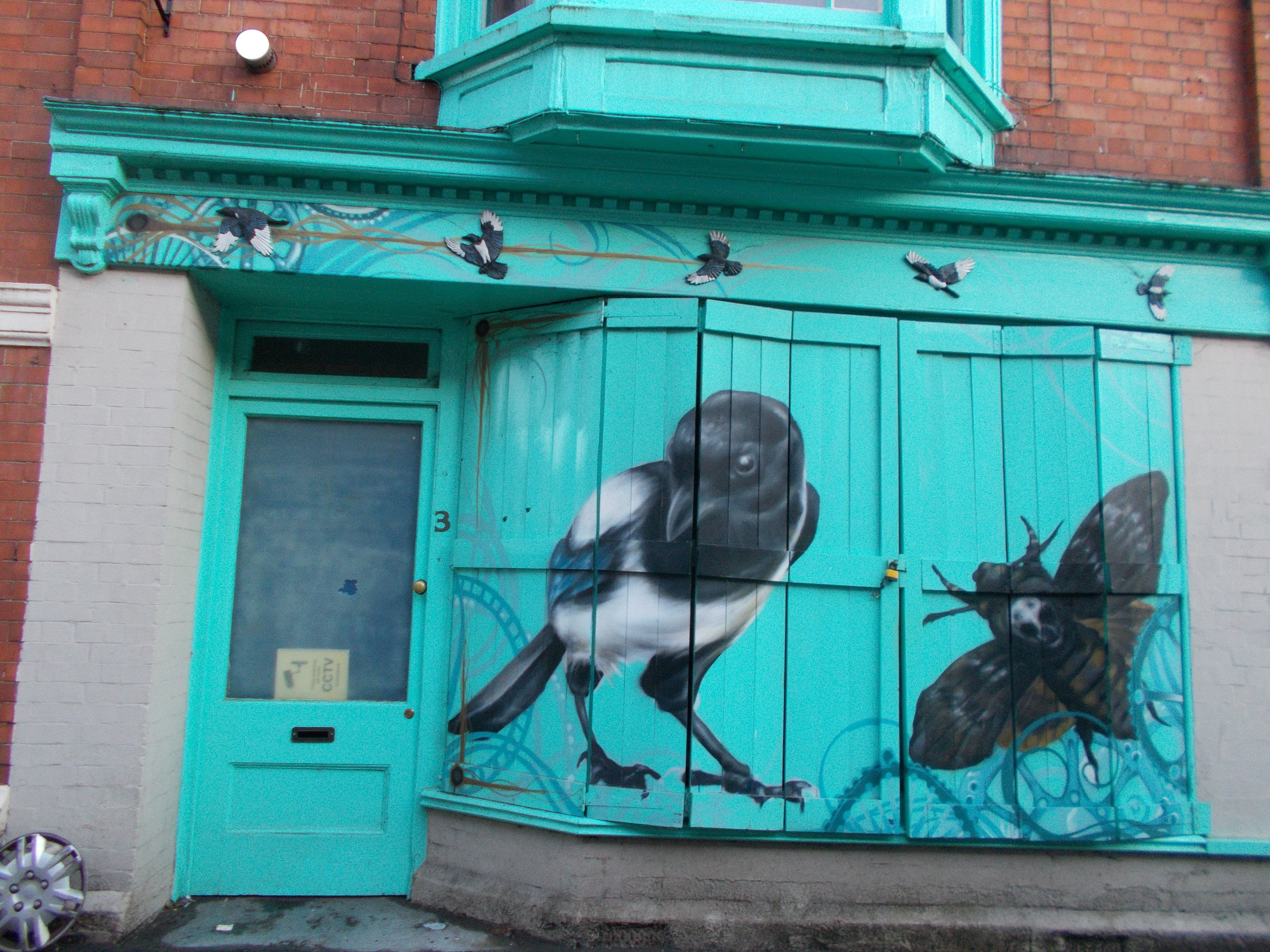
Magpie's Nest shop, Benedict Street, Glastonbury
Magpie's Nest shop, Benedict Street, Glastonbury
Wildwood mural, just off Glastonbury High Street
Stik Mural, just off Glastonbury High Street
Hares' Moon, Hill Head, Glastonbury
North Street, Wiveliscombe
Rainbow Walkway, Goodland Gardens, Taunton
Decorated shipping container next to Fiddington Church
Shipping Container, Fiddington Church
Cow mural, Great Elm
Giant flower mural on the side of a house at Stathe Farm, to the south east of Burrowbridge
Mural depicting Watchet Harbour in Anchor Street, Watchet
Kingsmead School, Wiveliscombe
This mural, which is on display outside the science block at Kingsmead school was painted in 2019 by year 8 art students, as part of their Challenge Week. It focusses on the school's core values of Aspiration, Care, Respect and Determination. The images represent every subject and support area available to students at the school. It is 16 feet high and 12 feet wide.
Otter, French Weir, Taunton
Foot & Gait Clinic, Bridge Street, Taunton
Foot and Gait Clinic, Bridge Street, Taunton
Orange tree mural, The Quarter Restaurant, Lower Middle Street, Taunton
Wellington themed mural, Courtfields School, Wellington
This mural features various Wellington landmarks, including the water towers, monument, former mills, Wellesley Cinema and the fire station
Queen Elizabeth II mural, pedestrian bridge over the railway line, Station Road, Wellington
This colourful mural was commissioned by Wellington Town Council from Taunton based Aerosol Art to mark the Queen's Platinum Jubilee in 2022. It features key events that took place during the reign of Queen Elizabeth II, including Concorde, the Moon landings, the opening of the Channel Tunnel, the cloning of Dolly the sheep, the death of Princess Diana, the marriage of William and Kate, the 2012 London Olympics and the Covid-19 pandemic.
Beatles Abbey Road album
Concorde and the Moon Landings
The release from prison of Nelson Mandela, the opening of the Channel Tunnel and Spice Girls' Girl Power
The cloning of Dolly the sheep
Golden Jubilee 2002 and the marriage of William & Kate
London Olympics and the Covid-19 pandemic
Platinum Jubilee 2022
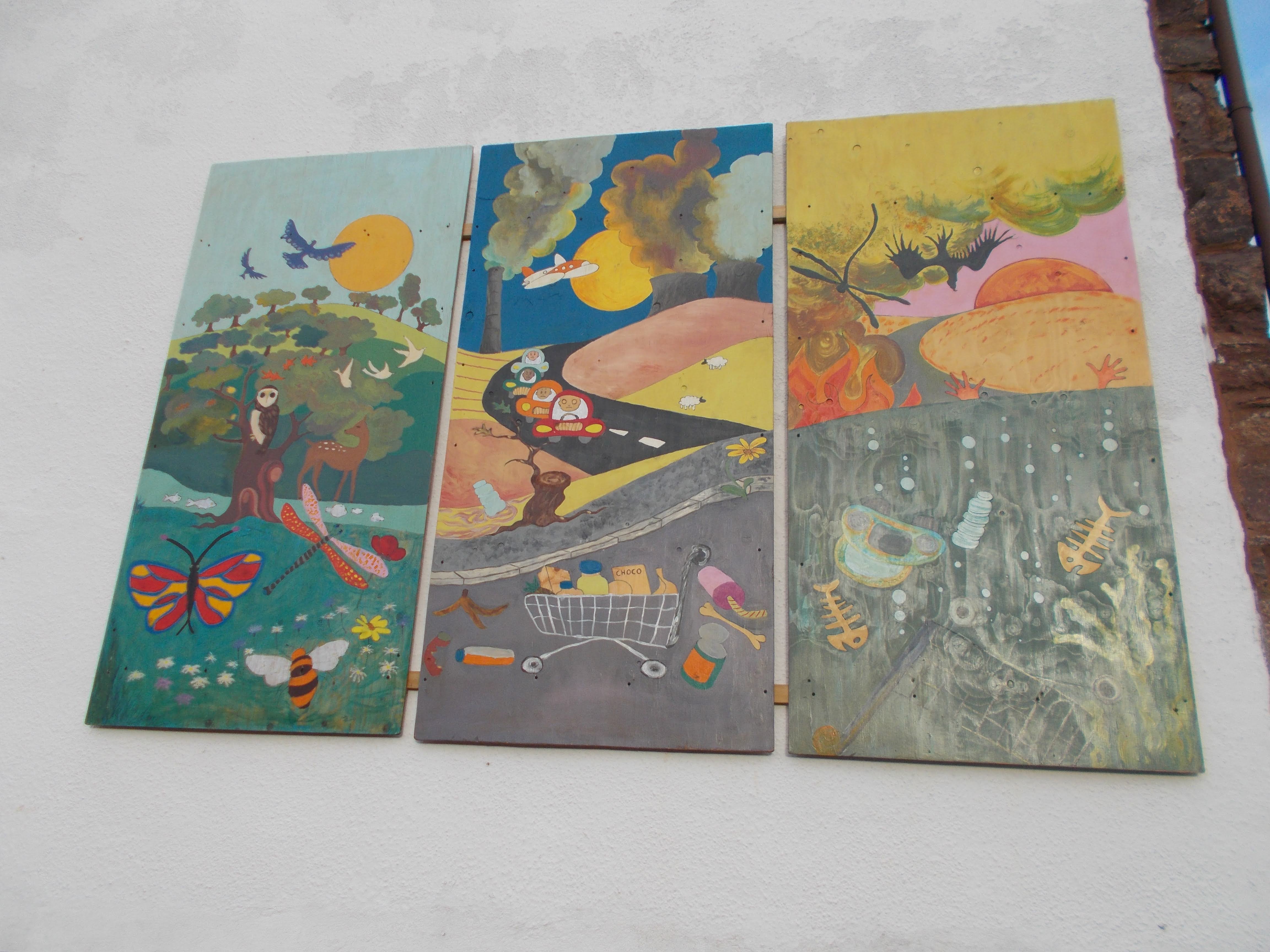
Triptych Mural, North Street, Wiveliscombe
Cockerel by Irony, Sultan's Kebab House, Weston-super-Mare
This was painted for the Weston Wallz Project 2021
Mural by Dan Kitchener, Regent Street, Weston-super-mare
This was painted for the Weston Wallz Project 2021
Flamingo by Sian Storey, Oxford Corner Cafe, Weston-super-Mare
This was painted for the Weston Wallz Project 2022
Seals & goldfish by Curtis Hylton, Oxford Corner, Weston-super-Mare
This was painted for Weston Wallz Project 2022. I think the seals look more like sea lions.
Let it Shine by Mishfit, Knightstone Island, Weston-super-Mare
This was painted for the Weston Wallz Project 2023
Cheshire Cat? by Vza, back of the RNLI shop, Weston-super-Mare
Red Arrows mural, North Petherton Memorial Park
Keep Calm and Carry On mural, North Petherton Memorial ParkIt's a shame about the spelling mistake!
Luttrell Arms, Dunster
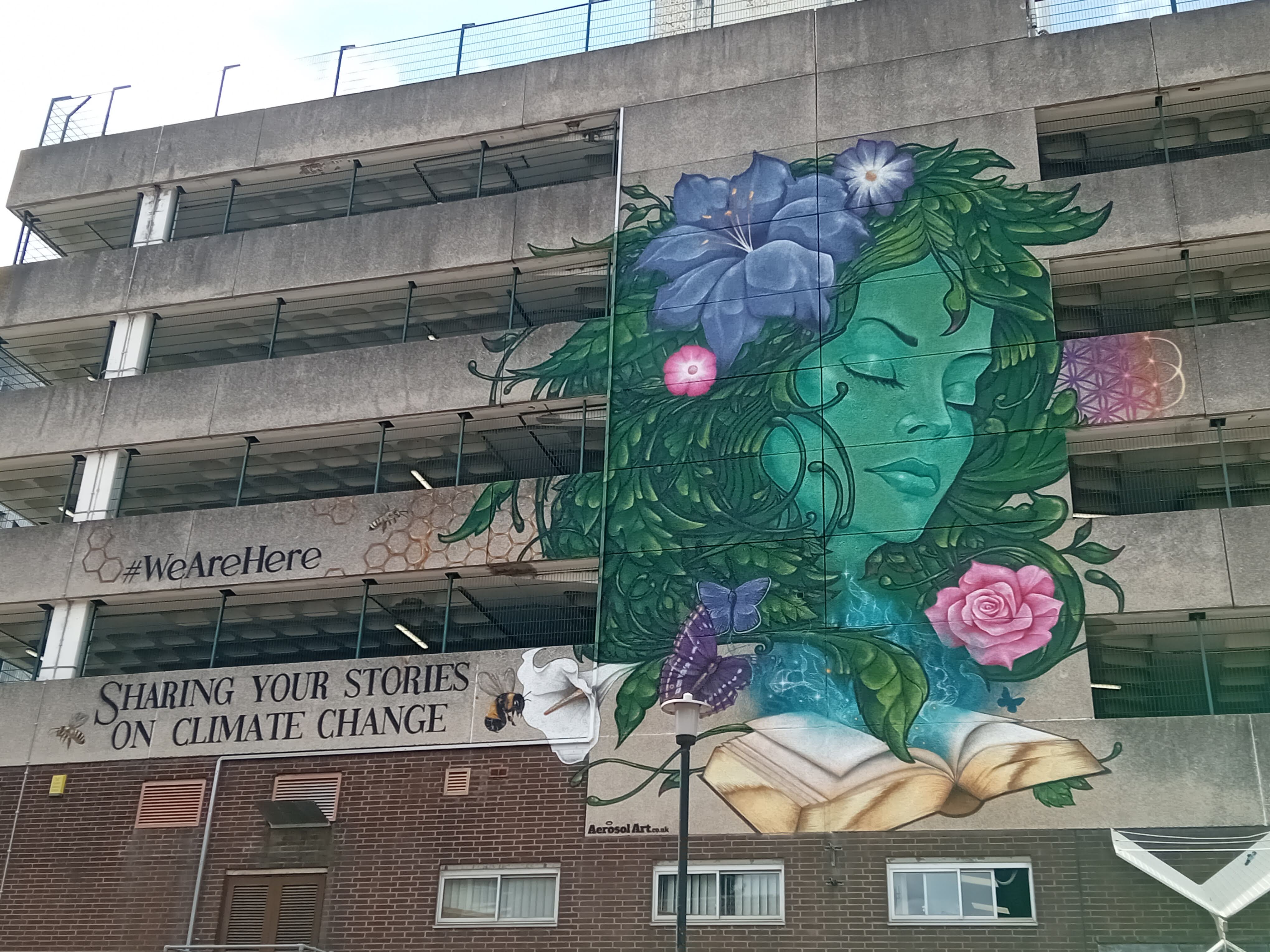
Mother Nature, Orchard Multi-storey Car Park, Paul Street, Taunton
This mural was spray-painted by Sam Gaden of Aerosol Art in June 2024 as part of a project by Go Create and Rights Community Action.
Snowdon Hill Toll House, Bath Street, Chard
I presume the initials painted on the right hand side are those of the artists?
Forefront Community Centre & Church, Fore Street, Chard
John Stringfellow's triplane is shown at the top.
Forefront Community Centre, Fore Street, Chard
This mural was painted by Jordon Lauder from The Mural Company in 2023.
Isaiah Ch40 v31 "But those who hope in the Lord will renew their strength. They will soar on wings like eagles; they will run and not grow weary, they will walk and not be faint."
George Street, Taunton
This was painted by Sam Gaden of Aerosol Art.
Woolavington Bus Stop
This mural was designed and painted by Karon Woodward in 2020.
The following quartet of murals were created by Sam of Aerosol Art for Taunton Independent Quarter:
Flower mural, Lower Middle Street, Taunton
Vines and wines!
The Little Wine Shop, Social Wine Bar & Tapas, Riverside Place, Taunton
Nicky's Flower Studio, Foundry Road, Taunton
Howards Fish and Chips shop, St James Street, Taunton
Taunton Pride, Debenhams, North Street
Pickney Farm Alpacas
Pickney Farm Alpacas
Spanish dancer, Bath Place, Taunton
Same door in Bath Place, Taunton, October 2025 The Spanish lady has been replaced with a scene, which is more in keeping with the restaurant to which the door belongs - Islands serves Caribbean food.
Victoria Gate Public House, Taunton
High Street, Taunton
I think this mural looks a bit like a Clarice Cliff design.
RNLI Mural, Burnham-on-Sea
This was painted by Aidan Ryan in 2022.
"Hope Springs Eternal", High Street, Burnham-on-Sea
This was painted by local artist Damian Nicholson in 2022.
Chameleon eating an ice cream, Burnham-on-Sea
Congresbury Youth Partnership building
Strawberry Line, Yatton Railway Station
This mural was painted by Clevedon based artist Damien Jeffery and was unveiled in January 2023. It features a siskin, a kingfisher, strawberries, apples, a GWR steam train, a spaniel and a bicycle. It is painted on a container belonging to Strawberry Line Cycle Hire.
Strawberry Line, Yatton Railway Station
Orca and Turtle, Knightstone Road, Weston-super-Mare
This mural was painted by Martin Darcy.
Fragile, Lower Church Road, Weston-super-Mare
This was painted on the side wall of The Strange Catch by My Dog Sighs as part of the 2023 Weston Wallz.
Great tit and chips by Aspire, Station Road, Weston-super-Mare
Hatcher's, Taunton
This mural in Pig Market Lane was painted in April 2025 by Sam Gaden of Aerosol Art to mark Hatcher's 250th anniversary. The company was founded as a drapery business in 1775 by William Hatcher.
East Quay, Watchet
East Quay, Watchet
Weston, Clevedon and Portishead Railway, Salthouse Fields, Clevedon
Salthouse Fields, Clevedon
This mural was painted by local artist Damien Jeffrey. It features Clevedon Pier, clocktower, bandstand and a steam engine from the Weston, Clevedon & Portishead Railway.
Kingfisher mural, High Street, Midsomer Norton
This mural was painted by Andy Council in 2025.
Dave Ilsley and his dog Penny, Lynton Road, Burnham-on-Sea
Mr Ilsley lived in Burnham-on-Sea and was a member of many local groups. He died in 2020. This mural of him was painted by Diff, a street artist from Bristol, in 2021.
Eastover Shopping Centre, Bridgwater
This mural, which was painted in June 2025, was designed with input from local residents. It depicts scenes connected to Bridgwater's history and its carnival. It was painted by Bristol artist Tom Sledmore.
Eastover Shopping Centre
Brick Mural, Bridgwater
Brick Mural, BridgwaterThis patchwork of brightly painted bricks at the junction of St John Street and Broadway in Bridgwater, was created by local community groups and individuals in July 2025. There are around 2,300 painted bricks. It was organised by the Brick Project Community Interest Company and was funded through the Bridgwater Town Deal.
The Bird in Hand pub, North Curry This was painted by Aerosol Art in July 2025.
Canal Mural, West Street Garden, Bridgwater
This mural was designed by Madeline Rossiter from Haygrove School. It was painted in June 2015 by an art teacher and pupils from Haygrove and other local school. Tex Freeman, a local policeman, created the garden in 2014 and organised the mural project.
Fairground Mural, West Street Garden, Bridgwater
This mural was sponsored by the Showmen's Guild and was painted by local school children in 2014.
Victoria Park, Frome
This mural, which was commissioned by Frome Town Council in late 2025, depicts bees pollinating flowers and plants. It was painted by aerosol artist Jody Thomas, who is based in Bristol.