Showing posts with label Crime and Punishment. Show all posts

Monday, 18 January 2021

The Kenn Hangings of 1830

A very ordinary looking field in the village of Kenn near Clevedon was the site of what was possibly the last public hanging in England to take place at the scene of the crime.  On 8th September 1830 35 year old William Wall, 30 year old John Rowley and 19 year old Richard Clarke were hanged for setting fire to three wheat stacks belonging to a local farmer called Benjamin Poole on 31st October 1829.

William Wall had operated an unlicensed cider house on Duck Lane, Kenn and some of those who had frequented it had committed many crimes in the area.  Wall had been fined for selling cider without a licence and it is thought that he believed that it was Benjamin Poole who had informed on him. Wall and his accomplices set fire to the ricks as an act of revenge after a night of drinking.

Husband and wife William and Mary Wall, brothers John & James Rowley, Richard Clarke and John Old were tried at the Somerset Assizes in Wells in August 1830.  Isaac Old (brother of John Old) had also been one of the accused but he saved himself by giving evidence against the others. William Wall, John Rowley and Richard Clarke were found guilty and sentenced to death.  John Old, James Rowley and Mary Wall were convicted of arson but were sentenced to transportation.

It was estimated that over 12,000 people turned up to witness the execution.  The men had been held at Ilchester Gaol and were transported on a prison cart the 40 or so miles from there to Kenn.

William and Mary Wall had 7 children at the time of his execution and Mary gave birth to an 8th child while she was held in Ilchester Gaol.  The older children were subsequently brought up by various relatives in the Kenn area and the youngest child (a son called David) travelled to Tasmania with Mary but died in Hobart aged 2. John Rowley and Richard Clarke were not married.

A fuller account of the case written by Derek and Jane Lilly can be found on the Kenn Village website: http://kennvillage.co.uk/home-2/history-project/kenn-hangings/

Hanging Field, Kenn Street, Kenn

Wednesday, 1 July 2020

The Walford Murder, Dodington, July 1789

John Walford was born in Over Stowey in 1762.  His parents were William and Ann Walford and they lived in Bincombe.  His father was a self-employed charcoal burner and John followed in his father's footsteps.  John worked alone in the woods six days of the week and slept in a small wooden hut close to the charcoal burner.  During the winter of 1784 he was visited by local girl Jane Shorney and she became pregnant by him.

Illegitimate pregnancies were considered a disgrace at this time. Parishes wanted to avoid illegitimate children becoming a burden on the poor rates.  Therefore if expectant mothers named the father of their child on oath before a Justice of the Peace, the Overseers of the Poor were given the power to apprehend him and imprison him, unless he agreed either to pay for the upbringing of the child or to marry the mother. On 7th February 1785 Jane Shorney was brought before the local Justice, James Bernard of Crowcombe Court and she declared that she was pregnant with an illegitimate child by John Walford.  He was arrested but released when his mother agreed to pay to support the child.  A son was born a few months later.

In 1786 Jane Shorney got pregnant again - this time the father was John's brother William.  William agreed to pay for the upbringing of his daughter, who was called Betty.  

In 1787 Jane became engaged to Ann Rice, who lived with her parents at Adscombe Mill but the engagement was broken off after a few weeks and Ann went into service.  However she and John continued to meet and she became pregnant.  Jane Shorney resumed her visits to John in the woods and became pregnant again.  John was arrested again but could not pay to support the child and he was therefore obliged to marry Jane.  

Jane Shorney and John Walford married on 10th June 1789.  However John arranged with Jane's mother that Jane and the two children would live with her and that Jane would only join John in his rented cottage at Bincombe at night.

On 27th June 1789 John met his friend William Bishop at the Dial Inn in Aley Green and asked him if he would go to London with him but William said he didn't have enough money to do this.  John admitted to William that he did not like his wife and said he would either have to murder her or leave the area.

On 4th July 1789 John Walford returned home from work at about 8pm.  He ate his supper with his neighbours - the Rich family.  He returned to his own cottage at about 10.30pm and shortly after Jane arrived.  She wanted to go to the Castle of Comfort inn at Dodington for some cider. John gave her a shilling and as it was dark and Jane didn't want to walk there on her own, he accompanied her.  As they approached the Counting House at Dodington they argued and John hit Jane, firstly with his fist and then he beat her with a post and fractured her skull.  He then attempted to drag her unconscious body, possibly to the shaft of the nearby copper mine, but she was too heavy, so he cut her throat with a pocket knife.  He returned home after midnight and went to sleep.

The following morning two children saw blood running under a gate on Dodington Common and told their neighbours John Mogg and William Sellick about this.  Mogg and Sellick discovered Jane's body.  Sellick went to John Walford's cottage to tell him the news.  Walford said that Jane had gone out to buy some cider the previous night but had not returned home and he had assumed that she had gone to her mother's house.  Walford set off to go to his mother-in-law's house to tell her that Jane was dead.  On the way he met Sarah Phillips and told her that he wished that he had never married Jane and that he also wished he had left the area.  He then accompanied his mother-in-law to see Jane's body.  When he arrived he spoke to Thomas Chidgey.

John Walford was interrogated by Thomas Poole (a tanner and farmer who lived in Nether Stowey).  He asked Walford why he had not gone out to look for his wife and queried why the shilling he had given her to pay for the cider was not found on her body.   Thomas Poole, Richard Briffet and Thomas Mogg then accompanied John Walford to his cottage where they found bloodstains on the clothes that John had been wearing the previous day.  His shoes were very dirty and the missing shilling was found in the pocket of his trousers.  Thomas Poole asked Walford where his knife was and Walford first of all claimed that he had lent it to Thomas Ware and then later that he had given it to his brother William.  A few days later Thomas Mogg returned to the cottage and found the knife under a window seat.  It had blood on it.

John Walford was arrested and taken to the Globe Inn in Nether Stowey to wait for the results of the inquest into Jane's death.  The inquest was held the following day and the coroner, William Blake pronounced a verdict of wilful murder by John Walford.  Walford was taken to the county gaol at Ilchester to wait for the summer assizes at Bridgwater.  Jane Walford's body was buried at Over Stowey.

On 18th August 1789 John Walford was escorted to the courtroom in Bridgwater.  The judge that day was the Lord Chief Justice, Lord Kenyon.  The court listened to the testimonies of Joan Rich and her daughter (Walford's neighbours); John Mogg; William Sellick; Sarah Phillips; Thomas Chidgey; Thomas Poole; Thomas Mogg; Thomas Ware; Richard Briffet; James Shorney (publican of the Castle of Comfort who said that Jane had not visited his inn on the night in question) and William Bishop.  The jury retired briefly before returning a verdict of guilty.  Lord Kenyon sentenced John Walford to death by hanging the following Thursday.  Walford then confessed to the murder but said it was not premeditated.

On Thursday 20th August 1789 Walford was taken by cart to the Globe Inn in Nether Stowey to wait while the final preparations were made for the execution on the hill above Dodington.  Ann Rice appeared and spoke to John Walford for several minutes.  The cart then moved on to the execution site where he again spoke to Ann Rice before he was hanged on a gallows.  When he was dead his body was put into an iron cage and this was hoisted on to a gibbet.  It stayed there for a year until the iron cage fell to the ground and John Walford's body was buried below the gibbet.  The site is now known as Walford's Gibbet.

In November 1789 Ann Rice gave birth in Stogursey to a daughter who she called Sarah.  Ann died in Nether Stowey in February 1790.

Site of the murder near the Counting House at Dodington

View of Walford's Gibbet from the murder site

The former Globe Inn in Nether Stowey
It has been greatly altered since 1789 and is now called The Clock House.

Castle of Comfort on the A39

Over Stowey Church

Walford's Gibbet

Walford's Gibbet

View from Walford's Gibbet

Walford's Gibbet

Signpost at Walford's Gibbet

Friday, 14 February 2020

Mary Bridge's Sword

11 or 12 year old Mary Bridge was living with her family in Westonzoyland in July 1685 at the time of the defeat of the Duke of Monmouth at the Battle of Sedgemoor.  After the battle a Royalist officer was billeted with them.  When he attempted to rape her mother, Mary drew the soldier's sword and killed him with it by stabbing him in the heart.  She was tried in front of Colonel Kirke but was acquitted.  He gave her the sword to keep and it was handed down the generations before being given to the Museum of Somerset.


Mary Bridge's Sword on display at the Museum of Somerset

Thursday, 1 March 2018

Murder at Road Hill House, Rode

Road Hill House in the village of Rode was the scene of a murder on the night of 29th/30th June 1860. Three year old Francis Saville Kent was taken from his bed, stabbed and had his throat cut.  His body was thrown down a disused privy in an outbuilding near the house. 

Detective Inspector Jonathan (Jack) Whicher of Scotland Yard was brought in to investigate the murder.  He suspected that Constance Emilie Kent, Francis Kent's 16 year old half-sister, was probably the killer and had her arrested.  However the case was not brought to trial.

Contance Kent was born in Sidmouth, Devon in 1844.  Her parents were Samuel Saville Kent and his first wife Mary Ann. She was one of their four surviving children (6 had died in infancy).  Samuel was a factory inspector and the family lived in a number of places around southern England.  

After Mary Ann's death in 1852 Samuel married Mary Drewe Pratt, who had been his children's governess since 1843. They had four children together, including Francis Saville, who was born in 1856.  In 1855 the family had moved to Road Hill House.  Constance did not get on with her stepmother but she was close to her younger brother William.  William was suspected by some people of having been Constance's accomplice in the murder, although she always denied this.

Constance made a confession to a priest in 1865 and then confessed to the police.  However there were several anomalies in her written statement, so it is possible that she was not the murderer.  The other possibility is that the culprits were either her brother William or her father Samuel and the younger children's nursemaid Elizabeth Gough, who it was suspected were having an affair.    

Constance was found guilty of the murder and was initially sentenced to death.  Her sentence was later commuted to life imprisonment and she served 20 years in Millbank, Parkhurst, Woking and Fulham Prisons. 

Constance was released in 1885 at the age of 41.  She emigrated to Australia in 1886 to join her brother William in Tasmania, where he was working as a marine biologist.  She changed her name to Ruth Emilie Kaye and trained and worked as a nurse in Victoria and New South Wales until her retirement in 1932.  She died in Australia in 1944 aged 100.

Kate Summerscale has written a book about the case, which is titled The Suspicions of Mr Whicher.  This was also the title of a series of BBC films about the career of Jack Whicher (played by Paddy Considine), the first of which was about the murder at Road Hill House. 

Road was a village in Wiltshire at the time of the murder.  It has subsequently changed its name to Rode and in 1937 it was moved into Somerset.  Road Hill House is now called Langham House.  The current owners obviously value their privacy, as it is shielded from view at the front by a very tall dense hedge.  It is possible to see the side and back from a public footpath.

Side view of Road Hill/Langham House
 
Outbuildings at the side of Road Hill House
 
Rear View of Road Hill House
 
Front gates of Road Hill/Langham House

Saturday, 8 April 2017

Prisons and Houses of Correction

Shepton Mallet House of Correction was built on the site of Cornhill House in the town c1625.   Houses of correction housed vagrants, beggars and petty criminals, who were made to do hard labour.  They were often called Bridewells after the first house of correction to open, which was located at Bridewell Palace in London. Over time they developed into prisons.  At this time the Somerset County Gaol was at Ilchester and there was another house of correction at Wilton in Taunton.
 
Shepton Mallet Prison was repaired in 1646 and enlarged/rebuilt in 1790 when the gate lodge and cottages at the back of the prison were purchased.  The buildings included accommodation for the Keeper, a magistrates' room, a chapel and a room for female prisoners. 

The prison was altered again 1817-20 and two wings were built.  In 1823 a treadwheel was installed to power a grain mill outside the prison walls.  This was converted into an industrial shop in 1903.  The prison was rebuilt 1830-32 and in 1843  A and B Wings were built, along with a hospital and reception block. In 1848 C Wing and a chapel were built.  The prison was badly damaged by fire in 1904 and all 3 wings had to be rebuilt.  Seven executions were carried out at the prison between 1889 and 1926.

The prison closed in 1930 but in 1938, as war loomed closer, part of the Public Record Office moved in with many of the nation's written treasures.  In 1940 the prison was occupied by the Royal Pioneer Corps. 

In 1942 it was taken over by the US forces for use as a prison.  They built an execution block adjoining the main wings. Under the terms of the United States of America (Visiting Forces) Act 1942, which enabled American military justice to be enacted in Britain, 18 military executions were carried out by the US forces for murder, rape or both.  Thomas Pierrepoint and his nephew Albert Pierrepoint were the hangmen for most of the executions.

After the Second World War the prison was handed back to the British Army for use as a military prison. 

In 1966 Shepton Mallet became a civilian prison again and the kitchen/chapel and factory blocks were built.  In 1973 it became a training prison.  In the 1980s it housed persistent offenders.  In 1991 it began to accept life sentence prisoners who were nearing the end of their sentences.  In 2001 it became a prison solely for lifers and it remained so until its closure on 28th March 2013.

Various plans were submitted and rejected for future uses for the prison, including hotel/bar/restaurant/housing/heritage centre or museum/gym/hotel/ghost tour. In 2014 Shepton Mallet Prison was sold to a company called City and Country.  Plans for flats were finally approved by Mendip District Council in January 2017.

 
 Shepton Mallet Prison - Cornhill entrance

 
 High wall surrounding Shepton Mallet Prison


Shepton Mallet Prison from Cornhill

There was a gaol in Ilchester from c1166 on two different sites.  By 1615 the Gaol and House of Correction were located at a 3rd site at Northover on the north bank of the River Ivel.  26 cells were added in 1789.  By 1808 the gaol had a quadrangular plan with buildings arranged around courtyards.  Dayrooms were on the ground floor with sleeping accommodation on the first floor.  In addition to a male wing there was also a governor's house, chapel, female prison, debtors apartments, male infirmary, stable, cow house, carpenter's shop and conversation room.  By 1810 a building had been erected, which had a bakehouse on the ground floor and a laundry on the first floor.

Ilchester Gaol closed in 1843 when the County Gaol moved to Taunton.  The only remaining buildings are the bakehouse and laundry, which have been converted into cottages.

 
 All that remains of Ilchester Gaol - this is as close as you can get without trespassing

Taunton's first prison was in Taunton Castle.  It was used up until the time of the Monmouth Rebellion in 1685.  There was also a prison known as the Bredcage or Birdcage in the middle of the market by 1308.  When the Guildhall was built in 1467 two small prisons called the Cow House and the Little Ease were built underneath it.  These continued to be used until the Guildhall was demolished c1768.  A Bridewell or house of correction was built at the north end of North Street on the west side of the approach to the Tone Bridge c1597.

A replacement house of correction, known as Wilton Gaol was built c1755 on what is now Upper High Street.  It was enlarged in 1815 and 1843 and it became the County Gaol for Somerset in 1843 after the closure of Ilchester Gaol. 

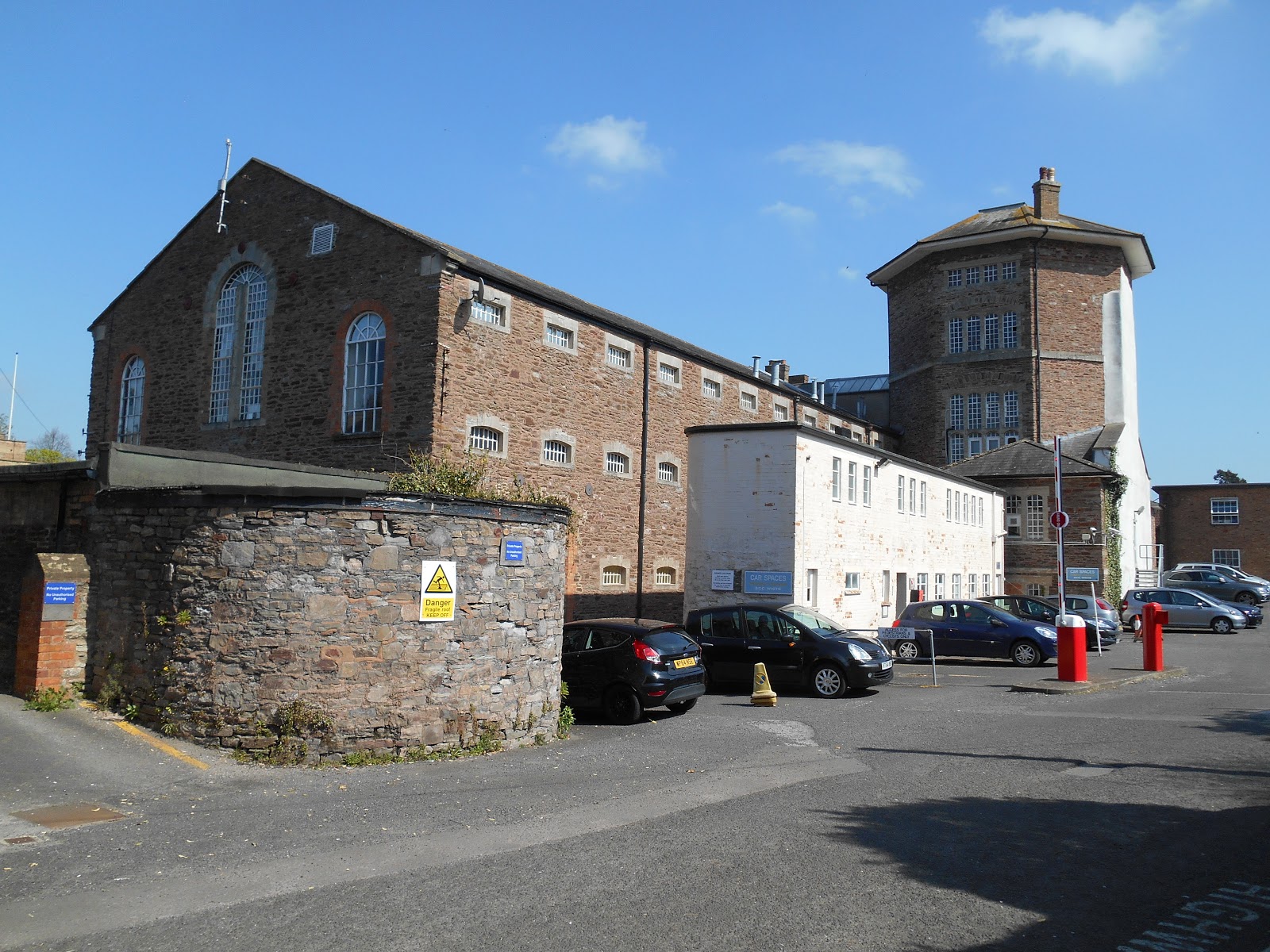
Wilton Gaol was built in a T-shape with a long three storey range and a higher polygonal tower.   The cross wing has been demolished but the long range and tower are still standing: they are located at the rear of Taunton Police Station on Upper High Street.

16 murderers were hanged at Wilton Gaol between 1844 and 1884. The executions were carried out on the prison roof in view of the public until 1867 and attracted large crowds.  In 1884 Wilton Gaol closed and Shepton Mallet Prison became the County Gaol.  Taunton Gaol was used as a military prison until 1889.  By 1910 the buildings were being used by the Territorial Army.  The current police station was built in 1943.

Wilton Gaol, Taunton
 
Wilton Gaol - presumably this is where another wing was once attached
 
Polygonal Tower of Wilton Gaol

Tuesday, 2 August 2016

Wheal Eliza and the Murder of Anna Maria Burgess

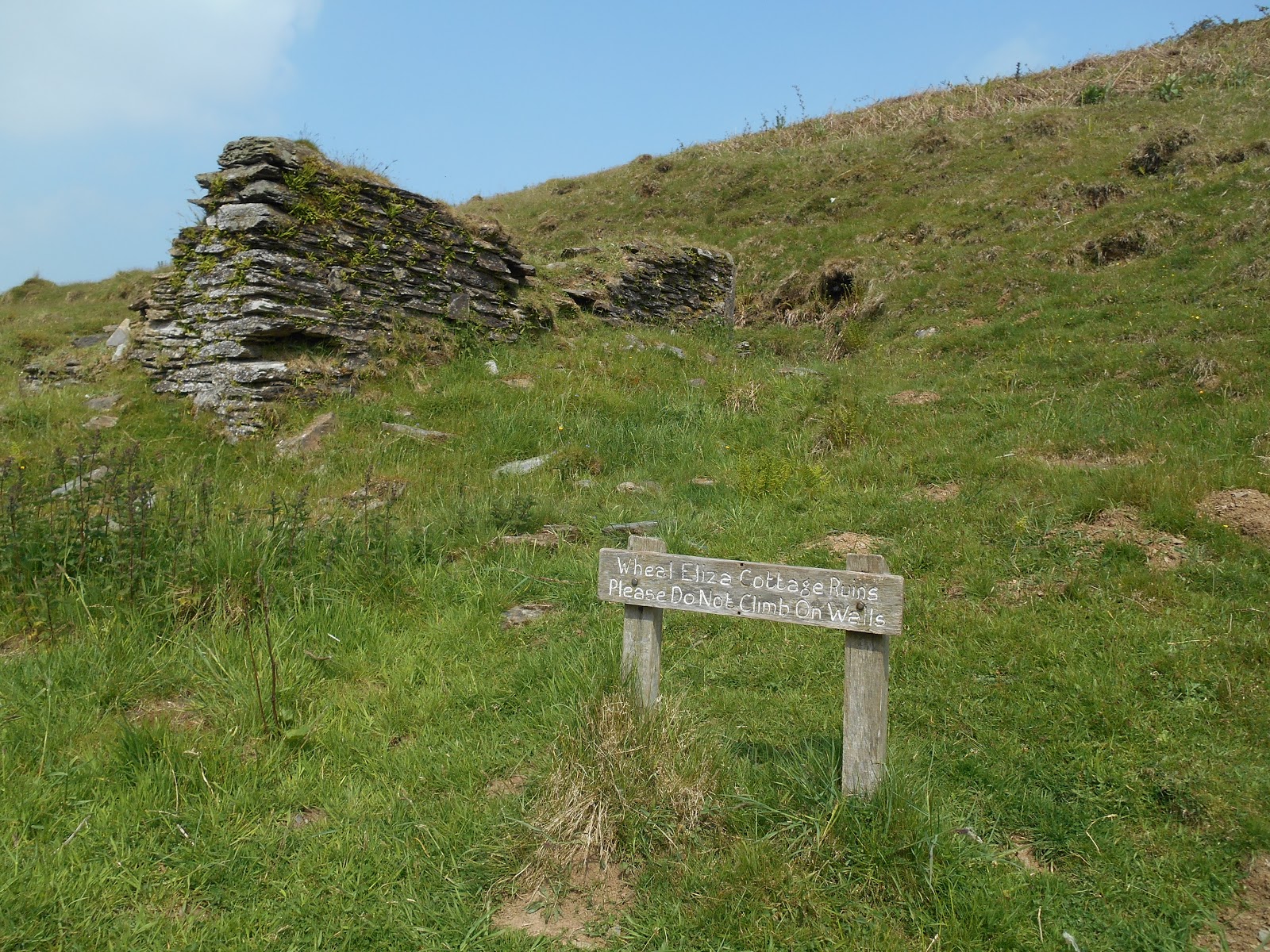
Wheal Eliza was a copper mine on the banks of the River Barle about a mile downstream from Simonsbath.  It opened in 1845 and was initially called Wheal Maria.  It had two leats and a large water wheel by 1846.  The entrance was a stone lined adit, which led to a 300 foot shaft.  By 1851 9 miners were employed at the site.  6 of them lived in a cottage on the site.  Little copper was produced and the mine closed in around 1857.  The remains of the workers' cottage, one of the leats, the space where the water wheel was once located and the mine shaft can still be seen. 

In the 1850s William Burgess lived with his wife and three children in a cottage in White Water Combe just over half a mile to the east of Wheal Eliza.  Then in 1857 Mrs Burgess died.  The two oldest children went into service at local farms but the Burgess's youngest child Anna Maria was only 6, so she went with her father into lodgings at Galleon House in Simonsbath.  However William Burgess resented having to pay a local woman 2s 6d to look after Anna.  He would rather have spent the money on alcohol.  William killed Anna in July 1858 to save the money and told everyone she had gone to live with relatives in Porlock.  

However the local vicar William Thornton and others didn't believe him and made checks in Porlock.  Reports of a blue light seen above Wheal Eliza led William Thornton to suspect that was where Anna's body had been dumped.  The mine was pumped out and after a few weeks Anna's body was found.  William Burgess had fled to South Wales but was captured there and brought back to Exmoor.    He admitted the murder of his daughter and was convicted and sentenced on 20th December 1858.  He was hanged on 7th January 1859.  Anna was buried in an unmarked grave in St Luke's Churchyard in Simonsbath.  The Exmoor Society later erected a headstone but as the location of the actual grave is unknown, they chose a suitable spot.


The water wheel was located in this space on the opposite side of the River Barle to the mine

Remains of the leat leading to the water wheel

Remains of Wheel Eliza and its spoil heaps from across the River Barle

Ruined Cottage at Wheal Eliza

Workers' Cottage ruins

Fenced off mine shaft.  The leat can be seen on the far bank

The Burgess's cottage in White Water Combe was located around here.  There are a few heaps of stones but no sign of a cottage.

Approximate location of the Burgess's cottage in White Water Combe

Anna Maria Burgess's headstone in St Luke's Churchyard, Simonsbath
The inscription reads "Anna Maria Burgess. Died in tragic circumstances, July 1858.  Aged 6 years." 

Further reading: The Murder of Anna Maria: The True story of William Burgess and the Wheal Eliza Mine by Gail Crane, Aller Books, 2023

Wednesday, 1 June 2016

Shot at Dawn - Somerset Light Infantry

In 2006 the 306 British and Commonwealth soldiers who were executed mainly for desertion during the First World War were finally pardoned by the British government.  The men who were executed for murder were not pardoned.

In all 3,080 men were sentenced to death under the British Army Act between 4th August 1914 and 31st March 1920.  The rationale behind the execution was that it would deter other soldiers from deserting, mutiny, disobedience etc.  The first execution by firing squad to be carried out by the British Army in the First World War was on 8th September 1914. 90% of the death sentences were not carried out but 346 men were executed by firing squads. 

Before their trials soldiers were offered the assistance of an officer to act as their defending counsel.  Not all soldiers accepted the help offered and those that did were assigned officers who were rarely legally qualified or skilled in advocacy work. There were plenty of qualified solicitors and articled clerks in the army but they were rarely called upon to defend the accused soldiers.  In many cases the soldiers were clearly suffering from mental collapse or shell shock.  Today we would call it post-traumatic stress disorder. However there was an absence of informed medical opinions at the courts martial.  Therefore the soldiers cannot be considered to have had fair trials.

The reasons for the death penalty were as follows:

268 for desertion
18 for cowardice
7 for quitting their post
5 for striking a superior officer
5 for disobedience
4 for mutiny
2 for sleeping at their post
2 for casting away arms 
At least 37 for murder

Military capital punishment was abolished in 1930 for all offences except mutiny and treachery.

There is a poignant memorial to the soldiers at the National Memorial Arboretum near Alrewas in Staffordshire.  There is a post with a name label for each of the 306 executed soldiers arranged in a semi-circle behind the statue of a blindfolded young soldier. The semi-circle is in the style of a Greek theatre and symbolises "tragedy".

The 10ft-high figure is modelled on Private Herbert Burden, of the Northumberland Fusiliers. He lied about his age in order to be allowed to join up and was executed for desertion, aged 17 on 21st July 1915.  The memorial was created by Birmingham artist Andy de Comyn and it was unveiled in 2001.

Two members of the Somerset Light Infantry were executed, although neither of them actually came from Somerset:

Private Louis R Phillips
Louis Phillips lived in London but chose to serve with the Somerset Light Infantry. He was sent to France in April 1915 and served near Ypres, where there was heavy fighting.  He went missing for 4 days in July the same year. He was sentenced to death by a court martial and was executed in Ypres at 4.20am on 19th August 1915

Private Alfred Leonard Jeffries
Alfred Jeffries, who lived in the St Philip's area of Bristol, enlisted on the outbreak of war in 1914.  He was sent to France in May 1915 but was injured shortly afterwards. He was hospitalised in November 1915 suffering from a nervous breakdown. He returned to his regiment in early 1916 but he deserted in August 1916 because he was unable to stand the strain. He was arrested in Le Havre while trying to catch a ferry back to England. His brother Arthur, who was serving in the same battalion, was killed in action in September 1916.  Alfred was executed near the village of Penin at 6.10am on 1st November 1916.

Further Reading:

Shot at Dawn: Executions in World War One by authority of the British Army Act: Julian Putkowski and Julian Sykes.  Wharncliffe Publishing, 1989


 Shot At Dawn Memorial


 Louis Phillips's post
 Alfred L Jeffries's Post

Tuesday, 1 December 2015

Village Animal Pounds

Animal pounds were secure enclosed areas where trespassing animals (usually cattle, horses, pigs or sheep) were impounded until their owners paid a fine or they were released as a result of a court judgment.    Most medieval villages had an animal pound. The man in charge of impounding the stray animals was paid by the Lord of the Manor and was known as a pinder or pounder.  Fines and disputes are documented in manorial court records.

In the medieval period the field system in use was an open one, so it would have been easy for animals to stray onto a neighbour's land.  Animals grazing unlawfully on common land could also be impounded.  If a person owed a debt to another person, their animals might also be impounded until the debt was paid. 

The word pound comes from the Old English word pund, meaning a pen or enclosure.  In parts of Scotland e.g. Shetland the word pund is still used.   The term pinfold is used in some parts of Britain instead of pound e.g. in the north and east of England.

Pounds were often sited near village greens, churches or crossroads to enable local residents to check if any of the impounded animals belonged to them. They were used up until farmland was enclosed in the 17th to 19th centuries.   

In some places the pounds were probably enclosed by hedges or wooden hurdles/rails and these have long since disappeared.  Some places had brick or stone animal pounds and a few of these have survived.  However some of the surviving pounds have at a later date been incorporated into neighbouring properties and so are no longer recognisable as animal pounds.

Not many examples of animal pounds survive in Somerset. The ones I am aware of are at Holford (dog pound), Crowcombe, Oakhill, Brompton Regis, Chaffcombe and Stogursey.  There is also one in North Somerset at Hutton.

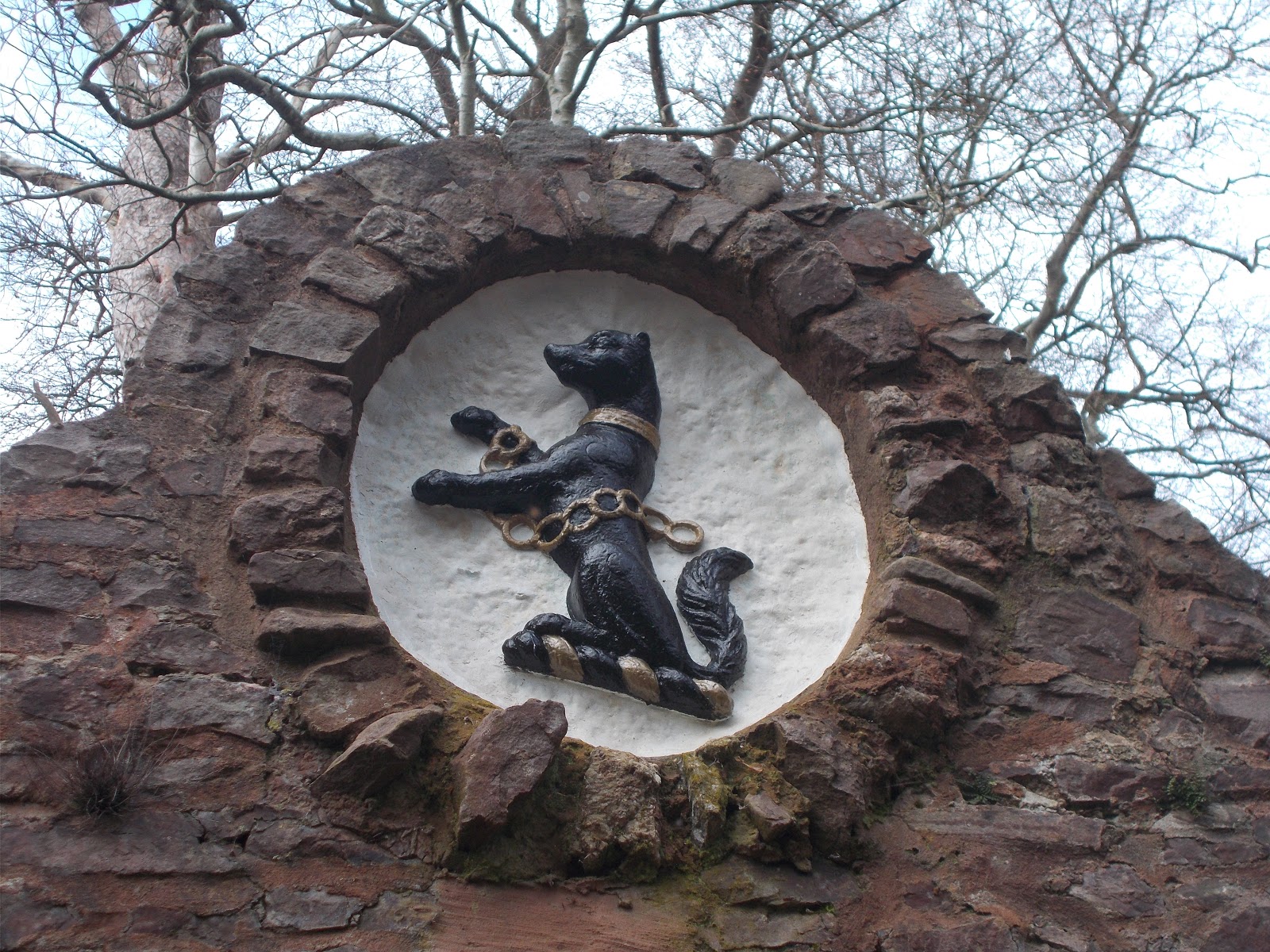
The (possibly apocryphal) story behind the Holford Dog Pound is that at some unspecfiied time in the past the pack of hounds used in hunts were kept on the Alfoxton estate.  Meat which would be used to feed them, was stored hung high in trees out of their reach until it was needed.  However the meat attracted local stray dogs.  One night the hounds were disturbed by the local strays and the huntsman who normally looked after the dogs went out to see what the matter was.  However he did not put on the clothes he normally wore to do this.  This meant that the hounds did not recognise him and they attacked and killed him.  The dog pound was built, so that local stray dogs could be rounded up and incarcerated, so that they wouldn't disturb the hounds.  The plaque below the dog crest reads: "This ancient dog pound was given to the village of Holford in 1982 by the family of the late John Lancelot Brereton, descendants of the St Albyns, owners of Alfoxton since the 15th century, whose crest appears above."

Crowcombe has had an animal pound since at least 1642 when it was first mentioned in official records.  It was used up until the 1920s or 1930s.  It was restored in 2004 by Crowcombe Women's Institute.  The large fern growing inside it is at least 60 years old.

 Dog pound at Holford

Recently repainted Brereton family crest on the Holford Dog Pound - December 2019

Entrance to the animal pound at Crowcombe

 Captive fern in Crowcombe Pound!

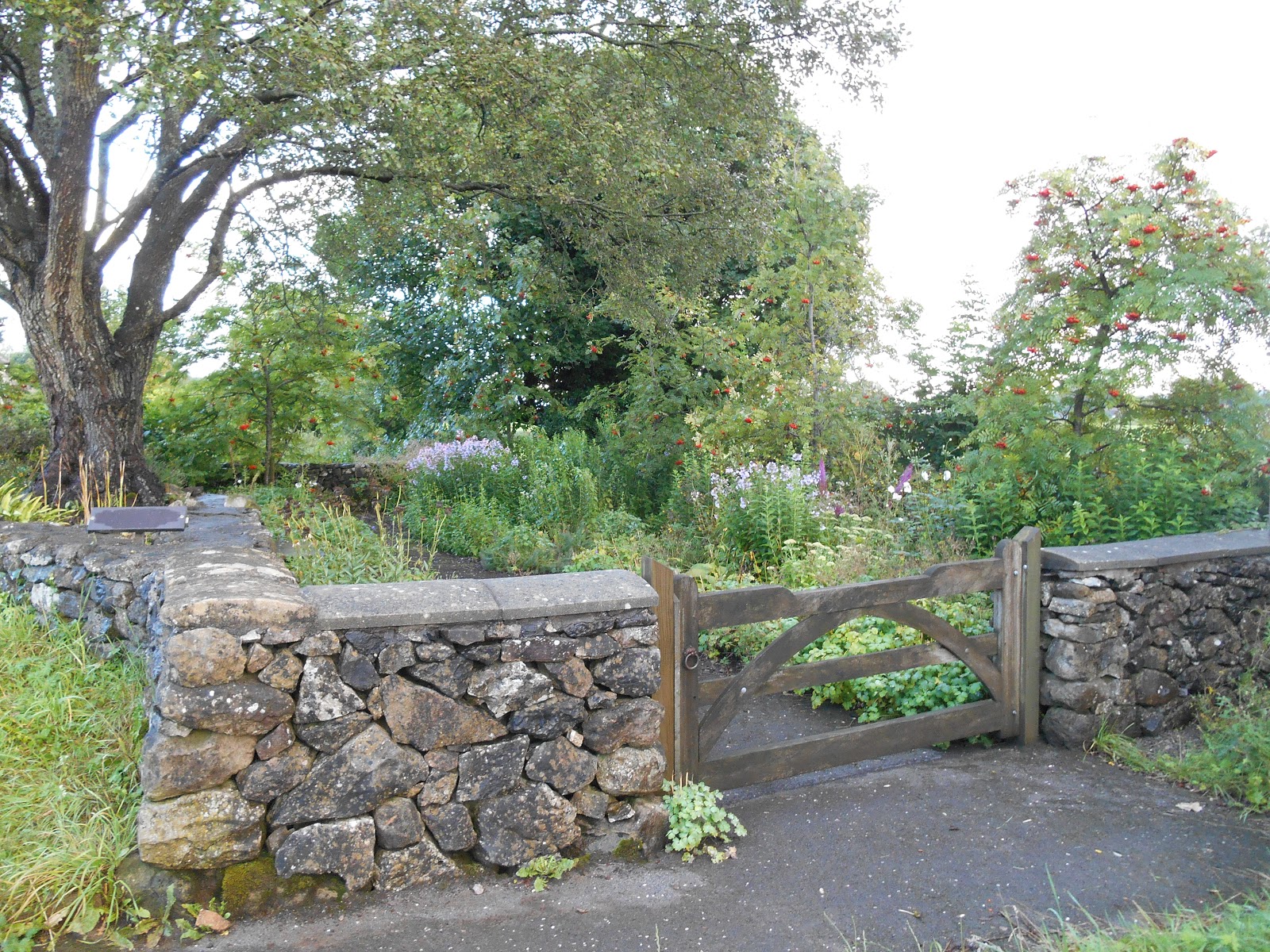
 Oakhill - the pound has been converted into a lovely garden

 Oakhill Animal Pound

 Plaque on Oakhill Pound


 I think this is the remains of the animal pound at Brompton Regis.  It is located behind the village lock up 
 Brompton Regis - lock ups for humans and animals

Entrance to Stogursey's animal pound
 - a dog waits patiently to be claimed by his owner. 

 Stogursey's Animal Pound
The pound is located on the corner of Castle Street and St Andrew's Road. There is a small garden inside it but it was locked on the day I visited in December 2015.
 
Chaffcombe
The pound here has been turned into a community garden with a strange colourful sculpture in the middle of it, a bench and some apple trees

Pound Cottage, Chaffcombe
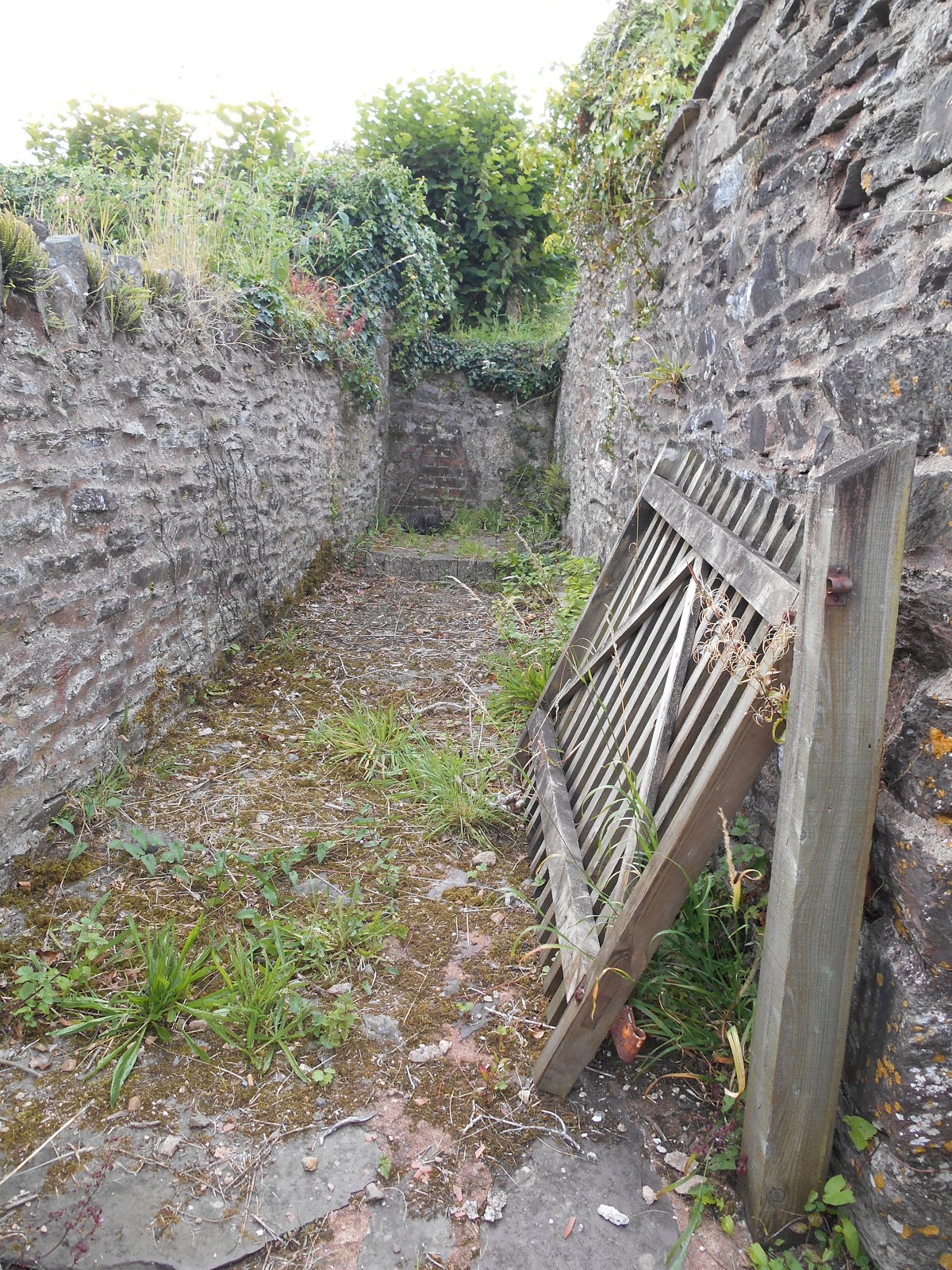
 The overgrown wall in the foreground was part of the village's animal pound.

Pound in Great Elm Road, Mells

Hutton Parish Pound

Hutton's Parish Pound

Stone and plaque (placed there in 2000) at the site of Lympsham's village pound and Manor Farm.

West Bagborough's pound
This was restored in 2000

Burrington
This pound on Fry's Lane dates from 1838-1888