On my travels around Somerset I have come across many artistic representations of birds: made from wire, topiary, brass, iron, stone, straw, plastic, wood and glass. As I come across others, I will add them to this blogpost.
Is this a crane? Pitney
Is this a peacock? Stembridge
Pheasant, Croydon Hill near Dunster
Woodpecker, Broadwood Plantation near Dunster
Kingfisher, Lopen Church
A spoonbill with an eel in its beak
Benchend in Stogursey Church
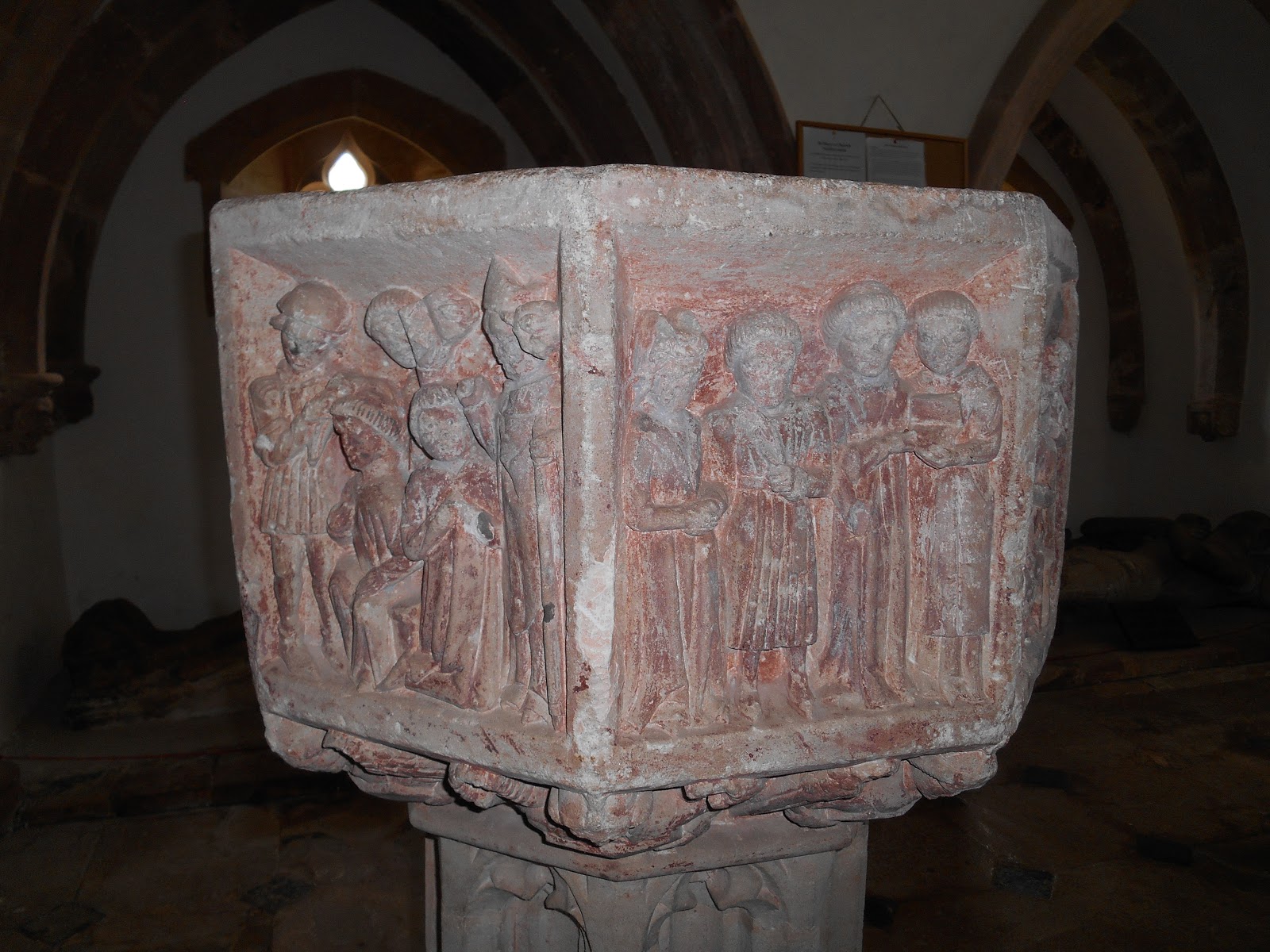
Rodney Stoke Church
The Blackbird Pub, Bradford-on-Tone
This sign used to be a 3 dimensional model but it is currently just a photo of that model. The original sign was made c1937 by West Somerset artist Rachel Reckitt (1908-1995). I don't know what has happened to the original sign, which is apparently Grade 2 listed.
Swan, Bishop's Palace, Wells
Swan, Wells Police Station
A tribute to Hot Fuzz, which was filmed in Wells
Eagle Lectern in St John the Baptist Church, Glastonbury
Lecterns in Anglican churches and cathedrals are often in the shape of eagles on whose outstretched wings a copy of the Bible rests. This is because an eagle is the symbol of St John the Apostle and writer of one of the four Gospels. Eagles are strong birds, who can soar high and carry God's word throughout the whole church and into the world beyond. The sphere the eagle is standing on represents the earth.
Eagle lectern, All Saints Church, Monksilver
Wooden eagle lectern at St Barnabas Church, Queen Camel
Eagle lectern, St Andrew's Church, Chew Stoke I'm not sure why the eagle is clutching a very large crystal in its claws!
Starling sculpture at Westhay Nature Reserve
Starlings
Close up the starlings are very simple but from a distance they are very eye-catching
Stork bench end, St Michael's Church, North Cadbury
Swan, Horse Pond, Castle Cary
This sculpture is titled The Return and was made by Perry Jansen Chapman.
Pelican bench end
St Michael's Church, North Cadbury
Pelican? feeding its young
Bench end in St George's Church, Dunster
Two birds on a bench end in St George's Church, Dunster
Swan Fountain, Dunster Castle Garden
Slightly spooky owl chainsaw sculpture, Webbers Post
Iron bird sculpture on the Bridgwater and Taunton Canal near Huntworth
Ducks Puddle - house sign at East Quantoxhead
Back of the Ducks Puddle house sign, East Quantoxhead
Marsh Harrier? Willow Sculpture at Steart Marshes
Peacock close to Taunton Castle
Bird on a bench end, All Saints' Church, Alford
Bench end, St Mary's Church, East Quantoxhead
A pair of birds on a bench end in St Mary's Church, East Quantoxhead
Wire peacock in Old Town Quarry, Weston-super-Mare
Robin, Old Town Quarry, Weston-super-Mare
Blackbird at Old Town Quarry, Weston-super-Mare
Iron pheasant on a garden fence in Ashill
Buzzard on the West Bagborough village sign
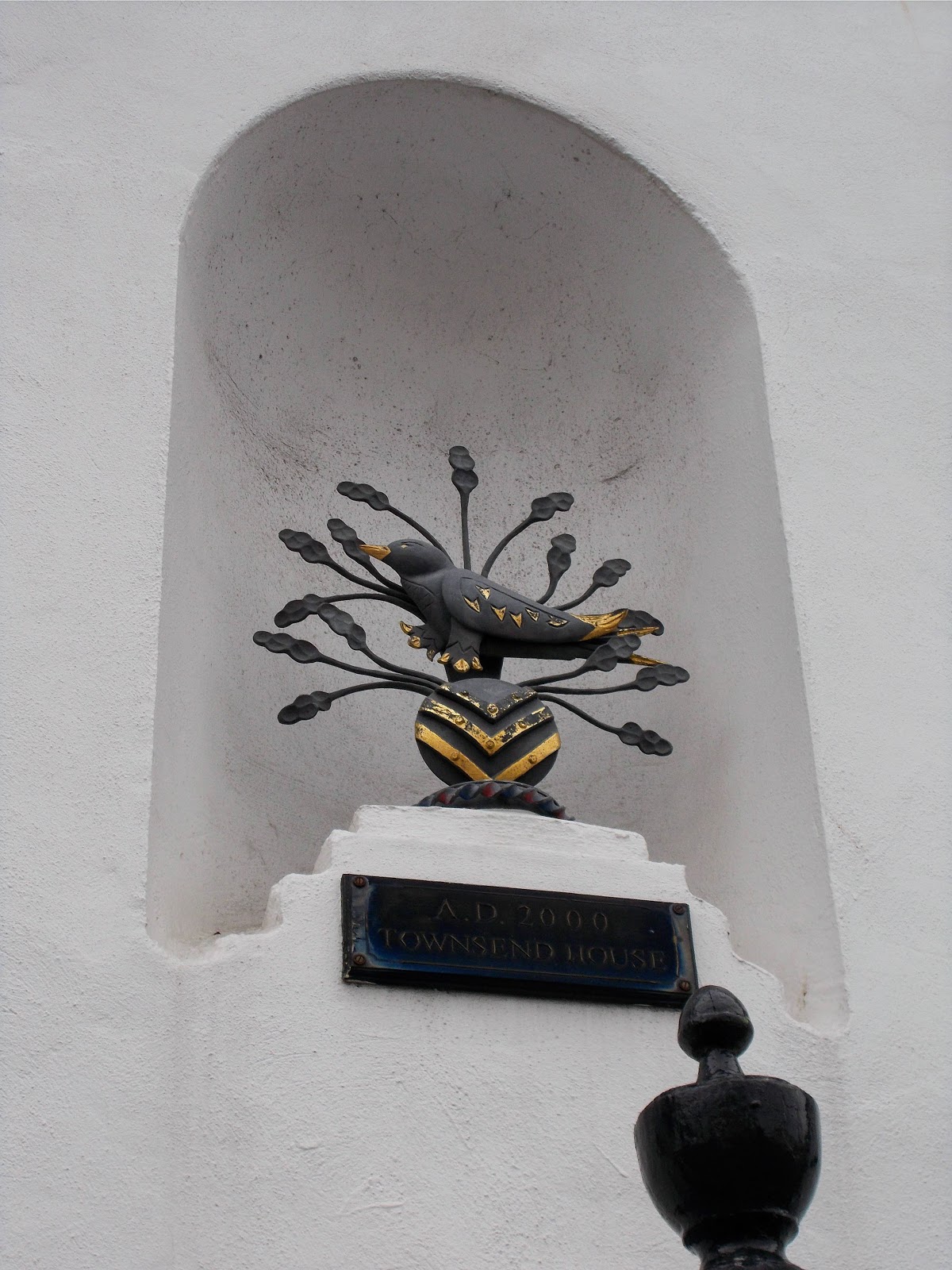
Martlet sculpture in an alcove above the front door of Townsend House, Townsend Road, Minehead
Kingfisher, owl, buzzard, robin and woodpecker sculptures in the playground of Kingston St Mary Church of England Primary School
The classes in the school are called Owl, Buzzard, Robin and Woodpecker. The After School Club is called Kingfishers.
Topiary peacock in the garden at Lytes Cary
(National Trust)
Peacock sculpture in the Cloisters of Wells Cathedral
This is a memorial to those whose ashes are buried in the Palm Churchyard. It was made from mild steel by Charles Hopkins of Frome
Flight of Six Acres Phoenix
This colourful sculpture, which was made by artists Becky Shaw and Tad & Brenda Mendziej, was donated by Taunton and District Mencap Society and the Friends of Six Acres. It is located in the sensory garden in Vivary Park, Taunton and was unveiled in October 2019.
Flight of Six Acres Phoenix from the back
Wire goose sculpture in the garden of Coleridge Cottage at Nether Stowey
Wire goose sculpture in the garden of Coleridge Cottage at Nether Stowey
Painting of swallows on a paving slab by the side of the towpath of the Bridgwater and Taunton Canal at Firepool, Taunton
Chough and anchor on the sign of the Hood Arms at Kilve
This was the crest of the Acland-Hood family of St Audries.
Straw birds on a thatched cottage in Dunster
These blackbirds are part of the Goddess Hall mural, Glastonbury
Heron on the Goddess Hall Mural, Glastonbury
Magpie's Nest shop, Benedict Street, Glastonbury
Magpie on the shutters of The Magpie's Nest shop, Benedict Street, Glastonbury
Eye of an owl
This is part of the Wildwood mural in an alleyway off Glastonbury High Street
Barn Owl reflected in the eye of another owl
This is part of the Wildwood mural located in an alleyway just off Glastonbury High Street
Plaque on the former Swan Inn, 2 Silver Street, Wiveliscombe
Stained glass pied wagtail in Winsford Church
Stained glass robin in Winsford Church
Heron in Dulverton
Owl at Malmsmead Tea Room
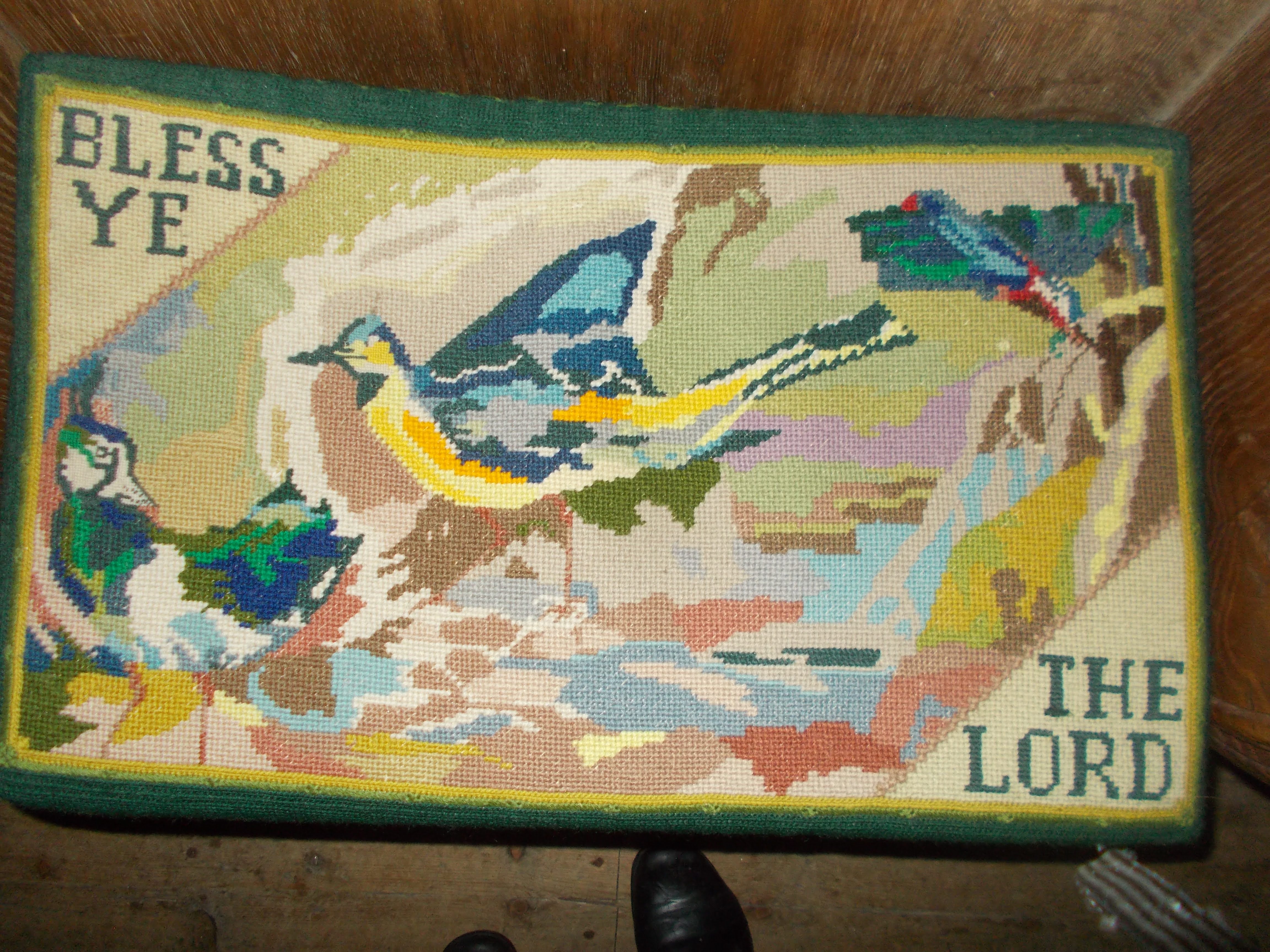
Robin and wren on a kneeler in North Curry Church
Heron on a kneeler in North Curry Church
Cockerel weathervane in Lydeard St Lawrence Church
It has recently been restored and is awaiting re-erection on the top of the church tower.
Memorial to Derek the Goose in Watchet
She arrived in Watchet Harbour in a storm in 2010 and liked it so much that she stayed until her death in October 2021
Swallows painted on the back of a gravestone in Chipstable Churchyard
Dove of peace above the font in Exford Church
Birds on a kneeler in Exford Church
Ruffles the Parrot in a cage, East Quay Watchet
This was one of the exhibits in the 2023 Somerset Trash Trail and was painted by Kelly Durdan
Fernando, Timpsons, Taunton
This was painted by Renee Durdan for the 2023 Somerset Trash Trail.
Quakers the Duck
He was painted by Phil Dudman for the 2023 Somerset Trash Trail
Large owl sculpture at Torre Cider Farm
Herons at Swell Wood
This cob wall sculpture was created by pupils from Curry Mallet Primary School in October 2016. It is on display outside the bird hide at RSPB Swell Wood near Fivehead. Swell Wood has a large heronry.
Partridge, St Martin's Church, Worle
Cockerel by Irony, Sultan's Kebab Shop, Weston-super-Mare
Flamingo by Sian Storey, Oxford Corner Cafe, Weston-super-Mare
Four assorted birds at the entrance to some flats close to the Priorswood Shopping Centre, Taunton
Swans and a barn owl with Glastonbury Tor in the distance
This mural at the bus stop in Higher Road, Woolavington was designed and painted by Karon Woodward in 2020.
Metal swans near Bawdrip on the cycle path on the route of the Bridgwater Branch of the Somerset & Dorset Joint Railway
Jane Maria Spencer's (1872-1946) memorial window with painted birds in St Peter's Church, Williton
Curlew on Jane Maria Spencer's (1872-1946) memorial window in St Peter's Church, Williton
Great tit and robin on memorial window in St Peter's Church, Williton
Bench end, Church of St James the Less, Halse
This bench end was carved by villager Herbert Ernest Cross c1900.
Bench end, Church of St James the Less, Halse
This bench end was carved c1900 by villager Richard Sealy. It depicts the pelican of piety feeding her young with her own blood. Two owls have been carved in the top corners and two rabbits at the bottom.
Bird with blackberries, Church of St John the Baptist, Axbridge
Kingfisher mural, Midsomer Norton
This was painted by Andy Council in 2025.
Kingfisher mural on a bus shelter in Stoke St Gregory
Geese mural in a bus shelter in Congresbury
Buzzard, tawny owl and pheasant on a mural in the bus shelter in Lamyatt
Gulls eating chips
This was painted on the side of Howards Fish and Chips shop, St James Street, Taunton by Sam of Aerosol Art in October 2025.
Three swans a-swimming, St James Street, Taunton
Long-eared owl sculpture, Jubilee Garden,
Norton-sub-Hamdon
These were carved in situ from a dead tree by a chainsaw artist called Dave in 2025.
Robin glass collage, Jubilee Garden,
Norton-sub-Hamdon
The Bird in Hand pub in North Curry
This was painted by Aerosol Art in July 2025.
Three owls on a bench, Victoria Park, Frome
This animal themed bench, which features three owls, was carved from a 140 year old Norway maple, which had to be felled in 2025 because it was diseased. The bench was carved by Graham Derham.
Owl in the Witches' House at Hestercombe