Showing posts with label Rivers. Show all posts

Wednesday, 1 July 2026

Public Water Supplies in North Somerset

Safe clean drinking water is currently supplied to the whole of North Somerset, Bristol, South Gloucestershire and parts of Somerset, Bath & North East Somerset and Gloucestershire by Bristol Water.

A group of prominent local citizens in Bristol formed a group in 1845, with the aim of supplying clean drinking water to the City of Bristol.  The city had suffered a cholera epidemic in 1832 and the disease was spread via contaminated water supplies.  The Bristol Waterworks Company was established on 16th July 1846 by an Act of Parliament.  The following year the first water flowed from Chewton Mendip via Barrow into Bristol.  Bristol was hit by another cholera epidemic in 1849.  The first of three reservoirs at Barrow was constructed in 1850.  Sand filters were later added to treat the water.

In 1888 parliamentary permission was given for Blagdon Reservoir, which captures water draining off the Mendips via the River Yeo.  Work on the construction of the dam began in 1898 and the reservoir was filled to its top level for the first time in 1903.  The associated pumping station was completed in 1905.

Pumping Station, Blagdon Reservoir

Blagdon Lake

In 1888 Bristol Water were also given permission to take water from the springs at Langford and Rickford.  In around 1895 they built a ornate gauge house in the style of a Swiss chalet at Rickford to regulate the flow of water into the village brook and into an underground pipe, which flows into Blagdon Lake.

Gauge House at Rickford

Springs at Cheddar were first tapped in 1922 and Cheddar Reservoir was built there in the 1930s.  Chlorination of the water began in 1935.  However until the 1940s or later many villages still relied on wells and springs for their water supply and communal pumps were a common sight.  Although no longer in use, a few of these have been preserved.

The construction of Chew Valley Lake was delayed by the outbreak of the Second World War in 1939.  Work on it eventually began in 1950 and it was formally opened by the Queen in 1956.  

Bristol Water helped with the construction of the Clywedog Reservoir in Mid Wales in 1967.  This reservoir regulates the flow of the River Severn.  Over half the water supplied today by Bristol Water is extracted from the River Severn, via the Gloucester and Sharpness Canal. Bristol Water’s treatment works at Purton and Littleton in Gloucestershire purify the water extracted from the River Severn.  Other sources of water currently used by Bristol Water in North Somerset include a well at Clevedon, a spring at Banwell and a borehole at Winscombe.

Parish Pumps, Coronation Road, Bleadon

In Bleadon there are two cast iron parish pumps outside Well Cottage in Coronation Road.  They were the main communal source of spring water for the villagers until mains water arrived in Bleadon in the 1940s.  The higher pump was used to fill containers on carts while the lower one was used by pedestrians.  

Old pump and trough at Wrington

Old pump or standpipe in Rickford

Village pump in Christon

Village pump in Chelwood

Pump cabinet, Compton Martin 

The Metropolitan Free Drinking Fountain Association was set up in London in 1859 by Samuel Gurney (an MP and philanthropist) and Edward Thomas Wakefield (a barrister) to provide people with free drinking water. In 1867 the organisation changed its name to the Metropolitan Drinking Fountain and Cattle Trough Association to also support animal welfare.

Old Cattle Trough at the junction of West Town Road and Chelvey Road, Backwell

Public drinking fountains were also sometimes provided by wealthy philanthropists or in memory of someone who had died.

Cattle trough with small drinking fountain on the left hand side, Marine Hill, Clevedon

Drinking fountain, Marine Hill, Clevedon

This cattle trough & drinking fountain on Marine Hill was erected in memory of Edward Long Davis, who died in 1899. There is a quotation from the Bible carved into the side above the drinking fountain, which says “Many waters cannot quench love” (Song of Solomon).  Users of the drinking fountain were instructed to “Keep the pavement dry”.

Sunday, 1 March 2026

RIP Bobby Booroff

On the wall of the churchyard in Barton St David there is a small plaque, which has the following inscription:

Allen Booroff

"Bobby"

Tragically drowned in the River Brue

23rd July 1939, aged 4

Buried in this churchyard

Allen George Rex "Bobby" Booroff was the only child of Mr Robert Booroff of Willesdon, London.   He was on holiday in Somerset with Mrs T. Coleman of Willesdon, who had fostered him nearly 3 years earlier.   They were staying with Mrs Coleman's parents, Mr & Mrs F. Cook, at Mill View, Barton St David.  At about 6.15pm on Sunday 23rd July, Bobby went for a walk with his 10 year old step-brother John Coleman, 14 year old Mary Louise Porter and 5 year old Violet Cook.  Bobby slipped down the bank, fell into the River Brue at Tootle Bridge and drowned. His body was recovered on the following day, from the river bed about 100 yards from Tootle Bridge.

Accounts of the inquest into Bobby Booroff's death, which was held in the Court House at Somerton, were recorded in the Taunton Courier & Western Advertiser and in the Bristol Evening Post of 29th July 1939.  Colston Victor Williams, aged 51 of Hotwells in Bristol, was fishing on the bank of the River Brue when he heard a child running nearby.  Then he realised that the young boy had fallen into the river.  The other children asked him to go into the river to rescue Bobby.  He put his fishing rod into the water and shouted to the boy to catch hold of it, but Bobby didn't manage to do this.  Mr Williams couldn't swim and hadn't fully recovered his grip after losing a finger, so he didn't dare venture further into the river.  He said he wasn't familiar with the River Brue at Tootle Bridge and that it was muddy and fast flowing at the time.  He was criticised by the coroner, Mr C. Leslie Rutter, who said that the water in the river was no more than waist deep for an adult.  He also said that Mr Williams could easily have grabbed the boy, walked with him down to the bridge and climbed out of the river there.  The verdict of the inquest was accidental death.  

NB: Bobby's first name at birth was registered as Alan, but his death is registered as Allan.  The newspaper reports of the inquest and the memorial in the churchyard at Barton St David say he was called Allen. 

Memorial plaque on the wall of the churchyard in Barton St David

Tootle Bridge

The River Brue from Tootle Bridge

Thursday, 15 February 2024

The Great Flood of 1952 in Dulverton

The first 2 weeks of August 1952 were very wet in the south west of England. Then on afternoon and evening of 15th August 9 inches of rain fell over Exmoor and caused devastating floods along the courses of the Rivers East & West Lyn, Exe and Barle and their tributaries.  34 people died (28 of them in Lynmouth and Barbrook), 100 buildings  and many bridges (including Tarr Steps and Marsh Bridge) were damaged or destroyed.  In Bridge Street, Dulverton there is a plaque showing the height that the River Barle reached in the town. It was donated by two soldiers who assisted in the clean up operation.

1952 Flood plaque in Dulverton

1952 Flood plaque

Marsh Bridge - rebuilt after the 1952 floods

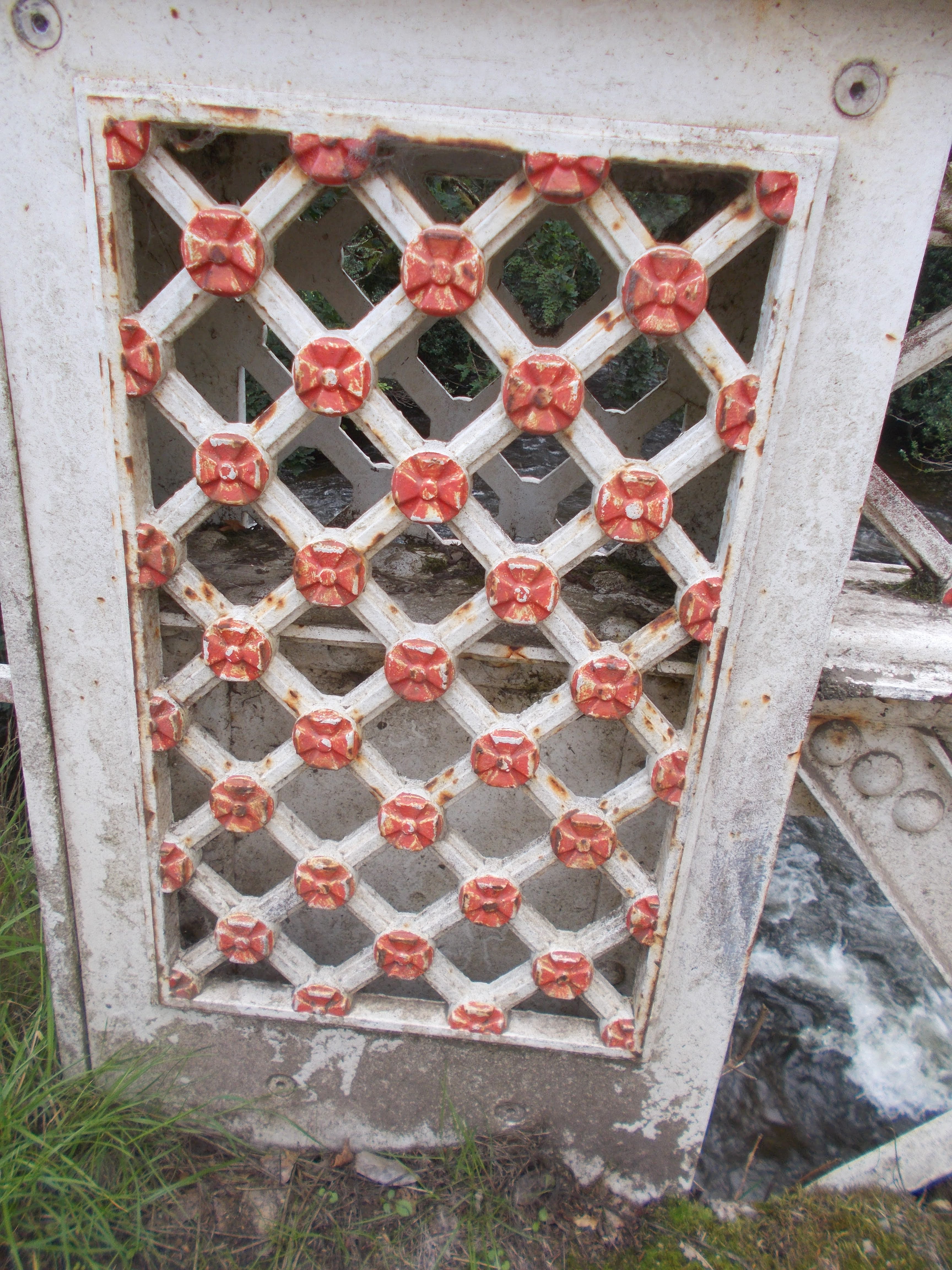
Decoration on Marsh Bridge

"The hedge that moved"
I was told by someone who was living at Higher Marsh in August 1952, that a section of bank and three beech trees close to the River Barle upstream of Marsh Bridge was moved wholesale by the force of the water about 50 metres downstream.  It remains in the middle of a field and the trees have carried on growing.  There is no public access to the field, so this was the best photo I could get of the trees.  They are located slightly to the left of the centre of the photo.