Friday, 1 September 2023

Packhorse Bridges

Packhorse bridges were built so that horses and ponies carrying loads could cross rivers and streams.  Most were built before c1800 and are just wide enough for one laden horse to pass over them.  Many of them were originally cobbled and they often have low parapets, so that they didn't interfere with the panniers carried by the horses.  Somerset has about 30 surviving examples, many of them on Exmoor because the bulk of goods were carried by packhorses in upland areas.

Gallox Bridge, Dunster - over the River Avill
This double-arched bridge possibly dates back to the late 15th century. It linked the market town of Dunster to the wool-producing pasture land to the south.  Pedestrians and packhorses used the bridge and carts crossed the River Avill using the ford adjacent to the bridge. The bridge takes its name from the gallows, which used to be located on nearby Gallox Hill.

Allerford - over the River Aller

Allerford's medieval packhorse bridge

Hacketty Bridge, Horner - over the Horner Water
This bridge possibly dates back to the late medieval period

Hacketty Way Bridge, Horner

West Luccombe - over the Horner Water
This bridge was built in the late medieval period

West Luccombe

Ramshorn Bridge, Taunton
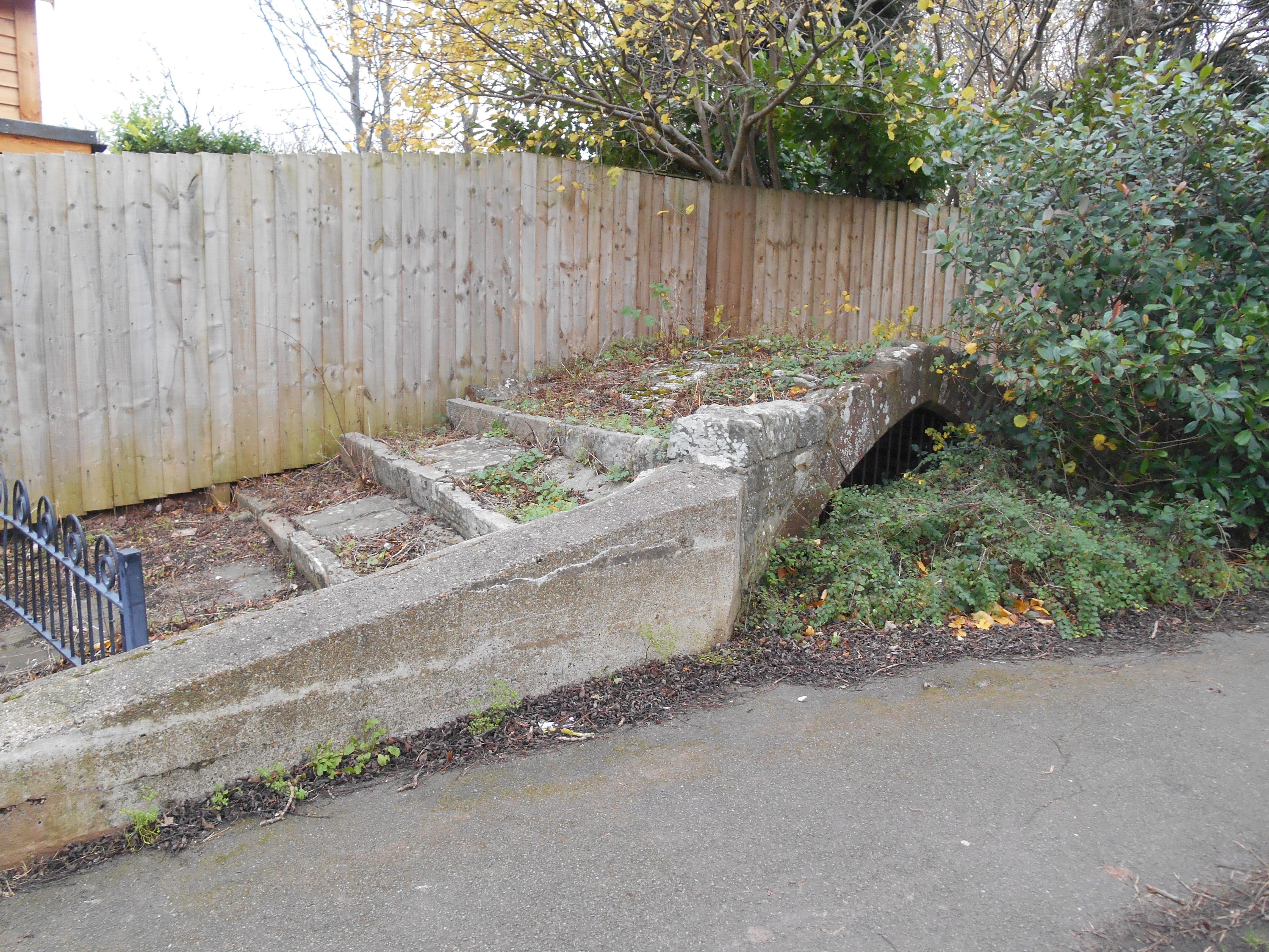
The Galmington Stream has been diverted and no longer flows under this bridge.

Bow Bridge, Bruton - over the River Brue

Bow Bridge, Bruton

Kentsford Farm, Watchet - over the Washford River

Robber's Bridge - over the Weir Water

Bury Bridge - over the River Haddeo

Bury Bridge

Bury Bridge and Ford
Medieval four-arched bridge

Malmsmead Packhorse Bridge and Ford over the Badgworthy Water
This bridge was built in the 17th century

Smithy Bridge, Winsford - over the Winn Brook
This single arch packhorse bridge dates back to the medieval period and was restored in 1952.

Packhorse bridge next to Vicarage Bridge, Winsford
This two-arched bridge is probably medieval in origin.  It was rebuilt in 1952 following flood damage.

Packhorse bridge next to Vicarage Bridge, Winsford

Edbrooke Packhorse Bridge over the River Exe near Winsford
This bridge is probably medieval in origin but was rebuilt in the 18th century.  The road to Winsford passed over the bridge until the new turnpike road was cut in 1824

Edbrooke Bridge

 Packhorse bridge at Marsh Bridge Cross
This packhorse bridge was built sometime before 1838.

Marshbridge Cross Packhorse Bridge

Cannington Packhorse Bridge over the Cannington Brook

Cannington Packhorse Bridge

Wellow Packhorse Bridge
This was built across the Wellow Brook in the late medieval period but has been restored and altered since then.

Bolter's Bridge

Bolter's Bridge

Bolter's Bridge, which spans the River Alham, is located half a mile south east of the hamlet of Hornblotton.  It is on the border between the parishes of Ditcheat and West Bradley.  It was reputedly built in the medieval period by the Abbots of Glastonbury to join two parts of the moor and to make a road from Castle Cary to Glastonbury.  It has 4 arches and no parapets.
Grid reference: ST 606 334.

Dowlish Wake
This packhorse bridge was built in the 17th or 18th century using the local Moolham stone from an earlier (14th or 15th century) bridge.  The arches on the right and left hand sides were inserted in 1997, as part of a flood relief scheme.

Chew Stoke
This two-arched bridge may date from the 17th or 18th century.

Monday, 14 August 2023

Beasley Weir Hydro, River Barle, Dulverton

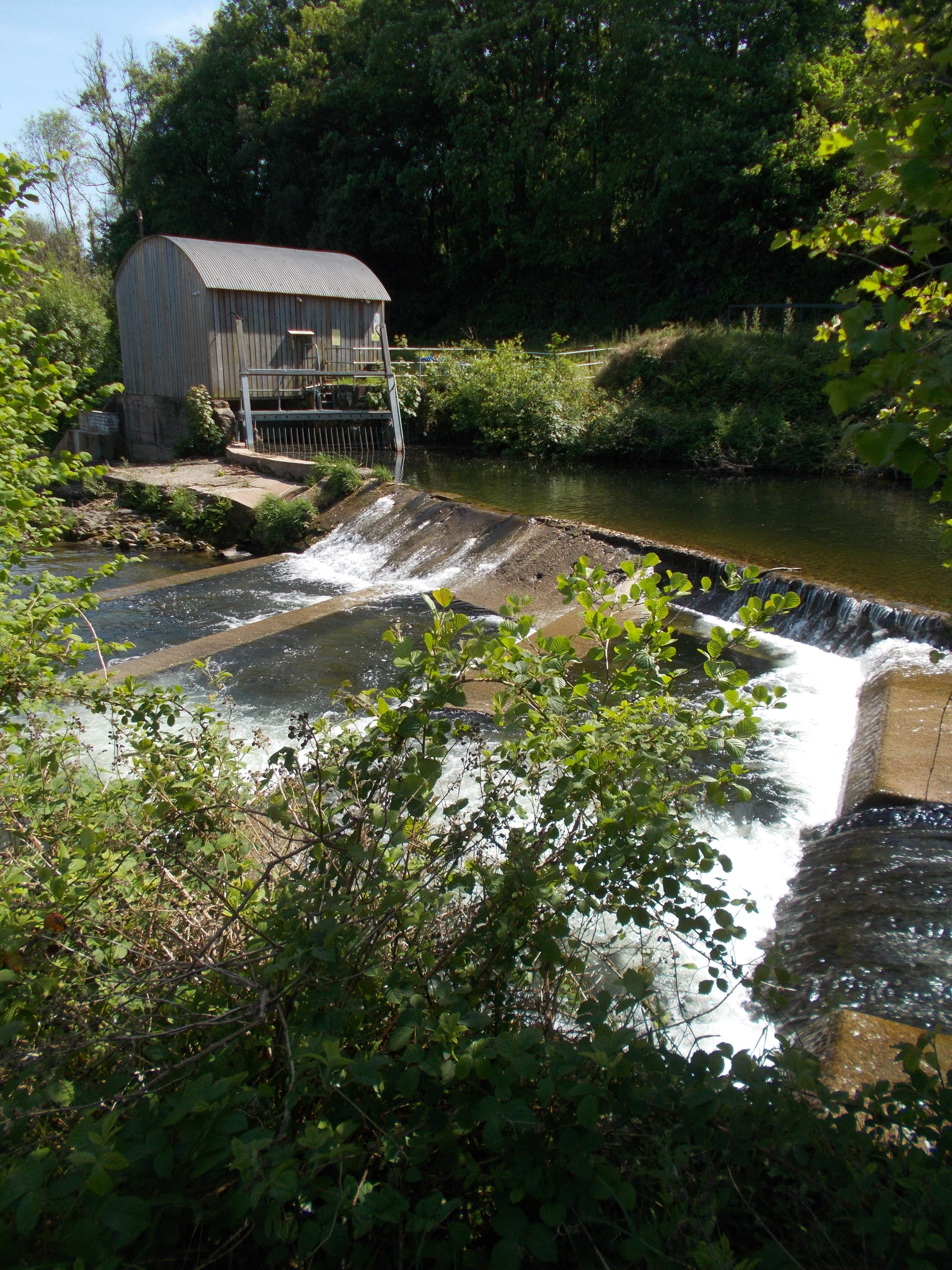
Beasley Hydroelectric generating plant and Weir were constructed on the River Barle half a mile downstream from Dulverton c1909-12 by the Dulverton Electric Lighting Company.  Its purpose was to supply electricity to Dulverton.  It used two Armfield River Turbines housed in a corrugated iron Dutch barn style building.  It was requisitioned by the government during the First World War.  In 1930 the Dulverton Electric Lighting Company merged with the Exe Valley Electric Company and the original turbines were replaced with a single vertical shafted Escher Wyss turbine.  This was used until 1938 when the National Grid reached Dulverton but it was retained as an emergency back up during the Second World War. It was decommissioned in the early 1950s and the Rivers Authority installed fish tanks on the site.  These were used until the 1980s.

The current 78Kw Archimedes screw turbine was installed in 2015 by a Stroud based company called Renewables First Ltd.  It was completed in November of the same year.  The Archimedes screw is located at the side of the river adjacent to a large pool above the weir. The timber turbine house is located above the Archimedes screw.  A new fish pass was constructed at the same time.  The new turbine generates around 320,00 kWh per year, which is enough to power over 100 homes.

Beasley Weir, fish pass and Turbine House

Beasley Weir and Archimedes screw turbine

Tuesday, 1 August 2023

Sir George Williams, founder of the YMCA

George Williams was born at Ashway Farm near Tarr Steps on 11th October 1821.  He was the youngest of the 7 sons of tenant farmer Amos Williams and his wife Ann Betsy.  He went to school at Miss Timlett's dame-school in Dulverton and then later at Gloyn's private grammar school in Tiverton.  He left school at the age of 13 to work on the family farm.  In 1836 he was apprenticed to draper Henry William Holmes in Bridgwater. 

George became a Christian in 1837 and in 1839 he became teetotal.  In 1842 he moved to London to work for a large retail drapers called Hitchcock, Rogers & Co at 72 St Paul's Churchyard.  He attended the old King's Weigh House Chapel in the City of London. He worked for their domestic mission and Sunday school and also for Surrey Chapel's ragged school and Craven Chapel's open air preaching and tract distribution. Many of his colleagues at Hitchcock's were also Christians.

On 6th June 1844 George and 11 other shop assistants, most of them employees of Hitchcock's,  held a meeting at Hitchcock's to set up the Young Men's Christian Association because they were concerned about the lack of healthy activities for young men in major cities:  

“Our object is the improvement of the spiritual condition of the young men engaged in houses of business, by the formation of Bible classes, family and social prayer meetings, mutual improvement societies, or any other spiritual agency.”

They initially offered prayer and Bible study groups, lectures, education classes, reading rooms and refreshment areas to the large numbers of young men who were moving from rural areas into London at that time, to help them to adjust to urban life.  The organisation grew rapidly in London. In 1845 branches of the YMCA were set up in Manchester and Leeds.

In 1851 international links were made at the Great Exhibition and as a result, YMCAs were established in Europe, the USA, Canada, New Zealand, Australia and India. 

In August 1855 YMCA Paris organised the first YMCA World Conference. An agreement about the mission and purpose of the YMCA was reached at this conference, which became known as the Paris Basis. A Central International Committee was set up as a result of the conference. This later became the World Alliance of YMCAs. George Williams attended 4 of the 6 international YMCA conferences between 1855 and 1880. 

In 1853 George Williams married Helen Hitchcock, daughter of George Hitchcock, the owner of the drapery firm he worked for, and he was made a partner of the firm. They had 5 sons and a daughter. George Hitchcock died in 1863 and George Williams became the sole proprietor of the firm. He became Treasurer of the London YMCA the same year. Three of his sons and a nephew later joined him in his drapery business, which changed its name to Hitchcock, Williams & Co in 1892.

In 1873 the YMCA opened its first holiday centre in England - at Ryde on the Isle of Wight.  In 1876 George toured around North America. In 1878 a permanent headquarters for the YMCA was established in Geneva.

George Williams helped to develop the National Council of YMCAs by raising money to buy Exeter Hall in London, where the YMCA often met, to prevent it from becoming a music hall.  In 1881 it opened as the headquarters of the London YMCAs and the new National Council.  George became the first president of the National Council in 1882.  He also supported numerous other societies financially and was president of many of them.

In 1894 George Williams was granted freedom of the City of London and was knighted by Queen Victoria in 1894.  In April 1905 he attended the YMCA's international jubilee in Paris.  He died at a hotel in Torquay on 6th November 1905, aged 84. He was buried at in the crypt of St Paul's Cathedral on 14th November 1905 and is commemorated with a stained glass window in Westminster Abbey.  

George Williams is still remembered in Dulverton: a stained glass window in All Saints' Church is dedicated to him and there is a YMCA themed kneeler on display.  A plaque on the Congregational Church commemorates his visit to the town to open the church on 26th August 1897.

Sir George Williams Memorial Window, All Saints' Church, Dulverton

YMCA kneeler in All Saints' Church, Dulverton

Plaque on Dulverton Congregational Church commemorating the opening of the building by Sir George Williams on 26th August 1897

Saturday, 15 July 2023

George Fiott Day VC

George Fiott Day was one of the first recipients of the Victoria Cross.  He was born in Southampton in 1819 or 1820 and joined the Royal Navy as a volunteer in 1833.  The first ship he sailed on was wrecked off the coast of Patagonia in 1835. He then served off the west coast of Africa, followed by six and a half years in the Mediterranean Sea from 1838.  He returned to the coast of Africa for three years from 1845 and then travelled across to the eastern coast of South America. In 1854 he sailed to the Baltic Sea and then to the Mediterranean Sea.   

The Crimean War was in progress when George arrived as a Lieutenant on HMS Recruit in the Black Sea in 1855.  On the night of 17th September 1855 he went ashore alone at Genitchi, Crimea on a reconnaissance mission to check out the batteries, bridge and Russian gunboats on the Arabat Spit in the Sea of Azov.  He had to cross 4 or 5 miles of swampy ground and wade through water, which was knee deep in places, in order to get close enough to see the enemy position.  It was only lightly defended and undermanned.  He decided that a surprise attack would be feasible but when he carried out another reconnaissance mission on the night of 19th September he discovered that the gunboats were fully manned and that the Russians were on the alert.  On this occasion the weather was cold and squally, his mission took much longer and he returned exhausted from it.  The planned attack was called off.  George Fiott Day was awarded the Victoria Cross in 1857 for his reconnaissance missions at Genitchi.  He was promoted to the rank of Commander in November 1855. 

George Fiott Day served off Africa again in 1857 and in 1858 he sailed to China.  He married Mary Ruddell-Todd in 1858 and they had three daughters.  He retired due to ill health in 1867 with the rank of Captain.  In 1875 he was appointed Companion of the Order of the Bath (CB) by Queen Victoria.  The same year he moved to Weston-super-Mare with his wife and daughters.  He died at the Anchor Head Hotel in Claremont Crescent, Weston-super-Mare on 18th December 1876, aged 56.  He was buried in Milton Road Cemetery in Weston-super-Mare but his grave had no headstone until 2002 when a ceremony was held to unveil one.  There is a blue plaque commemorating him on the Anchor Head Hotel.

Captain George Fiott Day's gravestone in Milton Road Cemetery,          Weston-super-Mare

Blue plaque on the Anchor Head Hotel

Anchor Head Hotel, Weston-super-Mare

Saturday, 1 July 2023

Thomas Sedgwick Whalley, Mendip Lodge and The Lookout

The Reverend Dr Thomas Sedgwick Whalley was a poet, playwright and traveller. He was born in Cambridge on 20th September 1746.  He was the 8th of the 9 children of John and Mary Whalley.  After the death of his father in 1748, his mother moved the family to Wells, where her father was Chancellor of the Cathedral.  Thomas was educated at Ilminster School and from 1763-67 at St John's College, Cambridge.  

Thomas was ordained deacon in Wells c1770.  In 1772 he was ordained priest in London.  He was given the living of Hagworthingham in Lincolnshire but immediately hired a curate to represent him there.  In 1773 he spent time in Wales and in 1774 he obtained an M.A.

On 6th January 1774 he married Elizabeth Sherwood, who was the only child of Edward Jones of Langford Court and the widow of John Withers Sherwood. She was wealthy and they lived at her Langford Court estate in Somerset.  In 1775 or 1776 Thomas and Elizabeth bought a house in the recently completed Royal Crescent in Bath.  He and Elizabeth entertained many guests at both houses but Thomas's lavish lifestyle was eating into his wife's fortune and in 1783 they mortgaged Langford Court and let it out while they travelled around France, Italy, Switzerland and Belgium for 4 years.  

On his return from Europe in 1787, Thomas decided to spend some of his wife's fortune on building a house high up on the north slope of the Mendip Hills overlooking Langford. The stone used to build the house was sourced from local quarries.  Initially he called the house The Cottage.  Work began on the house in late 1787 or early 1788 and it was mostly completed by 1791, although a few additions were made to it later.  

The front of the house was rendered and painted white.  A verandah ran the length of the front of the house on the ground and first floors.  The Cottage was probably built with a thatched roof but it burnt down in around 1791.  It was rebuilt with a slate roof.  In 1801 Hannah More, who was one of Thomas's closest friends, suggested that he change the name of the house to Mendip Lodge, as it was by this time much too large to be called a cottage.

The grounds around Mendip Lodge were laid out by 1791. Many trees were planted, including avenues of yews to line the walks around the house.  Rustic seats, hermitages and grottos were also built in the gardens. In 1795 land around Churchill was enclosed and Thomas took the opportunity to construct new access roads to Mendip Lodge. A kitchen garden and a gardener's cottage were built away from the main house on the flat land to the north of what is now the A386.  Over the next few years Thomas gradually bought more of the land around Mendip Lodge, including Dolebury Warren.  Eventually he owned 1200 acres.

Elizabeth Whalley died in December 1801. Thomas married Augusta Utica Heathcote in May 1803. She was from a wealthy Wiltshire family.  Langford Court was sold in 1804.  Augusta died in October 1807, aged 65.  

In October 1812 Thomas married for a third time, to Frances (Fanny) Horneck, who was the widow of General Charles Horneck.  However he soon discovered that they were incompatible and that she was in great debt and they separated in 1819. After 1814 Thomas divided his time between Somerset and France.

Thomas put Mendip Lodge up for sale in 1814 for £30,000.  This was half the amount of money he had spent on it, but no one wanted to buy it.  In 1819 Thomas sold Mendip Lodge to Benjamin Somers, who was a relative of his first wife.  However, he had to buy it back from him in 1822 when Somers failed to keep up the mortgage payments. In 1826-7 Thomas added a zig-zag drive and two lodges at the bottom of it where it met the West Harptree Turnpike, to try and make the house more attractive to a buyer.  

Thomas Sedgwick Whalley died in La Flèche, France on 4th September 1828 and was buried there.  His executor James Anthony Wickham didn't sell Mendip Lodge, as instructed in Thomas's will: he let his daughter Mary and her husband Major William Fawcett live there until after the death of Mary in 1840.  In 1844 the Court of Chancery ruled that Mendip Lodge should be sold. 

In 1846 Benjamin Somers bought Mendip Lodge back for £16,000.  When he died in 1848 he left Mendip lodge to his widow Mary and Langford Place to his son Thomas.  Thomas and his mother swapped houses soon after. Thomas Somers restored the gardens of Mendip Lodge, added a new stable block and a coachman's house next to the original kitchen and installed toilets in the house. He died in 1862 but his widow Elizabeth continued to live there with her children and her mother-in-law, until Mary died in 1878.  

Elizabeth Somers died in 1900 and her son Benjamin Edward Somers inherited the Mendip Lodge estate.  In 1907 he sold it to RA Naylor.  He in turn sold it to Vernon Tickell Hill (a cricketer who played for the Somerset county team) in 1909.  In 1919 it was sold again to John Beardsall Leigh. In 1938 he sold it on to Vera Wills and it became part of the Coombe Lodge Estate.  

In 1939 Mendip Lodge was requisitioned to allow Dr Fox's mentally ill patients to be moved there from Brislington.  In c1947 Dr Fox left Mendip Lodge and it was never occupied again, apart from the stables.  The house was derelict by 1955 and was partially demolished in 1956. The lodges were damaged by fire in the 1950s and were demolished. In 2010 the front wall of the Mendip Lodge was deemed to be unsafe and it was demolished. Only a small section remains standing today. The stableyard and the buildings in it were demolished to make a bigger parking area for the local shoot.

The Lookout is a horseshoe shaped raised platform 30 metres in diameter. It is located about half a mile to the west of the remains of Mendip Lodge House (grid reference ST461591). It was constructed c1791 by Thomas Sedgwick Whalley as a viewpoint for his house guests , but he may have used an earlier structure connected to the Iron Age camp on Dolebury Warren. It is open on the north west side and surrounded by a dry-stone retaining wall on all the other sides.  There is a small brick and stone shelter built into one of the walls.  The Lookout has extensive views over much of North Somerset. In 2007 the walls enclosing it were restored by the Woodland Trust, who now own it.

Further reading:

The Reverend Dr. Thomas Sedgwick Whalley and the Queen of Bath: a true story of Georgian England at the time of Jane Austen by Chris Stephens. Candy Jar Books, 2014

The only part of Mendip Lodge which remains standing

The remaining part of Mendip Lodge

Remains of the former stable block and cottages

The Lookout

View from the Lookout

Small shelter at the Lookout

The Lookout

Memorial stones to two of Thomas Sedgwick Whalley's wives in Holy Trinity Church, Burrington
Elizabeth's memorial is on the left and Augusta Utica's is on the right. The poems on them were probably written by Thomas Sedgwick Whalley.  The memorial in the centre is to Elizabeth's first husband John Withers Sherwood.  This was also erected by Thomas Sedgwick Whalley.

Augusta Utica Whalley's Memorial

Friday, 16 June 2023

HMS Dulverton

There have been two Royal Navy vessels named HMS Dulverton:

L3 was a Hunt-class destroyer launched in 1941.  She took part in many World War II operations in the Mediterranean Sea including:

  • Escorting troop convoys on their way to the Suez Canal and Malta
  • Supporting the British Eighth Army in North Africa
  • The raid on Tobruk in Libya
  • Working with the RAF and other destroyers to blow up the German U-boat U559 
  • The Dodecanese Campaign in October 1943 to try to recapture the Greek islands of Kos and Leros. 
On 12th November HMS Dulverton returned to Leros, along with HMS Echo and HMS Belvoir, to support the garrison there, as the island had been invaded by the Germans.  On 13th November, she was hit by a German glider bomb six miles off the coast of Kos.  Her bows were blown off and she caught fire.  6 officers and 114 ratings were rescued by HMS Echo and HMS Belvoir, but 3 officers (including the commanding officer Stuart Austen Buss) and 75 ratings were killed. After the rescue of the survivors was completed, HMS Dulverton was sunk by a torpedo fired from HMS Belvoir.

M35 was a Hunt-class mine countermeasures vessel launched in 1982.  In 1997 she was converted into a patrol vessel.  She was decommissioned in 2004. In 2008 she was sold to Lithuania and entered into service there in 2011 as the KurÅ¡is.

Both vessels are commemorated in All Saints' Church in Dulverton.  There is a model of HMS Dulverton (L3) in a glass case on display.  This was made by Maurice Burgess and donated to the church by Lily and Maurice Burgess on 11th April 2010.  The ship's bell and a carved wooden service board are located next to the model.  M35's battle ensign, which she flew during the Gulf War January-March 1991 is folded up and displayed in a wall mounted case, next to an illustration of the ship's crest.

Those who lost their lives on HMS Dulverton in 1943 are commemorated on the town's war memorial in Kemps Way.

Model of HMS Dulverton

Board recording the service of HMS Dulverton

Bell and service board

Crest of HMS Dulverton

Battle Ensign flown by HMS Dulverton during the Gulf War, January-March 1991

Dulverton War Memorial, Kemps Way


HMS Dulverton commemoration on the Dulverton War Memorial