Thursday, 1 December 2022

The Green Man

The best definition I have found for the Green Man is the following by Clive Hicks in his book The Green Man: A Field Guide (published 2001): 

"The Green Man is an image and an idea.  It is the image of a human face associated with foliage and it is the idea that makes real the connection between humanity and nature. The image personifies the idea."

The earliest Green Men in Britain, probably arrived with the Normans but the majority of Green Man images are found carved in wood or stone in medieval churches and cathedrals. They are also found in some European countries, especially France and Germany.  

The Green Man is also used as a name for a public house in England, although there are none in Somerset (the closest are in Barnstaple, Kings Stag (Dorset) and Bristol).

The term Green Man was first used by Lady Raglan in 1939.  Before this time they were usually described as "foliate heads".

No medieval written records have been found about Green Men, so their original meaning is shrouded in mystery.  They may have their origins in ancient mythology, which lives on today in folk customs, for example May Day celebrations, which sometimes include a character known as Jack-in-the-Green and have the theme of regeneration/rebirth.  Alternatively their origins may lie with "wild-men" who lived in the woods on the fringes of society in the Middle Ages, for example Robin Hood. Or they could come from an innate part of the human psyche where the Green Man symbolises the realisation and acceptance that humanity and the world are inseparable.

There are three main types of Green Men:

  1.  Have faces formed of leaves
  2.  Have faces where foliage comes out of the face, usually the mouth but occasionally the nose, ears or eyes.  This is the most common type in medieval carvings in England
  3. The face is set amongst the foliage.
There are very few Green Women and only a few animals: usually cats, lions, dragons or birds.

There are a few theories as to why so many Green Men are found in British churches:

  1. They are a customary decoration
  2. They are a witness to the events of the Christian story: Nativity, Crucifixion, Last Judgment etc and the cycle of life
  3. They are there to teach us to behave better and to deter us from sinning
Post medieval Green Men are mostly decorative, rather than having a symbolic meaning.  In the Victorian period they were often used as decorations on churches, houses, municipal and commercial buildings, monuments and fountains.

Somerset has more than its fair share of Green Men.  Here are a few I have spotted:  

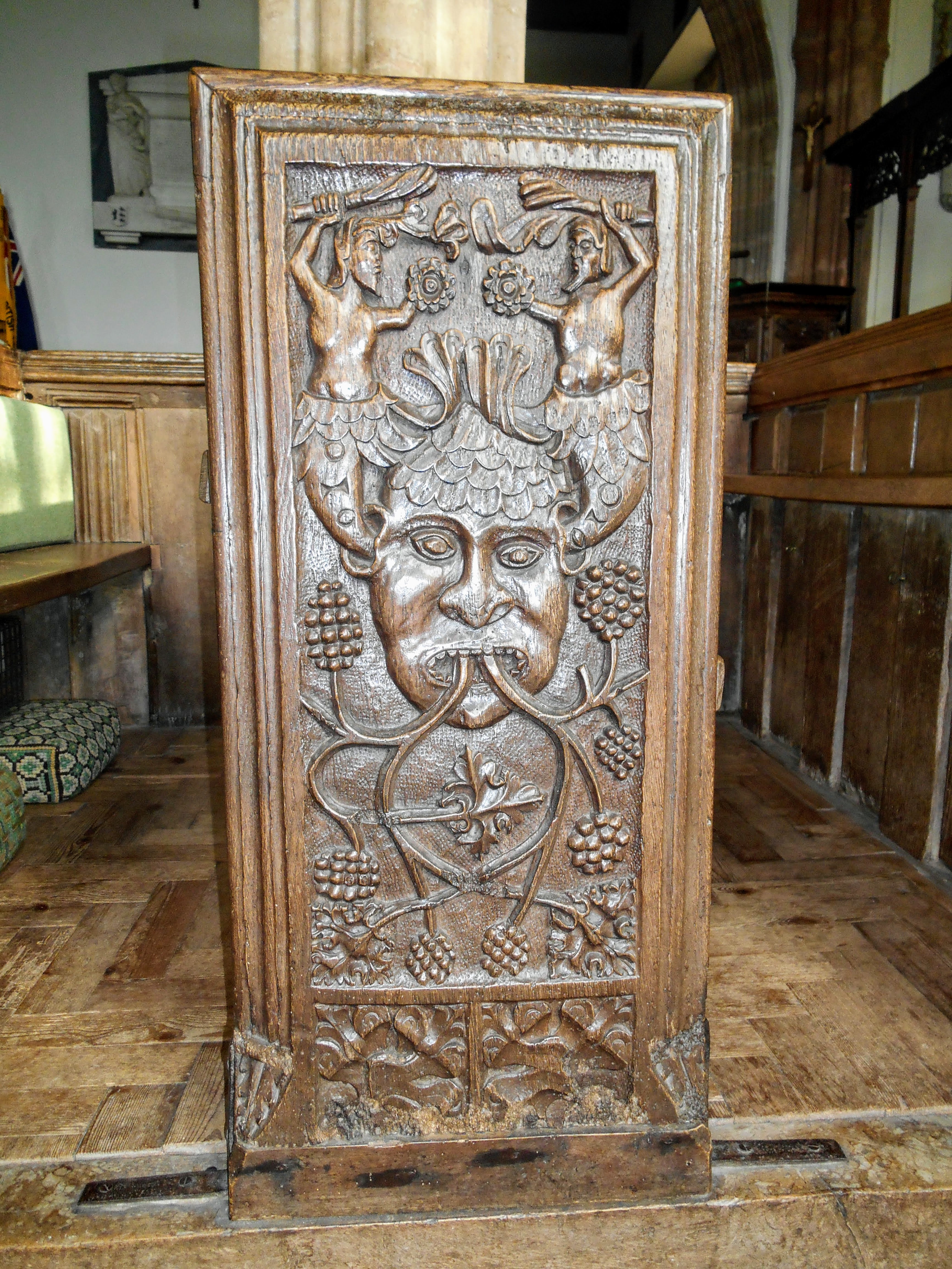
Bench end, Monksilver Church

Roof boss, Raddington Church

Bench end, Clayhanger Church


Bench end, Crowcombe Church

Bench end, Crowcombe Church


Bench end, Crowcombe Church

Roof boss, St Cuthbert's Church, Wells

Bench end in Churchstanton Church

Bench end in Cothelstone Church

Corbel in St Andrew's Church, Banwell

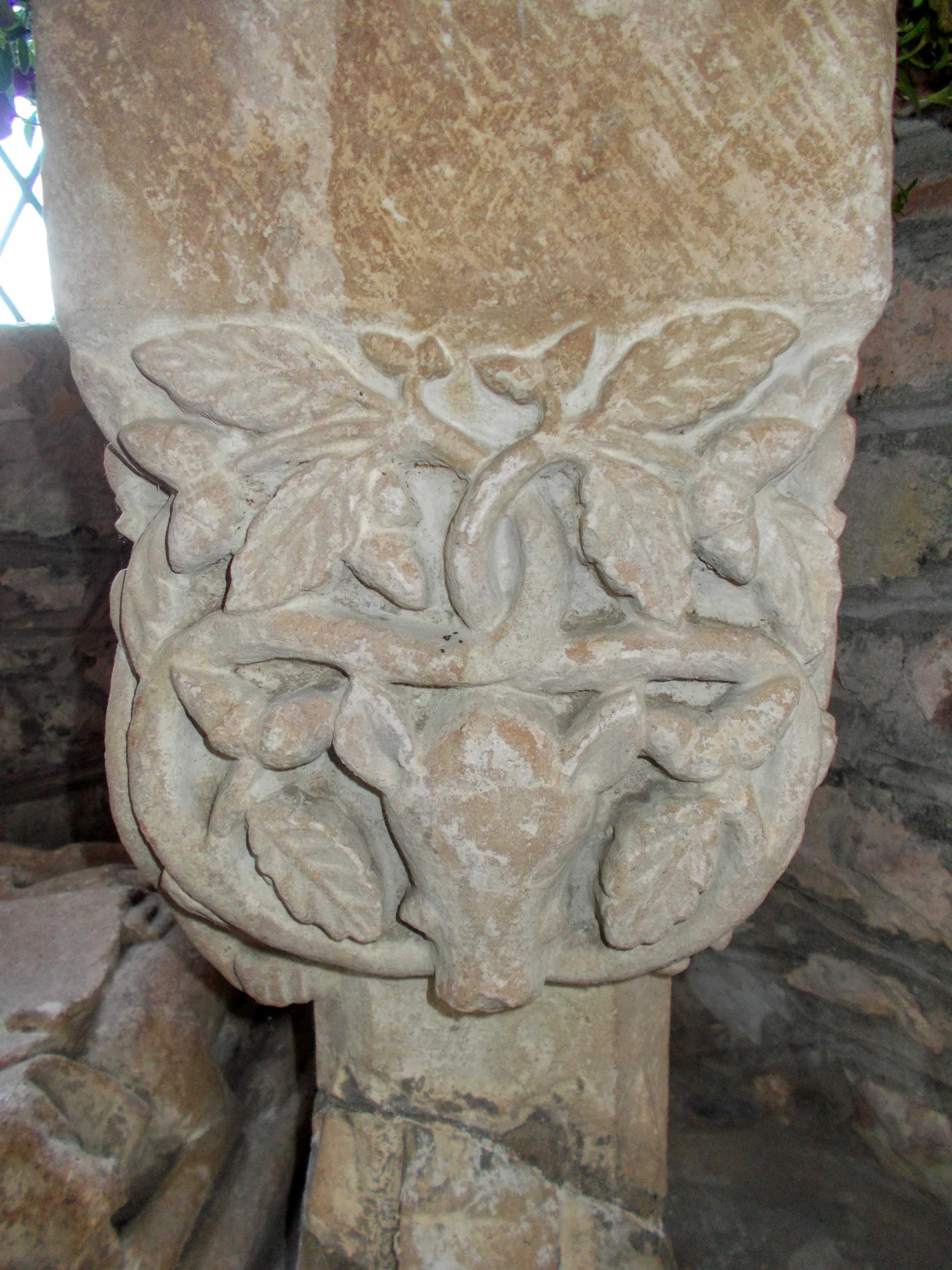
Capital, St Andrew's Church, Banwell

Capital, St Andrew's Church, Banwell

Capital, St Andrew's Church, Banwell

St Andrew's Church, Clevedon

St Nicholas's Church, Withycombe

St Nicholas's Church, Withycombe

St Nicholas's Church, Withycombe

St Nicholas's Church, Withycombe
This is an animal, rather than a man

St Nicholas's Church, Withycombe
This is an animal, rather than a man

St Nicholas's Church, Withycombe

Gate of Lydeard St Lawrence Church

Green man carved into the stonework of the side wall of the Boston Tea Party in Corporation Street, Taunton

Is this a green man?  
He is on the wall of a cottage opposite Aisholt Church

Bench end in St George's Church, Dunster

Green Man  next to the 'Welcome to Wiveliscombe' sign

Green man carved on the 16th century font in Brompton Ralph Church

Green man on a bench end in Cheddon Fitzpaine Church

Green Man, west end of St Michael's Church, Creech St Michael

St George's Church, Bicknoller

Holy Trinity Church, Burrington
The pews and 81 pew ends in Holy Trinity Church were installed in 1913.  They were all designed by Bristol architect, Mr Bligh Bond. They were given in memory of W.H.Wills, Baron Winterstoke (1830-1911) by his adopted daughters, Miss Vera Wills and Mrs Richardson.

Possible green man, Church of St James the Less, Halse

Church of St James the Less, Halse

Bench end, All Saints Church, Trull

Spandrel, St Andrew's Church, Brympton

Further reading: The Green Man: A Field Guide by Clive Hicks, published by Compassbooks, 2000

Wednesday, 16 November 2022

Nailsea Glassworks

John Robert Lucas was born in 1754. After his father Robert Lucas died in 1774, he took over his beer and cider works in Bristol and his shares in a glass making business in Limekiln Lane, Bristol.  In 1781 John Robert married Anna Adams and they had a son and two daughters.   In 1787 he leased a glassworks at Stanton Wick. 

John Robert Lucas established a glass works at Nailsea in 1788.  He chose Nailsea as the site for his new glassworks because of the abundance of coal produced by the mines around the town and local supplies of sand and limestone.  He may also have been influenced by plans for the Grand Western Canal, which would have linked the English and Bristol Channels with a branch to Nailsea.  However only the section from Tiverton to Taunton was ever built.   

Lucas’s company was called Nailsea Crown Glass and Glass Bottle Manufacturers.  Initially one cone shaped kiln and a furnace were built at Nailsea.  A second glass furnace was built there in 1790.  In 1793 John Robert Lucas went into partnership with William Chance, Edward Homer and William Coathupe.  In 1788 William Chance had married John Robert’s sister Sarah and Edward Homer had married John Robert’s sister Mary.

In addition to window glass and bottles, the Nailsea Glassworks also produced domestic ware and novelty items such as flasks, rolling pins, pipes, jugs and walking sticks, which were sometimes decorated with flecks, loops or bands of white or coloured enamel.  Most of these items were produced by workers at the end of their shifts using leftover pieces of glass.

In 1811 William and Sarah Chance’s son, Robert Lucas Chance, took over the management of the Nailsea works and married his cousin Louisa, the daughter of Mary and Edward Homer.  In 1812 he persuaded John Hartley, the leading crown glass expert in the country, to come and work at Nailsea.

The partnership of Lucas, Chance, Homer and Coathupe lasted until 1821 when William Chance sold all of his shares and Edward Homer sold part of his to William Coathupe.  Edward Homer’s son James Edward Homer was taken into the partnership at this time and the company traded as Lucas, Coathupe and Homer. 

John Robert Lucas died in 1828 and was buried at Backwell. Most of his estate passed to his grandsons John Rodbard Bean and Henry Lucas Bean.

The New House Cone was built at Nailsea c1828.  Experienced sheet glass blowers were recruited from France and Belgium from the 1830s, due a shortage of skilled British glass blowers. By 1835 Nailsea was the fourth largest glassworks in Britain.  Bottle making ceased at Nailsea in the 1830s in favour of plate, crown and sheet window glass.

In 1835 a partnership called Lucas, Coathupes, Homer and Cliffe was formed to run the business. In 1844 the company became Coathupes & Co with Charles and Oliver Coathupe, John and Henry Bean and James Edward Homer as shareholders. In the 1840s a new cone known as the Lilly or Lily Cone was built.

In 1848 Charles Coathupe retired and Oliver Coathupe became manager at the Nailsea works.  Over the next 25 years there were various changes in the partnership and shareholdings.  In 1861 the Nailsea works were closed for a while and the following year they were leased to Samuel Bowen, a glass merchant from West Bromwich, and John Powis of London.  They traded as Nailsea Glass Company and made patented ventilating glass, cut glass and coloured glass for stained glass windows.  Samuel Bowen became bankrupt in 1869 and he and Powis surrendered their lease.  In 1870 the Nailsea works were sold to Chance Bros of Smethwick, together with a coal mine on the same site.

Glass production ceased at Nailsea in 1873, due to competition from cheap Belgian imports and the decline in production from the Nailsea Coalfield, and the works were closed in 1874.  The New House Cone was demolished in 1905.  Some of the rubble from it was supposedly used to build the extension to the runway at Filton in the late 1940s.

Extensive archaeological excavations began on the glassworks site in 1983 and continued for several years.  In 2002 a supermarket was built on part of the site.  The only surviving building is one which housed the French kilns, and gas-fired furnaces.  This was later converted into the Royal Oak Garage. 

A collection of Nailsea Glass items can be seen at the National Trust’s Clevedon Court.  However much of what is today described as Nailsea Glass was not made at Nailsea but was made in the same style elsewhere in England e.g. Stourbridge.

Glassworks Cauldron, High Street, Nailsea

This would have been filled with cold water into which surplus molten glass would have been ladled.  Once the glass had cooled and solidified it was broken up and used to speed up the melt of the next batch of sand, limestone and soda.


The Glassblower Sculpture, High Street, Nailsea

This was sculpted by Vanessa Marston and unveiled in 2008

Former Glassworks building, later the Royal Oak Garage, High Street, Nailsea


Two glazed ceramic tile panels illustrating the glassworks and its various manufacturing processes. The panels were designed and produced by Ned Heywood of the Workshop Gallery in Chepstow.  They incorporate fragments of glass excavated from the site.  They are on display on the outside wall of Tesco’s Supermarket.

Drawing showing the layout of Nailsea Glassworks c1873

Thursday, 3 November 2022

Hannah More, Writer and Philanthropist

Hannah More, writer and philanthropist, was born in Fishponds, Bristol on 2nd February 1745.  Her father Joseph More was a schoolmaster and she had four sisters.   She was precocious and quick witted and her passion for learning was quickly recognised by her parents and older sisters, who all helped to educate her.  Joseph More ensured that all his daughters were educated, so that they would be able to earn a living for themselves by running a boarding school for girls.   He set up a school in Bristol for Hannah’s older sisters Mary and Elizabeth to run when Hannah was 12 years old and she attended the school.  By her late teens Hannah was teaching at the school.

Hannah started writing stories and poetry at an early age.  In 1762 her first significant work, a pastoral drama poem entitled The Search after Happiness, was published in Bristol.  In it she expressed her views on the education of women and their role in society.  It was republished in London in 1773 and had sold over 10,000 copies by the mid-1780s.

In 1767 William Turner of Belmont House at Wraxall proposed marriage to Hannah and she accepted.  However he was 20 years older than her and he postponed their wedding three times. In 1773 Hannah broke off their engagement and, after suffering a nervous breakdown as a result, resolved never to marry.  She turned down several subsequent marriage proposals. Feeling guilty William Turner persuaded her to accept an annuity of £200, which made her financially secure and independent.

In 1773 Hannah and her sisters Sarah and Martha visited London for the first time.  She was introduced to many notable people, including the artist Joshua Reynolds, the actor and playwright David Garrick and the writer Dr Samuel Johnson.  Her visits to London became annual events and on her second visit she was invited to join the Bluestocking circle, which was a group of intellectual women with literary interests. David Garrick put on Hannah’s first play The Inflexible Captive at the Theatre Royal in bath in April 1775.  Her second play Percy was performed in Covent Garden in London in 1777.  For various reasons Hannah became disillusioned with the literary world after 1779.

Hannah’s Christian faith became deeper in the 1780s and she became involved in the campaign to abolish slavery.  In 1784 she moved to a cottage at Cowslip Green near Wrington.  Hannah had many books and tracts published on a variety of moral issues.  She became friendly with anti-slavery campaigner William Wilberforce and he encouraged her and her sisters to set up schools to educate the children of poor people. 

Hannah and Martha’s first school was in Cheddar and it opened in 1789.  The children were taught to read and learned about the Bible and the Christian faith.  Hannah didn’t want them to be taught to write because she thought this would encourage them to be dissatisfied with their lowly situation.  The school was a success and so the sisters owned a second one in Shipham.  This was followed by another 10 in villages around the Mendips, including Blagdon, Yatton, Sandford, Congresbury, Banwell and Nailsea over the following decade. They also started evening classes for adults, weekday classes for girls to learn how to sew, knit, and spin, and a number of women's friendly societies, which emphasised the virtues of cleanliness, decency and Christian behaviour. 

In 1799 Hannah’s definitive two volume work on the subject of women’s education,         Strictures on the Modern System of Female Education was published. All five More sisters moved to a large house called Barley Wood on the north east edge of Wrington in 1801.

Hannah’s schools encountered opposition from local landowners and farmers who did not want their labourers to be educated.  She was also opposed by some local clergymen, who accused her of encouraging Methodism at Blagdon School in 1800.  Hannah defended herself well but closed Blagdon School in order to protect the reputation of her other schools.

Hannah suffered from ill health for the last 20 years of her life and one by one her beloved sisters died.  In 1828 her friends persuaded her to move to Clifton in Bristol, so they could look after her.  Hannah died on 7th September 1733 aged 88 in Clifton and was buried with her sisters in All Saints’ Churchyard in Wrington.

Bust of Hannah More in the porch of All Saints' Parish Church, Wrington 

Grave of Hannah More and her 4 sisters in the churchyard at Wrington

All Saints' Church, Wrington

Tithe Barn, Nailsea
This building housed Hannah More’s school for nearly 200 years from 1789

Hannah More’s name lives on today in three local street names – Hannah More Road in Nailsea and Hannah More Close in Wrington and in Cheddar.  There also still two schools named after her – Hannah More Primary School in St Philips, Bristol and Hannah More Infant School in Nailsea.

Hannah More Road, Nailsea

Hannah More Close, Wrington

Friday, 14 October 2022

Stepping Stones

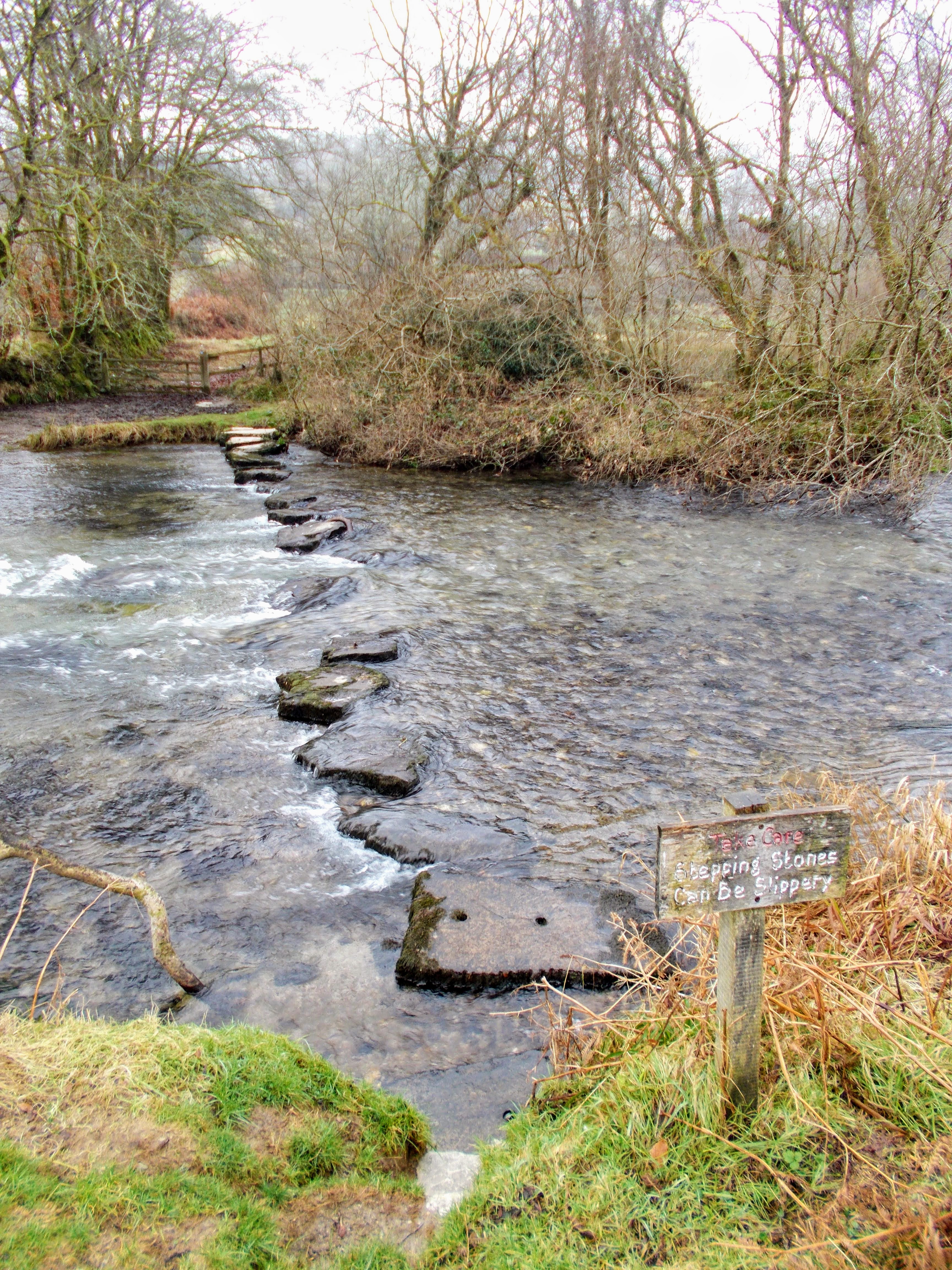
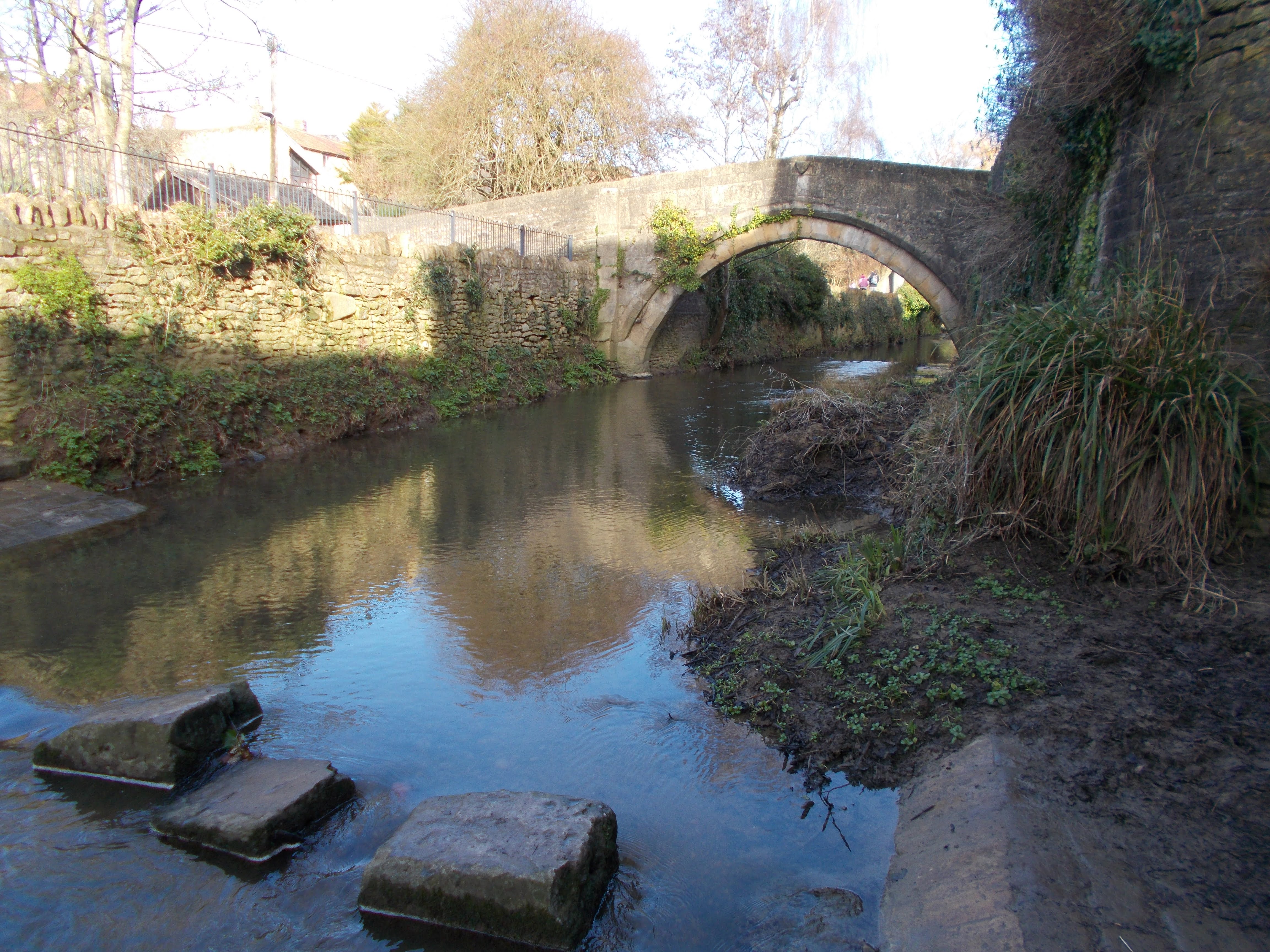
Sets of stepping stones across rivers are rare in Somerset.  The only two I have come across so far are across the River Barle near Withypool and across the River Brue in Bruton, just to the west of the packhorse bridge.  According to the Somerset Historic Environment Record, the stepping stones in Bruton are modern and were put there sometime after 1982.

Stepping stones across the River Barle near Withypool in the winter

Withypool stepping stones in summer
Many thanks to Thelma for taking this photo for me.

Stepping stones at Bruton across the River Brue

Bruton stepping stones

Saturday, 1 October 2022

Woodspring Priory

Woodspring Priory was founded at an unidentified location in Somerset called Dodlinch c1210 by William de Courtenay.  By 1226 it had moved to its present location at Middle Hope to the north of Sand Bay.   William de Courtenay’s grandfather, Reginald Fitz-Urse, was one of the knights who murdered Archbishop Thomas Becket in Canterbury Cathedral in 1170. 

The name Woodspring derives from a spring in the area called the Worspring or Worspryng and the priory was called Worspring until the 18th century.

Woodspring Priory was of the double order of St Augustine and St Victor, and it was dedicated to the Holy Trinity, St. Mary the Virgin and St Thomas the Martyr of Canterbury.  William de Courtenay provided the Manors of Woodspring, Worle and Locking to generate an income for the priory but it was never a very wealthy or large establishment.  There were probably never more than ten members of the community living there at any one time. 

The priory buildings were arranged around a central square cloister.  The priory church was located to the north of the cloister, with the sacristy, dormitory and chapter house on the east side.  The agricultural buildings were located to the west of the religious ones and were separated from them.  The original chapel was replaced in the late 15th or early 16th century by the present church, which was built in the Perpendicular style. At around the same time an infirmary and tithe barn were built.

In 1534 Prior Roger Tormynton or Tormenton and the seven members of his community signed a declaration acknowledging the supremacy of King Henry VIII instead of the Pope and in 1536 Woodspring Priory was dissolved.  Soon afterwards the infirmary, most of the church (except for the chancel, which was demolished) and the prior’s lodgings were converted into dwellings and to agricultural use.

The former priory changed hands several times before being acquired by the Pigott family (later the Smyth-Pigotts) in the late 17th century.  It remained in their ownership for 200 years, although it was rented to a succession of tenants from the middle of the 19th century. In 1918 it was sold to Major Vernon Tickell Hill but he sold it to Richard Burrough a few years later.

In 1968 the priory and adjoining land of Middle Hope were purchased by the National Trust. In 1969 the priory was taken over by the Landmark Trust, which spent 20 years restoring the buildings.  The surviving buildings include the nave, north aisle and crossing of the priory church; the infirmary; the tithe barn; a gatehouse and the 17th century farmhouse.  The Landmark Trust now rents out the farmhouse as holiday accommodation.

Woodspring Priory

North Side of the Infirmary

South side of the Infirmary

North side of the Farmhouse

Infirmary with the Priory behind it

Wednesday, 14 September 2022

Church of St Nicholas, Kittisford

The Church of St Nicholas in the small village of Kittisford in the countryside between Wellington and Wiveliscombe is a little gem, with many interesting features.  It was built of red sandstone c1480s after the building of Cothay Manor nearby and was restored in 1875. It is a Grade II listed building.

The Jacobean pulpit is dated 1610 and is made of oak.  The internal pillars and arches are made of wood (probably oak), which has been carved to look like stone. They date from the Tudor period (1484-1603) and were restored in the 19th century.  It is very unusual to find wooden pillars and arches in a church.  The priest's door has the word Alleluia carved over it.  The oldest part of the church is the blocked doorway in the north wall.

There are two brasses on the wall in the south aisle: these are dedicated to Richard and Agnes Bluett (née Verney). Richard Bluett was a local farmer, who died in 1524. There is also a piscina in the south aisle.

Alleluia carved above the priest's Door

Pulpit

Nave and Chancel

Brass of Richard Bluett

Brass of Agnes Bluett

Wooden pillars and arches

Stone piscina

Octagonal font

Wooden plaque showing that £65 was raised in 1872 for the restoration of the church

West front with Tudor arch doorway

Kittisford Church

Blocked doorway on the north side

Friday, 2 September 2022

Battery Point Lighthouse, Portishead

Battery Point Lighthouse was built in 1931 by Chance Brothers of Smethwick on a rocky promontory on the north west edge of Portishead.  The deep water channel known as King Road passes very close to the coast at this point.  The lighthouse, which is also known as Portishead Point Lighthouse, is nine metres tall and consists of a black metal pyramid on a square concrete base.  The lighthouse is maintained by Bristol Port Company.  In 1999 they announced that they wanted to demolish the lighthouse and replace it with a modern navigational aid.  After a campaign by local residents, they agreed to build a replica of the original lighthouse.

Battery Point Lighthouse

Container ship passing Battery Point Lighthouse

Battery Point Lighthouse

A two tonne bronze fog signal bell was installed at Battery Point Lighthouse in 1939.  It was removed c1998.  It was found in a warehouse owned by Bristol Port Company in Avonmouth in 2010.  After a campaign by local residents, it was acquired by Portishead Town Council in 2012.  It was restored and re-sited on Wyndham Way in 2013.

Battery Point Bell on Wyndham Way

There is a Merchant Navy Memorial close to Battery Point Lighthouse with a brass plaque attached to it.  The words on the plaque are as follows:

“This stone is situated here at Battery Point, the closest place on the coast of the United Kingdom which large ships pass.

It is dedicated to seafarers of the West Country who, since the Middle Ages, on voyages of discovery and in times of peace and war, have passed this point, some never to return.

“Oh hear us when we cry to thee, for those in peril on the sea.”

Erected by the Merchant Navy Association North Somerset Branch, 2005”

Merchant Navy Memorial at Battery Point