Monday, 1 February 2021

Alfred Leete, graphic artist

Alfred Ambrose Chew Leete was born in Thorpe Achurch in Northamptonshire on 28th August 1882.  His parents, John and Harriet, were farmers.  John Leete gave up farming, due to ill health, in 1893 and the family moved to Weston-super-Mare, where Harriet ran a series of boarding houses/hotels, including Claremont House in Claremont Crescent and the Addington Hotel in Madeira Road.  

Alfred attended Kingsholme School and the School of Science and Art (now Weston College).  At the age of 12 he was apprenticed to a surveyor in Bristol.  He loved drawing and was a self-taught artist.  In 1897 the Daily Graphic paid him for a drawing and he went on to make regular contributions to the Bristol Magpie.

In 1899 Alfred Leete moved to London to work as an artist for a printer.  He went freelance in 1905, when the magazine Punch published one of his drawings.  Over the next few years he contributed cartoons and drawings to the comic Ally Sloper’s Half Holiday, the Pall Mall Gazette, Strand Magazine, Tatler, Sketch, The Bystander, Punch and the London Opinion.  He specialised in comic illustration, cartoons, posters and advertisements. 

In November 1909 Alfred married Edith Jane Webb.  Their first child, a daughter called Betty, was born in 1910 but died a few weeks later. Their son Alfred John was born in 1914. 

Britain declared war on Germany on 4th August 1914.  On 5th September 1914 Alfred’s drawing of the Secretary of State for War, Field Marshal Lord Kitchener, pointing his finger, featured on the front cover of the London Opinion, with the words “Your Country Needs YOU” beneath the picture.  The image was later used by the magazine as an unofficial recruitment poster with the words “Britons [Kitchener] “Wants YOU”, Join Your Country’s Army!”.  The magazine also had this image displayed on advertising hoardings in London in the autumn of 1914. 

Alfred Leete's iconic drawing of Lord Kitchener

In 1917 the American artist James Montgomery Flagg adapted Alfred’s drawing by substituting Uncle Sam for Lord Kitchener and using the slogan “I Want YOU for U.S. Army”.  It also inspired similar posters, which were produced in Australia, Canada, South Africa, India, Italy, Austria, Germany and Russia.  In the Second World War Kitchener’s face was replaced by Churchill’s on a recruitment poster for the Australian Imperial Force.  Although Alfred Leete’s drawing of Lord Kitchener was never used as an official recruitment poster, it has become one of the most iconic and enduring images of the First World War.

During the First World War Alfred produced several comic cartoons, which made fun of the Germans. In 1916 he joined the Artists’ Rifles. He served with them on the Western Front in France and produced a series of drawings of his experiences there.

In the 1920s Alfred produced illustrations for successful advertising campaigns for companies such as Guinness, Bovril, London Underground, Younger’s Ales and Rowntree’s.  He often visited Weston-super-Mare and produced advertisements for local businesses and cartoons about local issues. In 1925 he designed the cover for the Weston-super-Mare Official Guide, which was entitled “Atlantic Breezes”.

“Atlantic Breezes” by Alfred Leete, 
cover of the 1925 Official Guide to Weston-super-Mare

Alfred Leete was taken ill on a trip to Italy and he died of a brain haemorrhage at his home in Kensington, London on 17th June 1933.  He was buried in Milton Road Cemetery in Weston-super-Mare.

Alfred Leete's grave in Milton Road Cemetery, Weston-super-Mare

Blue plaque, Addington Court, Madeira Road

Addington Court, Madeira Road

Alfred's brother, Sidney Tebbutt Leete (1889-1924), who was an architect, designed the Central Picture House in Oxford Street, Weston-super-Mare in partnership with R.I. Smith.  This opened in 1921, was renamed the Central Cinema in the mid-1950s and was demolished in 1964.

Monday, 18 January 2021

The Kenn Hangings of 1830

A very ordinary looking field in the village of Kenn near Clevedon was the site of what was possibly the last public hanging in England to take place at the scene of the crime.  On 8th September 1830 35 year old William Wall, 30 year old John Rowley and 19 year old Richard Clarke were hanged for setting fire to three wheat stacks belonging to a local farmer called Benjamin Poole on 31st October 1829.

William Wall had operated an unlicensed cider house on Duck Lane, Kenn and some of those who had frequented it had committed many crimes in the area.  Wall had been fined for selling cider without a licence and it is thought that he believed that it was Benjamin Poole who had informed on him. Wall and his accomplices set fire to the ricks as an act of revenge after a night of drinking.

Husband and wife William and Mary Wall, brothers John & James Rowley, Richard Clarke and John Old were tried at the Somerset Assizes in Wells in August 1830.  Isaac Old (brother of John Old) had also been one of the accused but he saved himself by giving evidence against the others. William Wall, John Rowley and Richard Clarke were found guilty and sentenced to death.  John Old, James Rowley and Mary Wall were convicted of arson but were sentenced to transportation.

It was estimated that over 12,000 people turned up to witness the execution.  The men had been held at Ilchester Gaol and were transported on a prison cart the 40 or so miles from there to Kenn.

William and Mary Wall had 7 children at the time of his execution and Mary gave birth to an 8th child while she was held in Ilchester Gaol.  The older children were subsequently brought up by various relatives in the Kenn area and the youngest child (a son called David) travelled to Tasmania with Mary but died in Hobart aged 2. John Rowley and Richard Clarke were not married.

A fuller account of the case written by Derek and Jane Lilly can be found on the Kenn Village website: http://kennvillage.co.uk/home-2/history-project/kenn-hangings/

Hanging Field, Kenn Street, Kenn

Friday, 1 January 2021

Ashcombe Gardens, Simonsbath

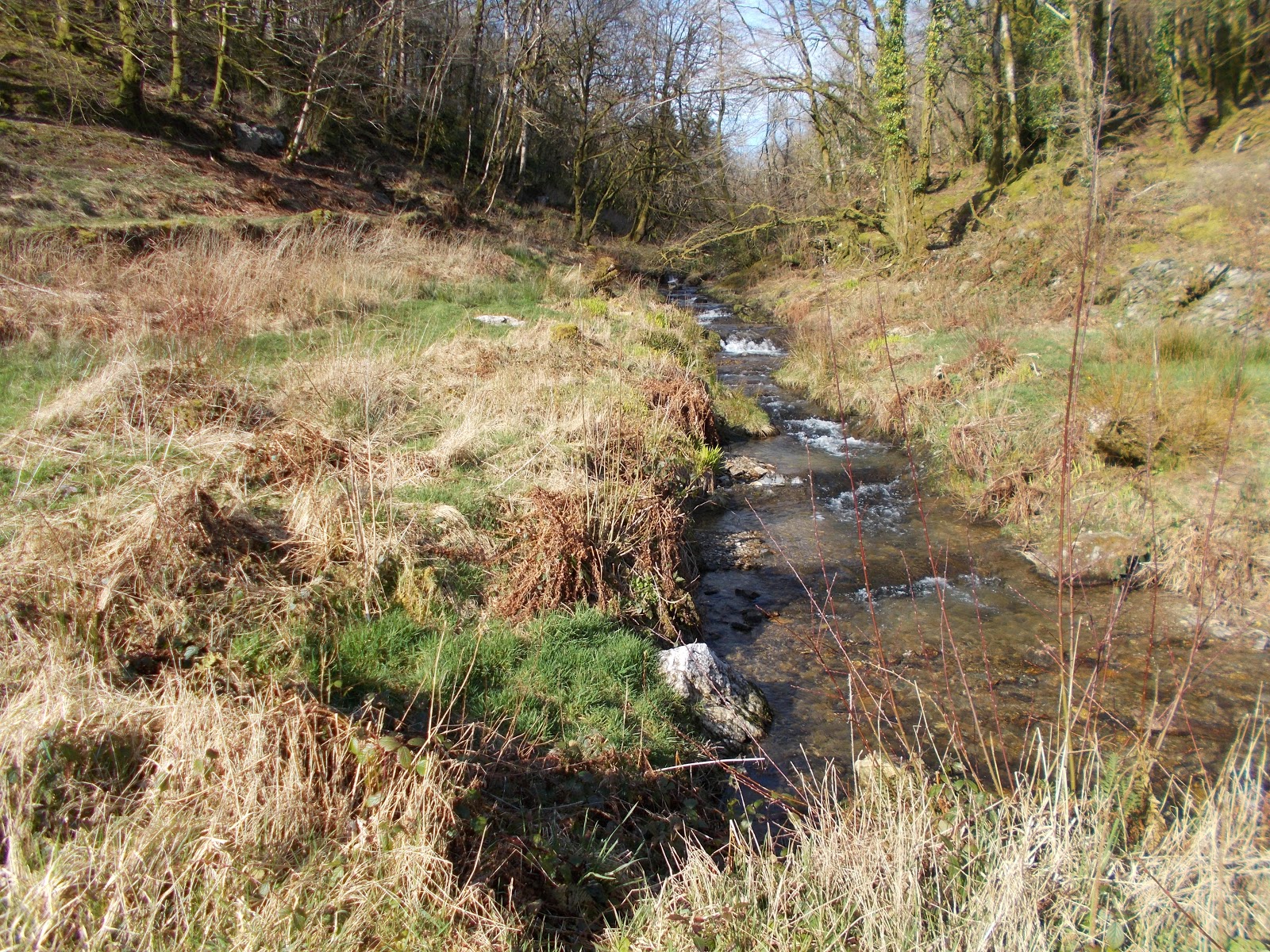
Ashcombe Gardens were laid out by John Knight in around 1820 to the north of Simonsbath House and up the valley of the Ashcombe Stream. Deciduous trees and conifers were planted and terraced paths were constructed but the gardens were never completed.  They were designed using "picturesque" principles.  The Oxford English Dictionary defines picturesque gardening as "the arrangement of a garden so as to make it resemble a picture: a romantic style of gardening, aiming at irregular and rugged beauty".

The Fortescue family bought the Simonsbath estate from Sir Frederick Knight in 1879 to use mainly for stag hunting.  Their main house was Castle Hill at Filleigh and they only used Simonsbath House for holidays and hunting parties until 1934 when Castle Hill was damaged in a fire. They moved to Simonsbath House for 2 years while Castle Hill was being repaired.  They planted up Ashcombe Gardens.  The Fortescues then rented out Simonsbath House to 4 different tenants from 1940-68 and the gardens became neglected and overgrown.  They sold Simonsbath House in 1969 and it has been run as a hotel ever since.  

Most of the trees in Ashcombe Gardens were felled in the 1940s but since then a wood of mainly oak, ash and sycamore has replaced them.  The gardens are currently being restored by a group of volunteers.

Entrance to Ashcombe Gardens

Ashcombe Stream

Large quartz boulders, 
These were deliberately exposed as a design feature

Old slate quarry
This was possibly laid out as a dell or fernery

Garden path

Ashcombe Gardens

Ashcombe Gardens

White Rock Cottage and Simonsbath Old School

White Rock Cottage and Simonsbath Old School

Simonsbath House

Monday, 14 December 2020

Lynch Chapel of Ease, West Lynch

Lynch Chapel of Ease in the hamlet of West Lynch near the village of Bossington, was built c1530.  It was probably the chapel for the Manor of Bossington, which had been owned by Athelney Abbey since 920AD.  After the Dissolution of the Monasteries in 1536-41 it was used as a barn until 1884-5, when it was restored by Sir Thomas Dyke Acland (11th Baronet and owner of the Holnicote Estate).  The chapel has a wagon roof and 11 of the original bosses remain. The windows on the north and south sides of the chapel are original but the east window was rebuilt in the 1880s. A porch was added c1904 in memory of Henry Goddard.

By 1930 Lynch Chapel was again in need of refurbishment.  Rev J.N. Wallis, who was Rector of Selworthy, decided to raise money to fund the refurbishment by writing The Lorna Doone Pageant.  The pageant was performed by 60-70 local adults and children on Selworthy Green on 3 consecutive days in July 1930.  Some horses also took part.  The pageant was directed by Major Trevilian.  3,000 people came to watch it and £500 was raised from ticket sales.  The restoration was led by Mr W.H.R. Blacking.  He built an organ gallery at the west end using wood from the old box pews, which had been removed from Selworthy Church in 1875.  The wood was also used for the panelling around the walls of the chapel.

Grid reference SS 900 476

Lynch Chapel of Ease

Interior of Lynch Chapel

East window of Lynch Chapel

Plaque in memory of John Allan Pilcher
He was an Officer Cadet in the Grenadier Guards.  He was killed by enemy action at the Royal Military College, Sandhurst on 29th January 1941.

Sunday, 29 November 2020

Wellington Park

Wellington Park is one of the town's best kept secrets. It opened in 1903 to celebrate the coronation of King Edward VII.  It is a small formal park and is located at the south western end of Courtland Road.  It can also be accessed via Beech Grove but it is not well signposted. It covers an area of 1.8 hectares.  The site was given to the town by Fox Brothers & Co Ltd (a local clothmaking firm).  They also paid for the buildings and landscaping and provided £100 a year for 5 years to cover the running costs. 

Fox Brothers commissioned the Exeter based company Robert Veitch & Sons to design and build the park.  The park was designed by the German landscape gardener F.W. Meyer, who worked for Robert Veitch & Son for 30 years.  His design included a ha-ha, three Spanish colonial style entrances, a shelter, a rockery, a bandstand and a caretaker's lodge,  Work on laying out the park began in July 1902.  The building work was carried out by Messrs Follett Bros of Wellington. The park was opened to the public on 2nd May 1903. Later the same year the ownership of the park was transferred to Wellington Urban District Council.  In April 1974 the park was transferred to Taunton Deane Borough Council.  On 1st April 2025 it was handed over to Wellington Town Council.

The park, which is Grade II* listed, was restored in 2000 with money from the Heritage Lottery Fund.  The park's current design is largely unchanged from its original layout.

Mature plane trees lining the walk on the north east side of the park

South East entrance on Courtland Road

North entrance on Beech Grove

Floral bedding

Floral bedding

Ornamental pond

Rockery

War Memorial
This was unveiled on 17th June 1921 by F. Hugh Fox.  The names of the 178 local men, who died in the First World War.  After the Second World War the names of a further 58 men and 1 woman were added to it.  It is made from Cornish granite.

Shelter

Bandstand

Caretaker's Lodge

Caretaker's Lodge

Plaque on the Caretaker's Lodge

Drinking fountain

Ha-ha

Grove of lime trees

Floral bedding

Floral bedding

Saturday, 14 November 2020

Dandy - Weston-super-Mare Railway Station’s Charity Collection Dog

One day in around 1923 a stray spaniel wandered into Weston-super-Mare Railway Station.  He was adopted by the staff who worked there. They named him Dandy, provided him with a kennel and put a charity collection box around his neck.  He spent the next five years mingling with people on the station platforms.  By the time he died on 16th January 1928, he had raised many hundreds of pounds for the GWR Widows and Orphans Fund.  He was buried at the end of one of the platforms. 

A memorial plaque to Dandy can still be seen mounted on the wall in the waiting room at the railway station.

Dandy the Spaniel

Dandy's Memorial Plaque

Sunday, 1 November 2020

The Development and Production of Penicillin in Clevedon

Antibiotics are compounds produced by bacteria and fungi, which are capable of killing or inhibiting the growth of other microbial species. Before their introduction as medicines, there was no effective treatment for infections such as pneumonia, meningitis or rheumatic fever.

In 1928 Alexander Fleming, who was a Scottish bacteriologist working in London, first noticed that the bacterium Staphylococcus aureus wouldn’t grow in the parts of a culture, which had accidentally been contaminated by the green mould Penicillium notatum.  He conducted research on the mould and discovered that it produced a substance capable of killing many of the common bacteria, which cause infections in humans.  However he was unable to produce a purified form, which was also stable.

Further research was carried out in the late 1930s by British biochemist Ernst Boris Chain, Australian pathologist Howard Florey and others at Oxford University to produce penicillin in a form that could be used as a human medicine. By 1941 they had developed an injectable form of the drug, which was available for use in humans. During the Second World War development of large scale production of penicillin took place in the United States.  However it was also produced in Clevedon.

In September 1939 the Royal Naval College Medical School, which was working on the production of vaccines against cholera and typhoid, was evacuated from Greenwich to Barrow Gurney Hospital.  However, the site at Barrow Gurney didn't have adequate water, gas and electric supplies, so they moved to White House in Highdale Road, Clevedon.  

When the Royal Naval Medical School also began to produce penicillin in Clevedon in 1943, they needed more space than they had at the White House, so they moved to the house that is now 5 Elton Road, although at this time it was No 4 and was called Eastington House.  The rooms in the house were used for research and assay laboratories.  The penicillin was produced in a factory built on land behind the house. 

Penicillin was produced by growing the Penicillium notatum mould on a culture medium at a controlled temperature.  This was done in sterilised milk bottles.  40,000 were used at Clevedon, as each one only produced a very small amount of antibiotic.  Many local people were employed in the laboratories, in addition to the Royal Navy staff.  The freeze dried powder was packed and distributed to the armed forces and a few civilian establishments.  When reconstituted with sterilised water, it became injectable.

After the end of the Second World War the Royal Navy sold the Clevedon factory to Distillers Company Ltd.  They moved in at the beginning of 1947.  They worked on developing new antibiotics but in 1949 the research station was transferred to the Medical Research Council.  They continued research in to antibiotic alternatives to penicillin and also manufactured other drugs.  The Clevedon site closed in 1961 when their work was transferred to Porton Down.

Further Reading:

Clevedon Places and Faces: Rob Cambell (editor). Matador, 2010

Clevedon's Social and Industrial Heritage: Further studies in the history of Clevedon: Clevedon Civic Society, 1998

5 Elton Road, Clevedon

Plaque outside 5 Elton Road, Clevedon

Wednesday, 21 October 2020

Dolphins in the River Parrett at Combwich

I'm not referring to the marine mammals, but to man-made marine structures, which are not usually connected to the shore and which are used to assist in the berthing or mooring of boats.  They are constructed at the entrance to a dock or along a pier, quay, wharf or beach. They usually consist of a number of piles, which are driven into the bed of a river or the sea and these can be made of wood, steel or concrete.

There are mooring and breasting dolphins and I think there are both types at Combwich.

Breasting dolphins help in the mooring of vessels by sharing some of the berthing load.  They also prevent vessels from hitting quays and can also be used as mooring points to restrict the longitudinal movement of berthing vessels.

Vessels are secured to mooring dolphins using ropes. Mooring dolphins also control the transverse movement of berthing vessels.

The dolphins at Combwich Pill were constructed in the late 1950s or 1960s when Hinkley Point A or B Nuclear Power Stations were being built.

The inner dolphins and finger jetty were due to be removed in 2019, as part of the redevelopment of Combwich Wharf to accommodate ships carrying materials for Hinkley C Nuclear Power Station. They are to be replaced by two new breasting dolphins.


Dolphins at the entrance to Combwich Wharf

Combwich Pill dolphins at low tide

Entrance to Combwich Pill at low tide

Dolphins at high tide, December 2022

Thursday, 1 October 2020

Sham Castle, Bathampton Down, Bath

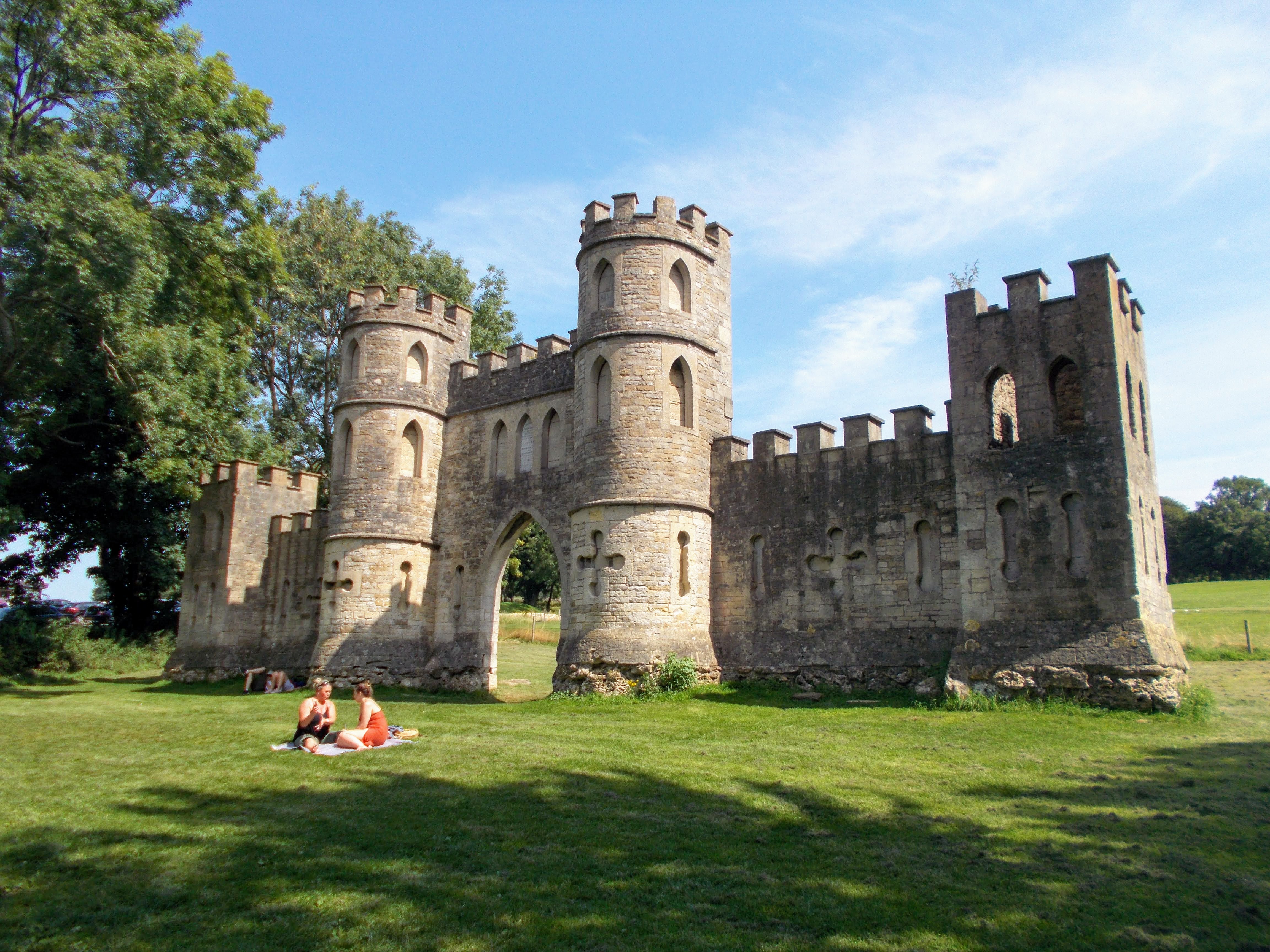
The Sham Castle was built on Bathampton Down to the east of Bath city centre by Richard James (or possibly Jones) for Ralph Allen in 1762.  It is a Gothick folly and is only the façade of a castle - the back of the castle is flat. 

Ralph Allen (1693-1764) was an entrepreneur and philanthropist, who reformed the British postal delivery service.  He was born in St Columb Major in Cornwall but moved to Bath in 1710 to work for the Post Office. He used the money he made from his postal reforms to buy the Bath stone quarries/mines at Combe Down and Bathampton Down. He made a fortune from his Bath stone quarries and in the mid 1730s work started on the Palladian mansion Prior Park, which was built for him on a hill overlooking the city.  The mansion was completed in 1741.

Ralph Allen probably had the Sham Castle built to show off the qualities of Bath stone as a building material and/or to improve the view from his house in the centre of Bath. 

The Sham Castle was restored and presented to the City of Bath by Richard Osden Ottley and Arthur Edward Withey in 1921.

The front of Sham Castle

The central arch of Sham Castle

Sham Castle

Plaque above the central arch

The back of Sham Castle

The view from Sham Castle