Showing posts with label Exmoor. Show all posts

Saturday, 1 August 2026

RIP Albert William Tarr

Albert William Tarr was born in East Anstey in 1880.  At the time of his death in 1935, he was living in East Anstey with his widowed mother Harriet.  He had been deaf and unable to speak since birth.  He became a tailor's assistant.  

On January 8th 1935 Albert Tarr was at Dulverton Railway Station in Brushford, waiting for a train to East Anstey.  Mrs Ivy Ellen Thomas of Coombe Head Cottage, Dulverton, was also at the station with her 4 year old son Robert John Thomas.  She and her son were crossing the railway line using the trolley crossing, rather than the footbridge at the other end of the station.  Mrs Thomas was laden with parcels, as she had just returned from a shopping trip to Tiverton.  Robert was dawdling behind her.  

The porter on the platform heard the whistle of an incoming train from Barnstaple and shouted at Mrs Thomas to hurry up. She turned to grab Robert, but then hesitated for a moment.  Albert Tarr realised that Mrs Thomas and Robert were about to be hit by the train, so he tried to save them. The train driver braked, but hit and killed all three of them instantly. 

Mr Leslie Sloman, who had returned from Tiverton on the same train as Mrs Thomas, also tried to grab Mrs Thomas, but he was able to jump back just in time and so wasn't hit by the train.

An inquest into the accident, was held in Dulverton on 10th January.  The verdict was Death by Misadventure.  The coroner was Mr G.P. Clarke. Both the train driver and the railway company were exonerated from blame.  However, the coroner recommended that the footbridge be moved nearer to the station entrance.

Copy of the memorial plaque in East Anstey Church

Thursday, 25 December 2025

Hedgehogs and Squirrels

Artistic representations of hedgehogs and squirrels aren't very common in Somerset.  Here are the ones I have come across painted on glass or walls, carved in wood, set in concrete and stitched onto church kneelers

Hedgehog, west door, Norton-sub-Hamdon Church

Mural, Priorswood, Taunton

Hedgehog, Church of St John the Baptist, Axbridge

Hedgehog on a carved seat in the churchyard of St Bartholomew's Church in Oake

Stained glass window, Churchstanton Church

Red squirrel on a kneeler in the Church of St Peter & St Paul, North Curry

Red squirrel set into the pavement outside the former Squirrel pub, High Street, Wellington

Squirrel chainsaw carving, Croydon Hill

Grey squirrel, Lamyatt bus shelter

Faded squirrel, Spray Point, Watchet

Victoria Park, Frome
This animal themed bench, which features three squirrels, was made from a 140 year old Norway maple, which had to be felled in 2025, as it was diseased.  The bench was made by Graham Derham.

Saturday, 1 June 2024

The Tragic Death of Amos Cann of Exford

On the afternoon of 9th March 1891, 24 year old Amos Cann, who lived on at Greenland Farm in Exford with his father Richard Cann, travelled down to Porlock to deliver 2 horses to a purchaser.  When he arrived in Porlock it was snowing, but rather than stay the night in there he decided to walk back to Exford.  He set off from Porlock at around 7.30pm.  He never arrived home.  Once they realised he was missing, local people went out searching for him but his frozen body wasn't found until 26th March, in a snowdrift a mile or so from his home.  His overcoat was found a quarter of a mile from his body.  He was buried in the churchyard of St Mary Magdalene's Church in Exford.  It wasn't known whether he died on 9th or 10th of March, so his tombstone just says he died in March 1891.  

The epitaph on Amos's headstone is as follows:

"You that are young, behold and see                                                                                            How quickly death has conquered me.                                                                                           Its fatal stroke it was too strong.                                                                                                     It cut me off while I was young:                                                                                                      The God above He knows for why                                                                                               That in my youth I was to die."

Amos Cann's gravestone in Exford Churchyard

Friday, 1 March 2024

Larkbarrow Farm

John Knight built Larkbarrow Farm as a model farm in the 1840s.  He attempted to turn large areas of moorland on Exmoor into productive farmland.  The farmhouse and outbuildings were arranged around a courtyard.  Trees were planted on three sides of the farm to shelter it.  The first tenant was James Meadows.  He arrived in 1852 but he left by 1852 when his attempt to establish a dairy farm and produce cheese failed.  Larkbarrow was uninhabited until the 1860s when shepherds from Scotland lived in the farmhouse.  It was later used as a shooting lodge.  The farm passed to the Fortescue Estates in the late 19th century.  

During the Second World War the farmhouse was used for target practice by the army and only a few low walls remain standing today. The site has been conserved by Exmoor National Park Authority: they have capped the standing walls and cleared the undergrowth.

Another model farm was constructed c1850 half a mile to the west of Larkbarrow Farm, at Great Tom's Hill. This farm was occupied until the Second World War, when it too was used for target practice.

Larkbarrow Cottage was built between Tom's Hill Farm and Larkbarrow and was occupied until the 1920s.  In July 1923 one of the occupants, Will Little, was killed when he was struck by lightning on his way back from work at nearby Warren Farm.  The remains of Larkbarrow Cottage can still be seen.

Since 2021 Larkbarrow Farm has been used as the destination for the Exmoor Dark Sky Discovery Trail. 

Larkbarrow Ruins

Larkbarrow Ruins

Larkbarrow Ruins

Larkbarrow Ruins

Larkbarrow Ruins

Larkbarrow Ruins

Exmoor Dark Sky Discovery Trail post at Larkbarrow

Exmoor Dark Sky Discovery Trail post at Larkbarrow

Thursday, 15 February 2024

The Great Flood of 1952 in Dulverton

The first 2 weeks of August 1952 were very wet in the south west of England. Then on afternoon and evening of 15th August 9 inches of rain fell over Exmoor and caused devastating floods along the courses of the Rivers East & West Lyn, Exe and Barle and their tributaries.  34 people died (28 of them in Lynmouth and Barbrook), 100 buildings  and many bridges (including Tarr Steps and Marsh Bridge) were damaged or destroyed.  In Bridge Street, Dulverton there is a plaque showing the height that the River Barle reached in the town. It was donated by two soldiers who assisted in the clean up operation.

1952 Flood plaque in Dulverton

1952 Flood plaque

Marsh Bridge - rebuilt after the 1952 floods

Decoration on Marsh Bridge

"The hedge that moved"
I was told by someone who was living at Higher Marsh in August 1952, that a section of bank and three beech trees close to the River Barle upstream of Marsh Bridge was moved wholesale by the force of the water about 50 metres downstream.  It remains in the middle of a field and the trees have carried on growing.  There is no public access to the field, so this was the best photo I could get of the trees.  They are located slightly to the left of the centre of the photo.

Friday, 15 December 2023

The Two Moors Way

The Two Moors Way, a long distance path which links Exmoor and Dartmoor, was officially opened on 29th May 1976.  It was created and developed by Joe Turner.  The original Two Moors Way ran for 102 miles from Lynmouth to Ivybridge.  The 15 mile Erme-Plym Trail from Ivybridge to Wembury was added to it in 2005, to make it a coast to coast path.  The Two Moors Way is described as "Devon's Coast to Coast" but the stretch from the Hoar Oak Tree to Hawkridge is in Somerset.

After Joe Turner's death in 2004, Peter Randall-Page, a Dartmoor based sculptor, created a pair of stone memorials to him.  They are large granite boulders with lots of small round holes carved into them.  One is located at the southern boundary of Exmoor National Park at Badlake Moor Cross near West Anstey.  The other is located on the northern boundary of Dartmoor at Drewsteignton.

Two Moors Way Signpost at Badlake Moor Cross
Lynmouth 24 miles, Ivybridge 78 miles

Memorial to Joe Turner at Badlake Moor Cross

Memorial to Joe Turner at Badlake Moor Cross

"The Walker" statue on Lynmouth seafront 
This statue marks the beginning (or end) of the Two Moors Way (& the point where it meets the Coleridge Way, the South West Coast Path and the Tarka Trail).  It was created by Richard Graham and unveiled by John Craven on 8th May 2017

Friday, 1 December 2023

Sir John William Fortescue, British Army Historian

John William Fortescue was born in Madeira on 28th December 1859.  He was the 5th son of Hugh Fortescue, the 3rd Earl Fortescue, and his wife Georgiana.  He spent his childhood at Castle Hill near Filleigh in Devon.  His family owned large areas of Exmoor.  He attended Harrow School 1873-1878 and then went on to study law at Cambridge University in 1878.  In 1880 he was appointed as private secretary to Sir William Robinson, who was Governor of the Windward Islands.  John Fortescue spent 2 years in the Caribbean and then returned to Cambridge to complete his degree and graduated in 1884.  

From 1886-1890 he lived in New Zealand, working as private secretary to Sir William Jervois, who was the Governor of New Zealand.  During this time John Fortescue wrote several articles for Macmillan's Magazine, many of which were on the subject of military history, a subject which greatly interested him.  He was then commissioned by Macmillan to write a comprehensive history of the British army.  This was published in 13 volumes between 1899 and 1930.  He also wrote several other books, including The Story of a Red Deer (a children's book published in 1897), My Native Devon (published 1924) and a biography of the Duke of Wellington (published in 1925).

In 1905 he was appointed as librarian at Windsor Castle by King Edward VII.  He remained in this job until 1926.  He accompanied King George V and Queen Mary on their 1911 visit to India and he wrote the official account of their visit.  

In 1914 John Fortescue married Winifred Beech but they had no children.  He often stayed at Simonsbath Lodge (this is now the Simonsbath House Hotel). He was knighted in 1926. He died in Cannes on 22nd October 1933 and his ashes were scattered at Five Barrows above Simonsbath.  His widow suggested that his family should pay for a memorial cairn.  This was built at the side of the Simonsbath to South Molton road above Drybridge Combe.  The cairn and the land around it now belong to Exmoor National Park and they restored the cairn in 2001.

Sir John William Fortescue's Memorial Cairn

Friday, 1 September 2023

Packhorse Bridges

Packhorse bridges were built so that horses and ponies carrying loads could cross rivers and streams.  Most were built before c1800 and are just wide enough for one laden horse to pass over them.  Many of them were originally cobbled and they often have low parapets, so that they didn't interfere with the panniers carried by the horses.  Somerset has about 30 surviving examples, many of them on Exmoor because the bulk of goods were carried by packhorses in upland areas.

Gallox Bridge, Dunster - over the River Avill
This double-arched bridge possibly dates back to the late 15th century. It linked the market town of Dunster to the wool-producing pasture land to the south.  Pedestrians and packhorses used the bridge and carts crossed the River Avill using the ford adjacent to the bridge. The bridge takes its name from the gallows, which used to be located on nearby Gallox Hill.

Allerford - over the River Aller

Allerford's medieval packhorse bridge

Hacketty Bridge, Horner - over the Horner Water
This bridge possibly dates back to the late medieval period

Hacketty Way Bridge, Horner

West Luccombe - over the Horner Water
This bridge was built in the late medieval period

West Luccombe

Ramshorn Bridge, Taunton
The Galmington Stream has been diverted and no longer flows under this bridge.

Bow Bridge, Bruton - over the River Brue

Bow Bridge, Bruton

Kentsford Farm, Watchet - over the Washford River

Robber's Bridge - over the Weir Water

Bury Bridge - over the River Haddeo

Bury Bridge

Bury Bridge and Ford
Medieval four-arched bridge

Malmsmead Packhorse Bridge and Ford over the Badgworthy Water
This bridge was built in the 17th century

Smithy Bridge, Winsford - over the Winn Brook
This single arch packhorse bridge dates back to the medieval period and was restored in 1952.

Packhorse bridge next to Vicarage Bridge, Winsford
This two-arched bridge is probably medieval in origin.  It was rebuilt in 1952 following flood damage.

Packhorse bridge next to Vicarage Bridge, Winsford

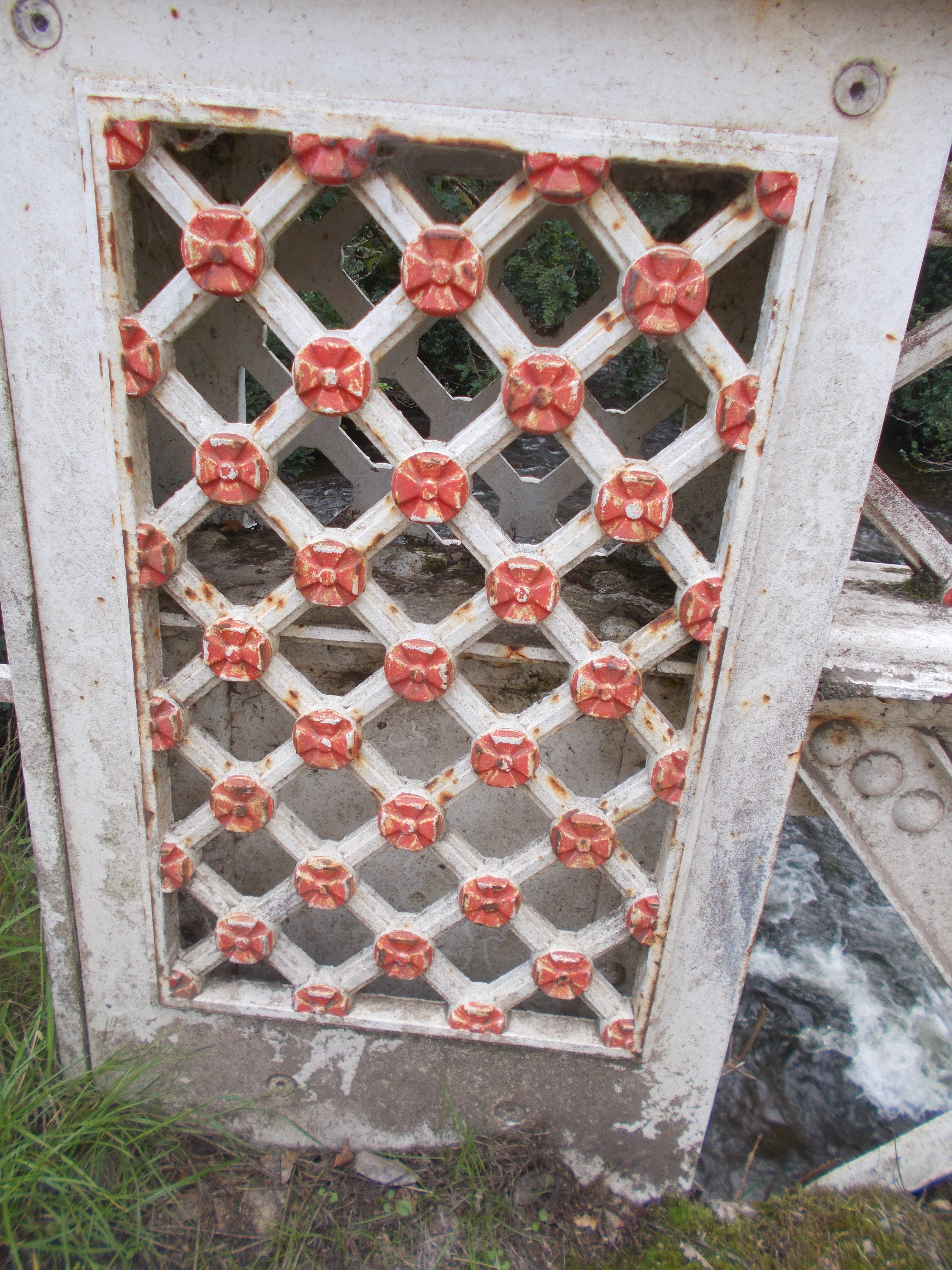
Edbrooke Packhorse Bridge over the River Exe near Winsford
This bridge is probably medieval in origin but was rebuilt in the 18th century.  The road to Winsford passed over the bridge until the new turnpike road was cut in 1824
Edbrooke Bridge

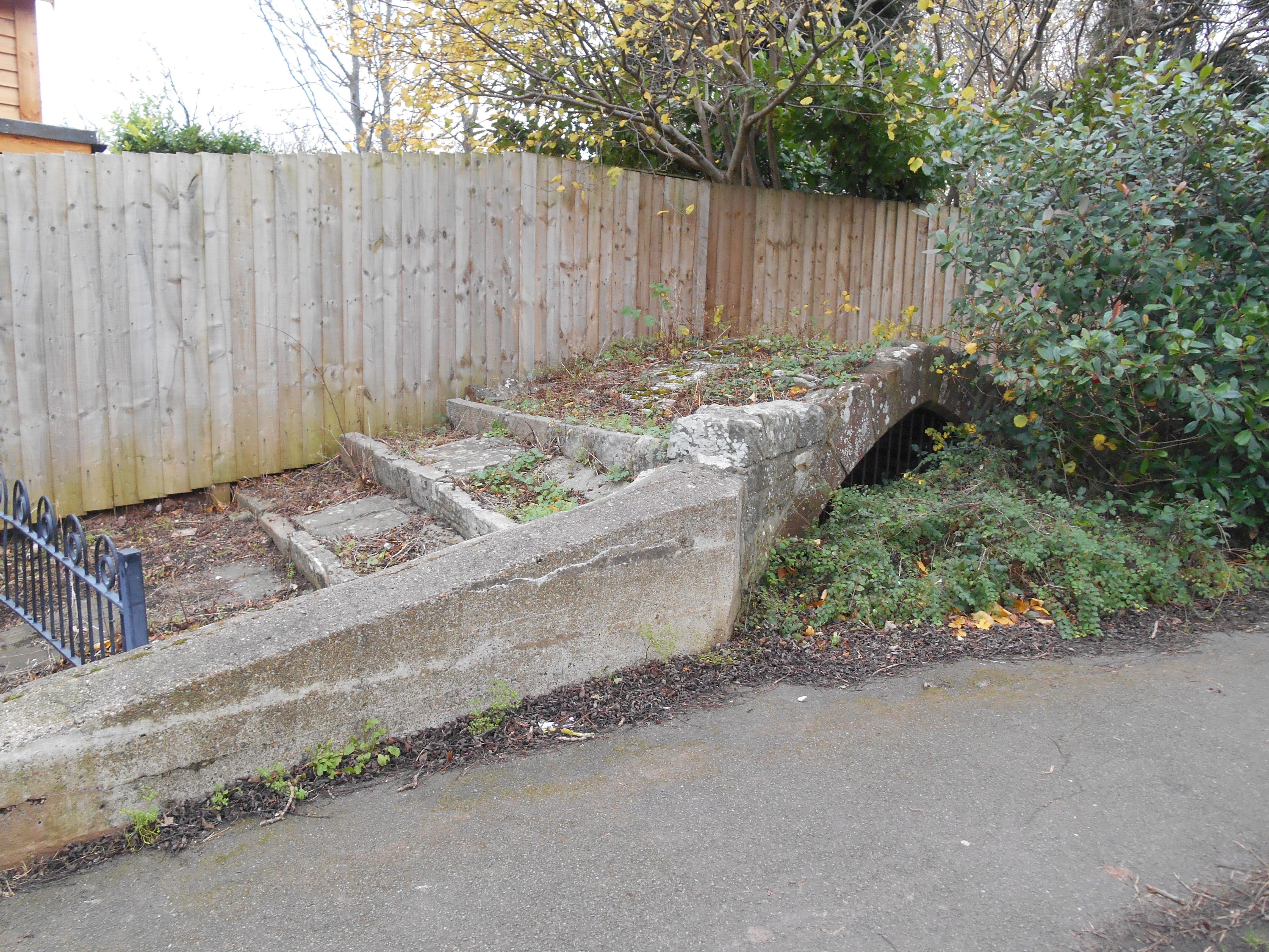
 Packhorse bridge at Marsh Bridge Cross
This packhorse bridge was built sometime before 1838.

Marshbridge Cross Packhorse Bridge

Cannington Packhorse Bridge over the Cannington Brook

Cannington Packhorse Bridge

Wellow Packhorse Bridge
This was built across the Wellow Brook in the late medieval period but has been restored and altered since then.

Bolter's Bridge

Bolter's Bridge

Bolter's Bridge, which spans the River Alham, is located half a mile south east of the hamlet of Hornblotton.  It is on the border between the parishes of Ditcheat and West Bradley.  It was reputedly built in the medieval period by the Abbots of Glastonbury to join two parts of the moor and to make a road from Castle Cary to Glastonbury.  It has 4 arches and no parapets.
Grid reference: ST 606 334.

Dowlish Wake
This packhorse bridge was built in the 17th or 18th century using the local Moolham stone from an earlier (14th or 15th century) bridge.  The arches on the right and left hand sides were inserted in 1997, as part of a flood relief scheme.

Chew Stoke
This two-arched bridge may date from the 17th or 18th century.